

Martial arts is the science of battling external and internal threats, the meeting of anatomy and physics, philosophy and psychology, where any vulnerability in a fighter’s physical or mental defenses can be fatal. Since a fighter’s physical attributes can be measured and defined, they can be translated to videogames’ as animations and number values into a character with a central theme. Every fighting game flows from Street Fighter’s Ryu, the young shotokan warrior who battled through Capcom’s titular international tournament and became the starting point for every subsequent martial arts archetype in the genre. But as Ryu had dedicated himself to the way of the fist, Street Fighter required the player to develop the technical skill, opponent knowledge, strategic mindset, and ring positioning to beat the “Emperor of Muay Thai” Sagat and become the Street Fighter champion.
Fighting games evolved from the brawler genre, both of which kicked off with “Piston Takashi” Nishiyama’s 1984 arcade classic Kung-Fu Master. With an eight-way joystick that moved playable character Thomas left and right and crouched or jumped with down and up, the player punches and kicks up a five-story tower whose every level was packed with enemies and a 1-on-1 end boss fight. Thomas’ entire moveset, including the two attacks with different reaches and power values, was challenged by diverse enemies that can move and throw projectiles at different heights, from all around. The player was tested most with the bosses, whose life meter, like Thomas’, needed to be depleted to defeat. Kung-Fu Master’s scrolling screen that followed the player made the game more cinematic and able to emulate its martial art movie inspirations. Though the scrolling screens and level structure set the standard for every action genre afterwards, Piston Takashi would use Kung-Fu Master’s combat and boss fights as the foundation for Street Fighter.

Despite Ryu’s shotokan style bearing little resemblance to its real-world counterpart, he’s an ideal avatar for the romanticized journey of a martial artist, a lone wolf seeking mastery over himself. Since the style needed to be viable against each of the ten opponents’ styles and offer wide strategic options at different distances, shotokan needed to be balanced, a concept long associated with Buddhist ideas of harmony and resilience, elements that can lead to success in all aspects of life. As Ryu’s journey of self-discipline very much represents climbing a metaphorical mountain of knowledge, it’s fitting that rising through the Street Fighter tournament’s ranks represents a distillation of his quest, starting the player at the mountain’s base, sights set on the Muay Thai warrior at its peak. Nishiyama and Hiroshi Matsumoto used every design element to make that climb attainable.
A game’s design branches wildly when it pits the player against a single enemy rather than many, from a character’s size on screen, to his or her number of moves, to their controls. Since bouts were observed from a side view and every round started Ryu on the left facing the enemy on the right, Street Fighter recognized that in a 1v1 match, a fighter’s actions are relative as they step towards, back away from, or jump over an opponent. This can also dynamically change the joystick’s function, turning a character’s backstep into a block if held while the opponent attacks. Nishiyama already got a lot of use out of the joystick in Kung-Fu Master, but he took it even further in Street Fighter. And since SF’s movements were relative, its controls offer a large range of technical depth and strategic potential, which is crucial for a game dedicated to knocking out your opponent before they KO you.
Since the vast majority of a fighting game’s processing resources are dedicated to animating a character’s movement, they can attack from crouching, standing, and jumping positions. A move’s cost equals the skill and time it takes to activate, corresponding to real-world fighting considerations; the three sets of animation frames that constitute the startup phase where an appendage extends towards a target, the active phase where it makes contact and, if it’s an attack, causes damage, and the recovery phase where the appendage comes back and the attacker returns to a normal, neutral stance. With Street Fighter’s six-buttons, Ryu had light, medium, and heavy punches and kicks, trading longer animations for increased damage. While these normal attacks have deep tactical consequences depending on the situation, they are simple compared to Ryu’s famous special moves.

Videogames struggle capturing nuanced human movements because they are confined to joysticks/d-pads and buttons, but Street Fighter emulated technical movements in a way no other game had. Nishiyama and Matsumoto combined stick movements with button presses into revolutionary special moves: the Hadōken’s mid-height fireball, Shoryūken diagonal flying uppercut, and Tatsumaki Senpū Kyaku spinning hurricane kick. All these have unique properties, travel distances, and areas of effect and can be used as individual attacks or as setups to force an opponent into vulnerable positions, proving Ryu’s versatility as a warrior.
Ryu’s special moves are tactile characterization, a way to mentally connect him to the player. Picture the shape of the joystick movements for these specials and how they relate to their attack button: the Hadōken’s quarter circle rotation from down to towards the opponent and punch is like raising Ryu’s hands and channeling energy into his palms; the Tatsumaki’s quarter circle down to back and kick lifts his leg up and around for a powerful spin; and the forward to down Z motion and punch turns him into a coiled dragon and unleashes the Shoryūken’s bite into the air. With these techniques, the player literally transforms into a shotokan warrior.
The ten street fighters provide a decent selection of styles to fight against, including Geki, the shuriken throwing ninja that teleports around the screen, Gen with the triangle jumping pattern, and Adon’s aerial reverse flipkick. Like Ryu, these characters have unique, defined properties that players on both sides of the fist can account for. Though they have primitive behaviors, these enemies force you to find their vulnerability in lightning fast and high-damage fights that often last less than ten seconds.
Street Fighter’s fast strikes and blocks creates a super quick combat rhythm that forces players to change between offense and defense on the fly. This rhythm is made more dramatic when fighters have low and high attacks and blocks, and can reposition from crouch to stand to crouch between moves. These close-quarter brawls highlight the importance of quick strikes over powerful ones, as the fewer animation frames of the light attacks allow players to interrupt the longer wind up of heavy attacks and build a defense around a smart offense. It may seem subtle at first, but this branching move system is an incredibly important element for the later creation of custom combination attacks which transforms Street Fighter into an exercise in anticipating from where the next attack will come.
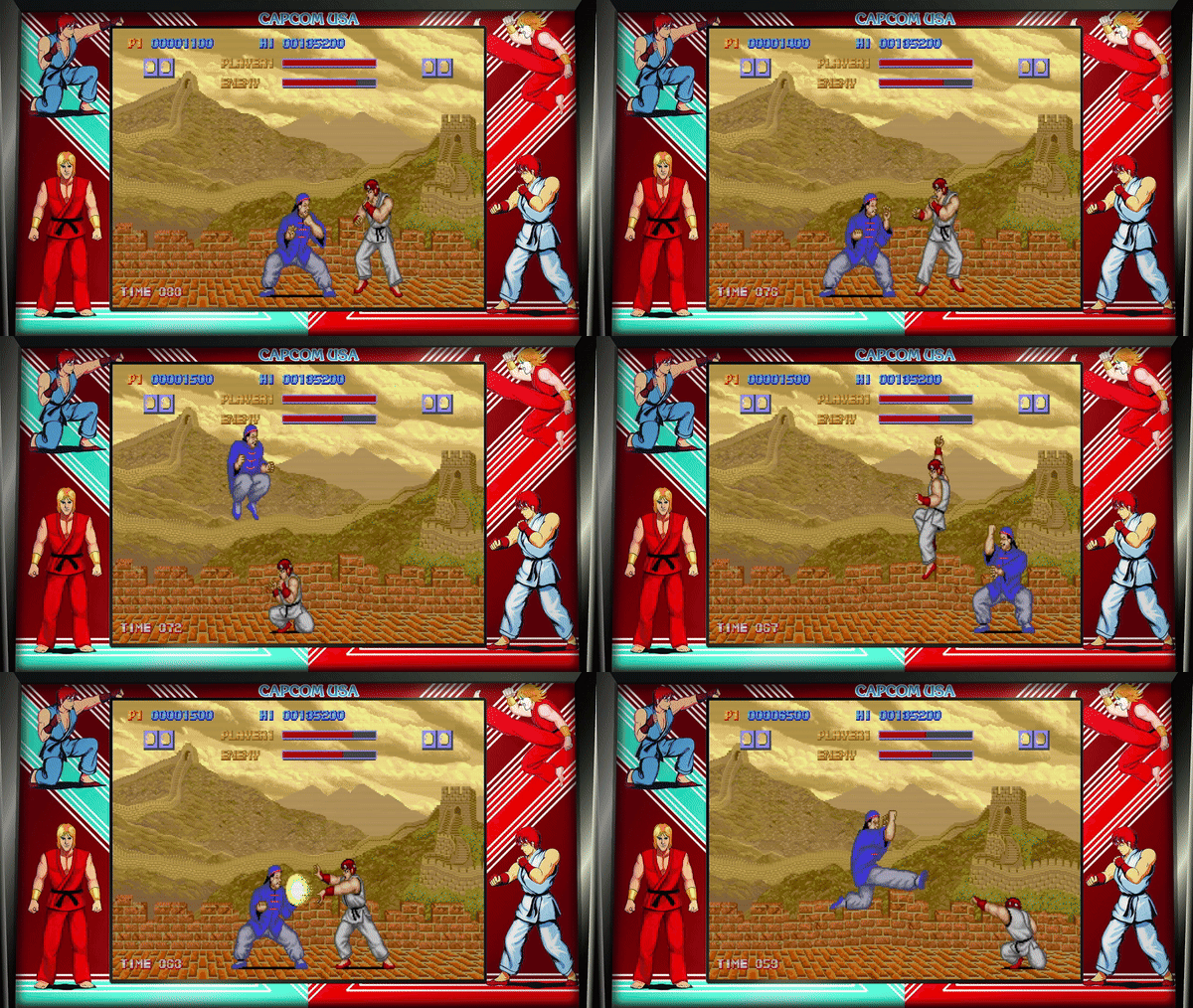
Now, all animations are a series of image frames played in a sequence to convey motion, but they can’t contain all the data to allow objects to interact with each other. Layered on top of every character, attack, and projectile, is a set of invisible boxes that causes reactions when they contact other boxes. Ryu’s attack hitbox defines where he can inflict damage as much as his hitbox defines the area where he can take damage. Blocking works the same, but the animation for it only triggers if a hitbox enters a hurtbox when the joystick is held back. The shape and location of all these boxes change depending on the character’s shape, stance, and position, which is constantly changing depending on which move is performed. All of this means that while sprites are visual representations of the combat, they are a means to convey the collision of data really happening behind the scenes.
From a larger perspective, Street Fighter is about controlling space and time and the special moves create damage zones within the screen. Where the Tatsumaki’s spin creates a vertical area of effect attack, the Hadōken’s travel forces the defender to reposition, and the Shoryūken is quick to activate but long to recover. If Ryu is the model for all fighting game archetypes, the Hadōken and Shoryūken combo is the foundation for the psychological war behind the physical one. Understanding behavior is important as when you step into the ring with Sagat.
As smart as Street Fighter’s core martial arts’ design was, the hardware still needed to mature before the gameplay was truly in fighting shape. Technical restraints kept movements feeling stiff and fights from being fluid, while slowdown and frame drops make inputs sluggish and special move execution unreliable. As primitive as its fighting blueprint was, Street Fighter’s design had a strong enough core to sufficiently train in basic maneuvering and strategy, which it’s revolutionary sequel would brilliantly expand on by refining and linking all its elements together three and a half years later.
Of course, developing the basic toolset is crucial for defeating the Street Fighter tournament’s final fighter, whose Muay Thai style is similar enough to Ryu’s as to be an intermediate test in fighting yourself, down to both shooting fireballs to bait the other to jump face first into a flying uppercut. It’s knowing yourself to better defeat your opponent. The ultimate test, however, is when a second player steps into the ring as Ryu’s shotokan rival Ken Masters and starts throwing your specials back. While the lone wolf Ryu represents Street Fighter’s soul, both recognize that it’s easier to reach the martial arts summit with a friend.
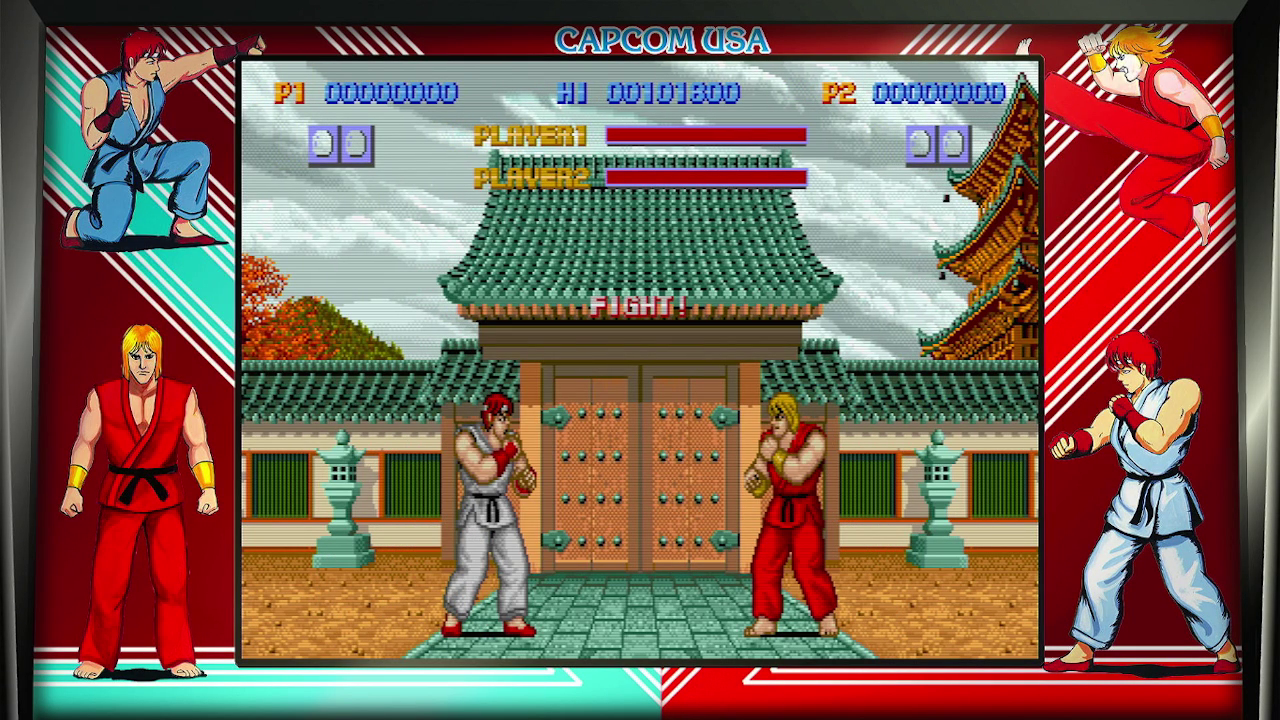
DEVELOPER: Capcom
PLATFORM: Motorola 68000 Arcade Board
1987
Dane Thomsen is the author of ZIGZAG, a sport-punk adventure in a world of electrifying mystery. With the voice of her people as her guide, Alex walks neon purple streets thrown into chaos, wielding the concussive force of her baseball bat the mighty ‘.357’ against the forces of evil. Print and kindle editions are available on Amazon. For sample chapters and to see his other works please check out his blog.
 scriptroutine.com