

Street Fighter’s shotokan style was an important first archetype for a 1v1 fighting game and introduced Ryu and Ken to the world, but the game had too many weaknesses to sculpt a complete, well-rounded martial artist. Like a body maturing, its strength multiplying and nervous system connecting every part, it wasn’t until Capcom’s arcade hardware improved that it could fully realize the fighting depth and dramatic spectacle to which the original game aspired. But three and a half years would prove fruitful training time to address SF’s faults, and the result revolutionized videogames forever and debuted an iconic cast of diverse fighting styles. With its improved animation system, new character archetypes, and a third core mechanic that brilliantly merged the gameplay, Street Fighter II: The World Warrior’s eight playable fighters helped solidify Street Fighter’s martial art, and took its digital dojo global.
To streamline game production and control piracy, Capcom developed their Capcom Play System in the late 1980s with a primary motherboard and swappable game boards. The CPS produced titles in popular action genres of the time, from shooters like Forgotten Worlds and U.N. Squadron, to action platformers Ghouls’n Ghosts and Strider, and beat ‘em ups Dynasty Wars and Final Fight, the latter particularly important for Street Fighter II. Designed by Akira “Nin-Nin” Nishitani and Akira “Akiman” Yasuda, Final Fight combined Takashi Nishiyama’s Kung-Fu Master’s brawling and Street Fighter’s striking and special move system, giving its large and detailed character sprites more developed combos and throws. The two Akiras’ game proved the CPS could overcome Street Fighter’s design limitations. The greater production value also upped every fight’s showmanship with thrilling sound effects, music, and announcer.
As Kung-Fu Master was the basis for Street Fighter, Final Fight was a warmup for Street Fighter II, especially its throw mechanic, here activated by pressing a direction and a normal attack. This added connective tissue to SF’s striking and blocking, turning the core game into a speed version of Rock, Paper, Scissors, where a block move beats a strike which beats throw which beats block, providing crucial balance to the combat. These three move types comprise the pillars of the fighting game genre, each built from a logical animation system that clearly communicated the startup, active, and recovery phases of a move to create a diverse roster of shotos, chargers, and grapplers with unique control schemes. Turning rock, paper, scissors into sub characters becomes a matter of combining their health, power, range, angles, size, shape, object boxes, animation frames, normal attacks, and specials in different ways.
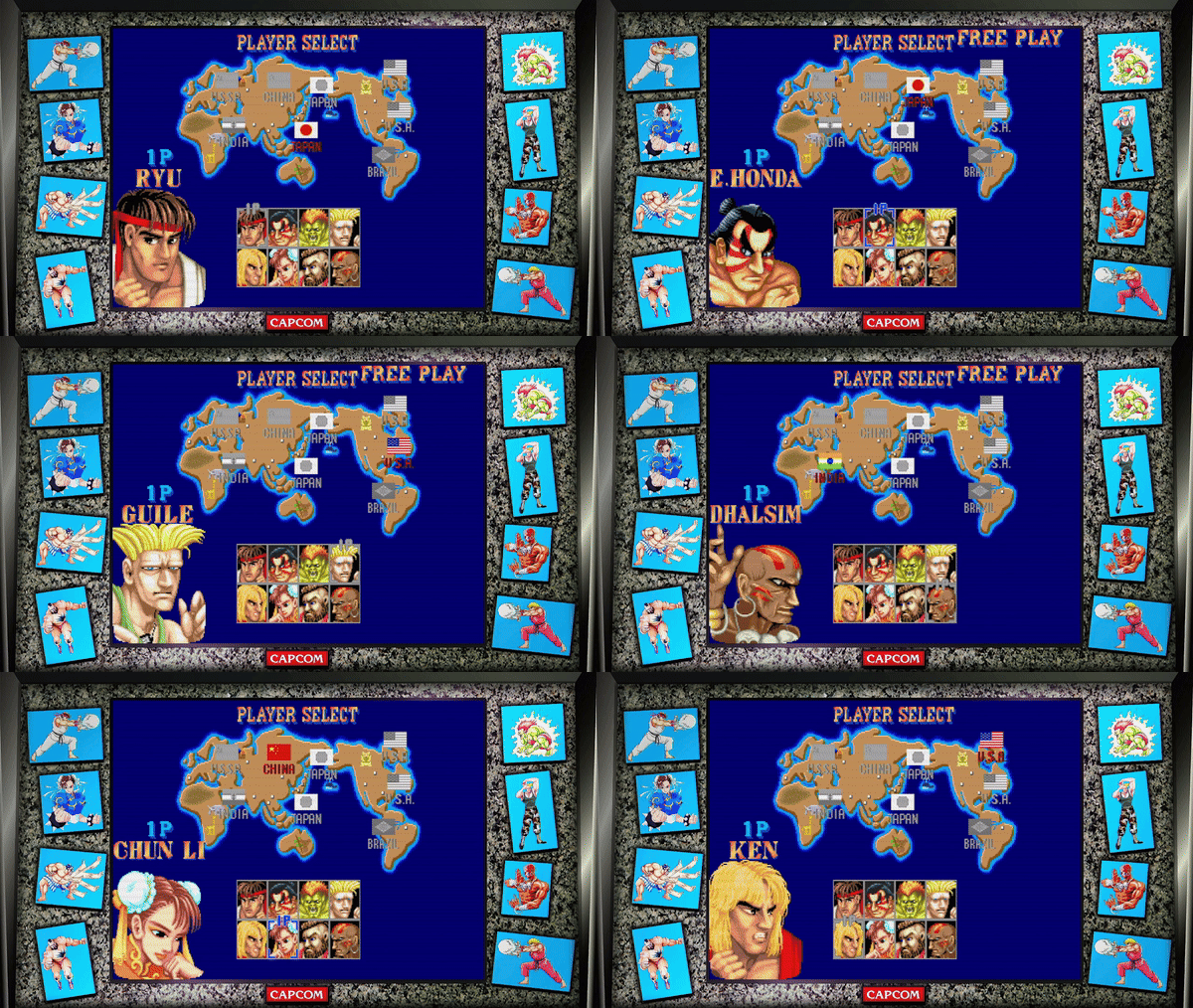
As Ryu is Street Fighter II’s default selectable character, he still represents the shotokan’s balanced style and his hadōken, shoryūken, and tatsumaki senpū kyaku are easy to execute and useful to pair. Animation improvements allowed air attack animations to trigger at different heights of a jump’s curve, which made air combat not only viable but dynamic. This highlights an important component of the air combat, the crossup, the product of the two opponents being relative to each other- when the vertical line running through a character’s center is crossed by the other character, the first character will flip 180 degrees to face their foe’s new position which flips the joystick’s relative control. By timing a jumping attack to that flip, an attacker can take advantage of their target’s block button changing, their defenses opening. The relative positioning is important for Street Fighter II’s new defensive archetype.

Charge characters are a defensive archetype and make up half the new roster, with Guile’s, Chun-li’s, E. Honda’s, and Blanka’s special moves powered by holding back or down a few moments and executed with forward or up and a normal attack. Back-toward specials attack across the screen while down-up usually go airborne. This natural fortification allows cautious play. Charging reveals that SFII assigns two functions to every input, one when pressed and one when released, or negative edge. Since all button presses happen independently of all others, a player can hold back to block, strike, and return to block without letting go of the joystick, quickly flipping defense into offense. This interrupt comes in handy with the three characters that have mashed button attacks, a useful way to punish opponents pressuring up close. Because attacking a blocking opponent pushes them away from the attacker, chargers have many places to insert their specials.
The game’s branching strikes that work at different heights means both attacker and defender must anticipate what the other’s next move will be, and to be a fully fair combat system, strikes must be paired against an equally sound blocking system. To counter attacks from three possible heights, the game provides players with two blocks where a standing block defends high and mid attacks while crouched blocks defend mid and low. With each block protecting against two thirds of possible strikes, defenders are more easily able to chain successive blocks together, and so attackers must be more choosy about how they alternate moves so their opponent stays on their toes. This biases towards the defender since they only have to select one correct choice from two options where the attacker has three, but it is brilliantly counter balanced by SFII’s primary new mechanic.
Street Fighter’s core combat was completed with the addition of throws, which beats blocks in the trinity of roshambo moves, and The World Warrior’s grappler is the large Russian wrestler Zangief, whose slow speed is balanced by big health, high damage, and more than half a dozen normal throws. That slower speed is weak against projectiles, but his Double Lariat spin, activated with all three punches, doesn’t have a center hurt box so is invincible to fireballs if timed correctly. While his Screw Piledriver’s full 360 stick rotation plus punch is confusing for newbies, hitting back, down, forward, and ending with up and punch triggers the attack’s animation before the jump registers.
Negative edge helps too, where a button press will execute its strike but only the release completes the action and executes the joystick input. Negative edge not only makes timing the stick rotation inputs easier, the button press / stick rotation / button release has a built-in multi-hit combo function, transitioning a strike into a special. Input swapping can happen across strike intensities and types, turning a Jab into a Fierce Shoryuken or a Fierce into a Roundhouse hurricane kick. This allows for any strike special combo to easily flow together.
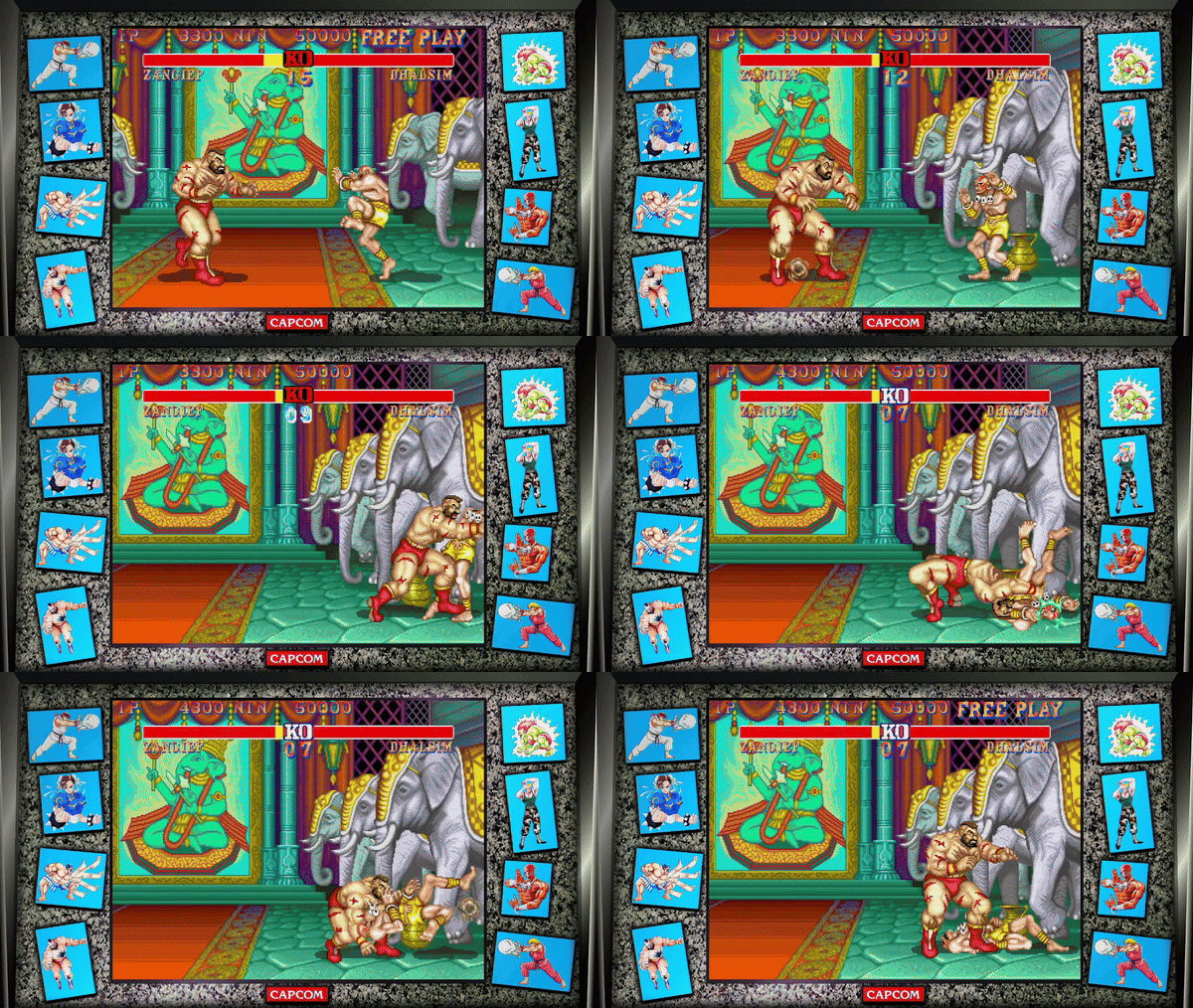
The zoner archetype controls spacing within the ring, well represented by yoga master Dhalsim’s long, stretchy normals, fire specials, floaty jumps, and differently angled aerial dives. These allow him to control the ring and pressures opponents to stay at the range he wants, which requires the different archetypes to rethink their placement, approach, and the timing and placement of their attacks. He even invalidates many mid-height attacks with his crouched kicks that are actually slide kicks, that can even safely dive under many ranged attacks. Because his fists and feet have the hitbox that cause damage while arms and legs have a hurtbox that receive damage, Dhalsim’s stretch attacks have their own advantages and disadvantages, especially from players skilled enough to anticipate the long-distance strikes. The way that zoners create unique scenarios makes them an interesting element that can disrupt any normal strategy.
Street Fighter II’s explosive global popularity resulted in many minds testing every angle of the gameplay, and Capcom took advantage of the CPS’s interchangeable board design to easily distribute revised versions. In addition to Champion Edition and Hyper Fighting making the bosses playable and increasing game speed respectively, they added character color pallettes, fixed bugs, added a new type of strike, the command normal, and, above all, tweaked animations, move attributes, and built out every moveset.

The tweaks further highlighted the game’s ability to create different characters even within the same archetype, and Ryu’s and Ken’s shotokan was differentiated towards defensiveness and aggression. Their tatsumaki is a great example of how a move’s different properties can be adjusted: where Ryu’s hurricane kicks go further and cause knockdown, Ken’s are able to land multiple hits and stay close for a followup. Ryu is designed to create distance with his opponent to hit ’em with fireballs as Ken is most effective up close, which goes well with his longer reaching shoryūken.
At the same time that Street Fighter II’s throw expanded the top level gameplay and roster, its striking system introduced a revolutionary combo system. While the original Street Fighter’s three punch / three kick control scheme was a fantastic starting point for a nuanced combat, the game’s limited animations and inconsistent input detection kept it from being reliable, predictable, and, ultimately, competitive.
Given Akira Yasuda’s art career, it’s no wonder that Street Fighter II’s robust animation system communicates its moves fluidly and consistently, which provides a tangible visible ruleset all combatants can rely on. The most obvious improvement is that the three phases of a move are better communicated due to the increased framerate, but reactions were added or improved to portray different status states, from being launched into the air to getting dizzied. Out of all of them, block and hit stun, the time it takes to recover after taking a hit, may be the most important, as they let normal strikes link together into combos.

A natural effect of attacks, blocks, throws, and stuns having time costs is that different moves will have a mathematical advantage in different situations, including an attack stunning an enemy long enough to execute a second, potentially stronger, attack before the defender regains control. Links are the basis for Street Fighter’s advanced technical play and allow other concepts such as juggles as a way to knock an opponent into the air and follow up before he or she lands. The combo system is balanced out by giving all hits push-back so a defender is knocked out of reach after taking a few blows and resets things to a neutral playfield. In all, these organic combinations create a thrilling and satisfying combat flow.
Fixing the special moves was important for the Akiras’ game as well, and not only did specials have different properties depending on the intensity of the normal used to execute, but the reliable input detection meant strategies could be confidently set up and performed. Since even blocking a special chipped away a bit of a fighter’s health, much of the combat took to the air, especially for those characters with no way to destroy a projectile.
Consider how elegantly the game’s complex design comes together: multiple archetypes are built around fundamental fighting concepts and connected to a host of skill-based input techniques by a solid animation system into a single fast paced gameplay. Exploring the technical depth leads to discovering whole new mindsets- negative edge benefits from being calm of mind as you efficiently press your strike and release your special move, and confidence comes as you learn how to properly place and distance yourself in relation to your opponent no matter which character he or she controls. Street Fighter’s striking system that worked at different heights became a branching, inprovisational combat form.
Fighting games’ most important battle takes place between each player’s ears, and Street Fighter II’s mental game involves its own rock/paper/scissors choices in the medium distance between players where neither of their strikes can reach. As “Machaboo on fundamentals for those that want to become good at GG” has analyzed, this neutral game revolves around three strategies: passive play, where a player hunkers down and reacts to what the opponent does; establishing play that involves attacking in order to catch the foe off-guard; and preempting, which has a player read what the other is doing in order to anticipate an action and counter. No strategy is better than the others, although both players making the same choice can be reduced to a simple variable set- with two blockers, neither wins, with two establishers, the character with the fastest strikes wins, and with two preemptor’s, the faster striker or better reader gets the advantage. This is a powerful knowledge base from which many options flow.
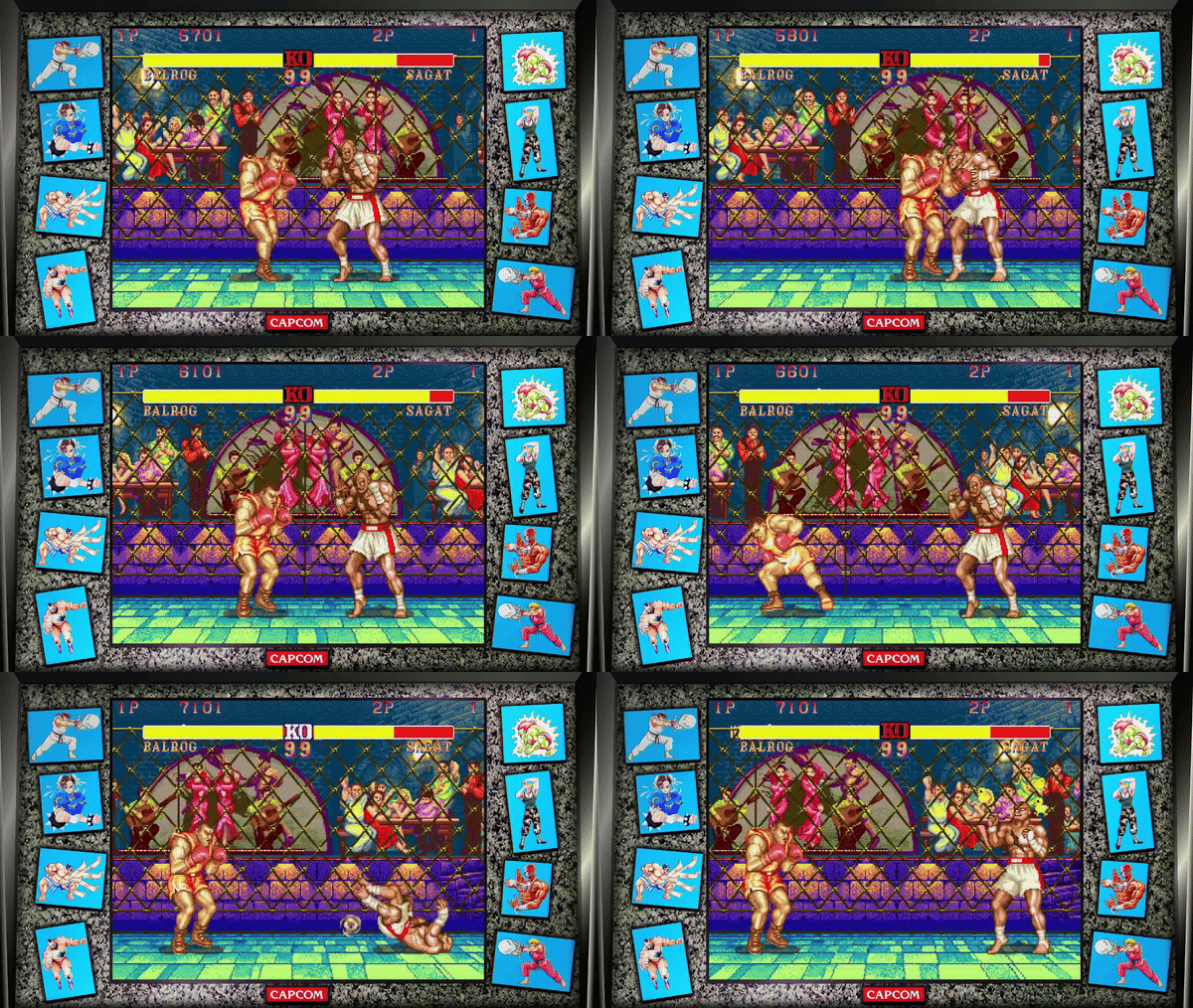
Given how different archetypes are and the variation that can occur within each, matches are influenced as early as the character select screen. By the time the player has fought to the Shadaloo bosses, they will have developed a fundamental understanding of what Street Fighter II is, so these bosses throw new playstyles and trait combinations: the boxer Balrog, whose special is executed with all three punches but can be pressed and held one at a time for a combo before releasing all to finish with the special, Vega who bounds around the screen, and the Muay Thai former SF champion, Sagat, scarred from where he took a direct Dragon Punch to the chest in the last tournament. The bosses test the player’s understanding of the Street Fighter science, one whose every element can be measured, analyzed, and compared. That’s why Bison, whose Psycho Power charge moves and slide tackle that come at different angles and cross you up from behind, can be so imposing- he overlaps with the other archetypes.
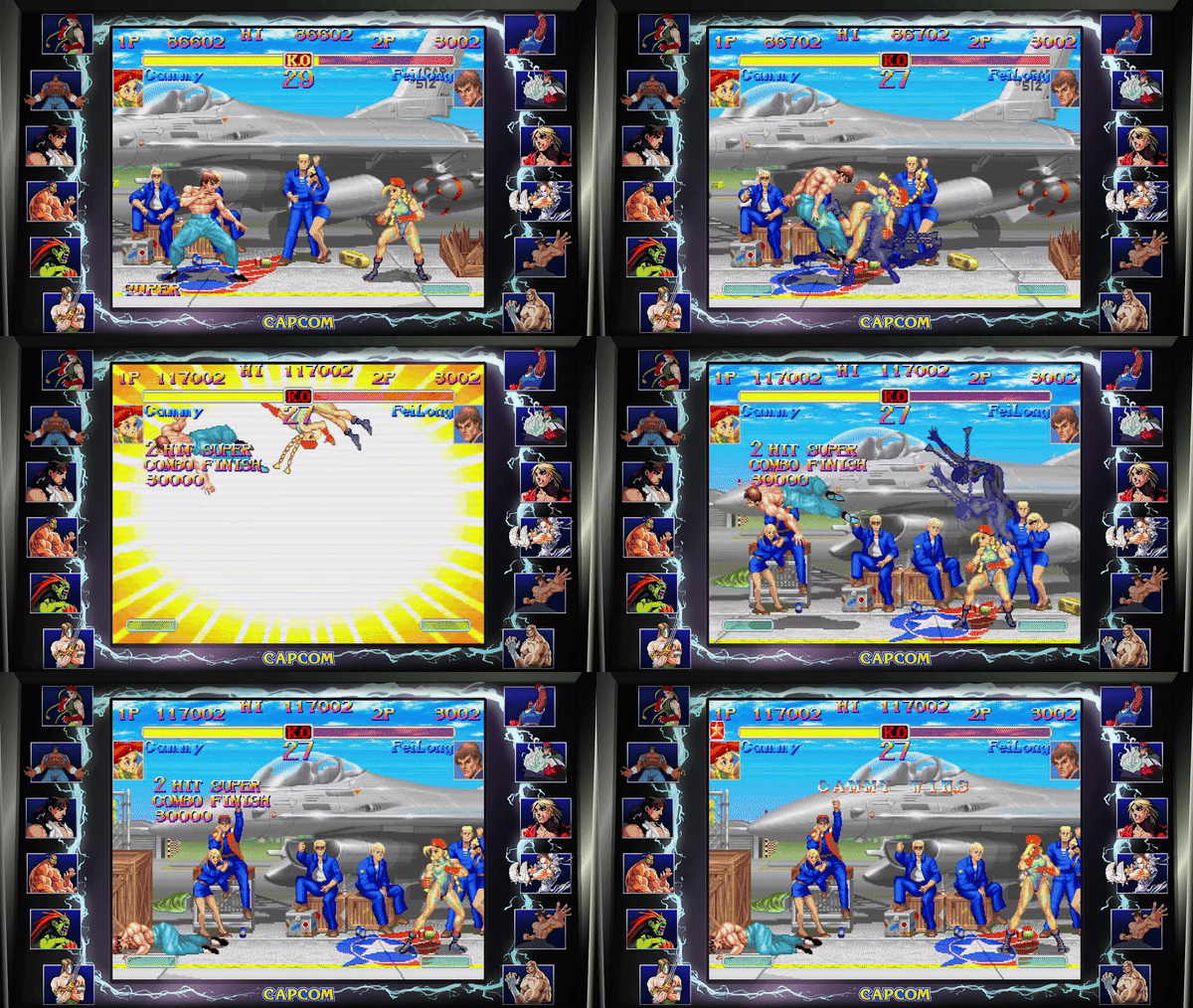
With the release of the CPS-2 in 1993, new SFII designer Noritaka Funamizu experimented with Capcom’s fighting game formula on new hardware, and created Super Street Fighter II: The New Challengers‘ rush down characters Cammy and Fei Long, grappler T. Hawk, and charger DeeJay. The new board also overlaid mid-match text for events such as first strikes and combo counters, all adding in-game commentary for bouts. But SFII’s last significant gameplay innovation was Super Street Fighter II Turbo’s Super meter, which filled by attacking and unleashed a powerful version of a character’s special that blew the screen up in color if it KO’d the target. The Super meter would influence the genre forever, further supplanting SFII as one of the most important videogames ever made.
As the Street Fighter dojo expanded to new martial art forms and produced great characters, a secret one awaited to challenge Super Turbo’s toughest players. If one practices enough to beat Sagat within 1500 seconds or earn more than 1.2 million points, Akuma, the Shotokan demon, will challenge you to a fight and fire powerful new hadōken including from the air. To keep you on the martial artist path, SF challenges you with increasingly difficult goals and Akuma is a fantastic test for the years of beatings you’ve handed out and eaten. If Street Fighter’s Ryu taught balance through a well-rounded form, Akuma’s shoto style represents strength for power’s sake, but Street Fighter II’s international cast and gameplay innovations proved that when evil steps into the ring, there are many ways to knock it out.
DEVELOPER: Capcom
PLATFORM: Capcom Play System, Capcom Play System II
1991
Dane Thomsen is the author of ZIGZAG, a sport-punk adventure in a world of electrifying mystery. With the voice of her people as her guide, Alex walks neon purple streets thrown into chaos, wielding the concussive force of her baseball bat the mighty ‘.357’ against the forces of evil. Print and kindle editions are available on Amazon. For sample chapters and to see his other works please check out his blog.
 scriptroutine.com