

Iterating gameplay is a crucial part of the videogame design process to streamline the strong elements and improve the weaker, especially important for competitive genres where devs balance thousands of different aspects to make it fair. But with a game’s subsequent releases, a developer risks changing the base structure too much and making it unrecognizable. For a legendary game like Street Fighter II, which established fighting game’s rock/paper/scissors blueprint, balancing new ideas is incredibly challenging, even for a game notorious for its many revisions. The smart move would be to start with a fresh series to safely experiment with new gameplay, powered by new tech. In the mid 1990’s, Capcom branched out, resulting in more than a dozen games that would not only establish All-Star and Tag-Team fighting games, but create a new standard for a combat system’s actions-per-minute. These games would cultivate a lightning-fast subgenre that captured the spirit of Shōnen anime, complete with fast combat, air combos, and glorious super moves, with the beloved Marvel vs Capcom series its star.
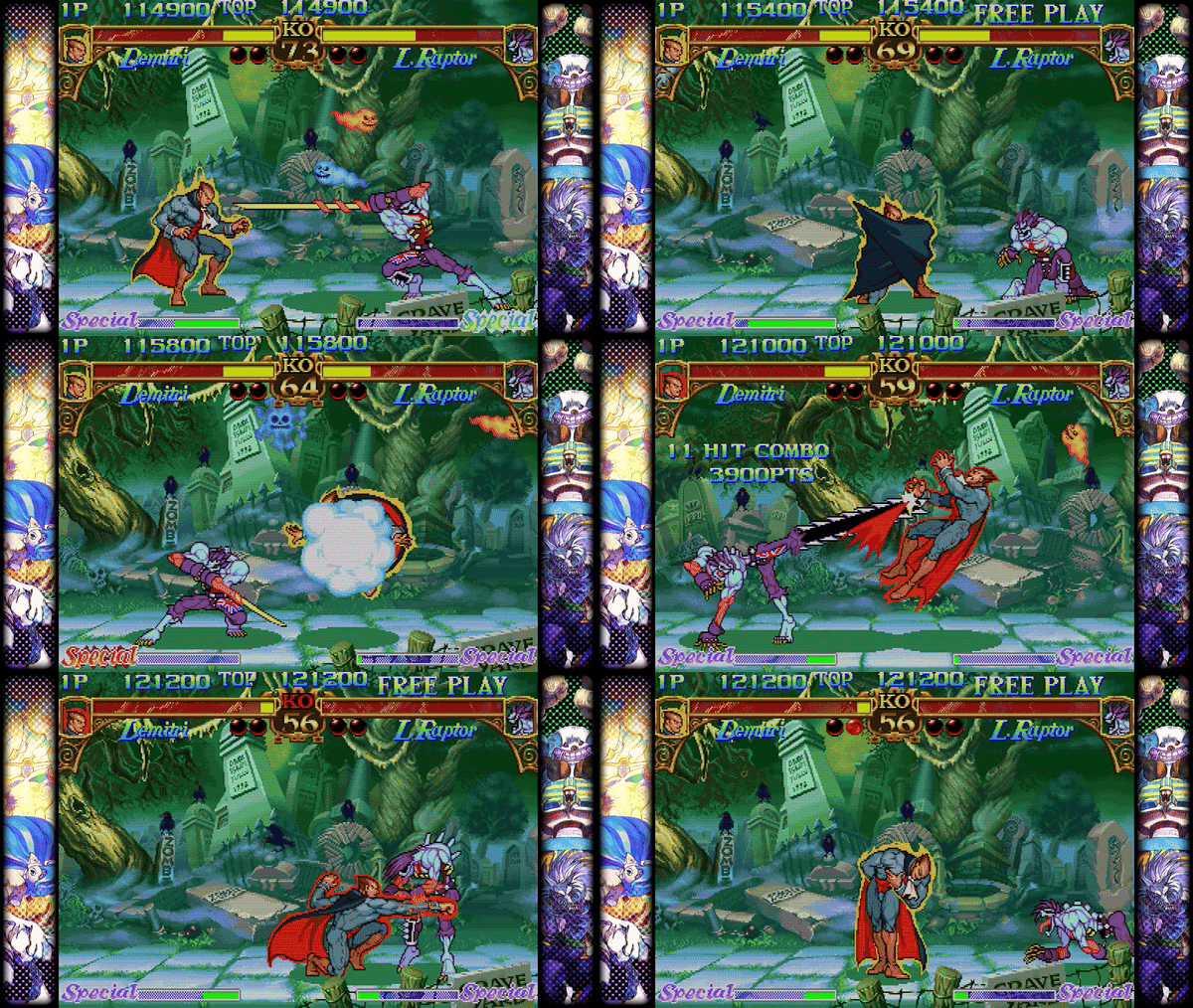
Capcom’s CPS-2 arcade board meant more pixels with more colors, more animations, more sound effects, more systems, and the first new fighting IP the company made was 1994’s monster brawler Darkstalkers: The Night Warriors, designed by legendary Street Fighter II artist Akira Yasuda. Based on that game’s design, Darkstalkers was an exaggerated light horror anime that was faster and more expressive than SFII while retaining the six normal strikes, link combos, specials, and character archetypes, starring the shotokon vampire Demitri Maximoff, zoning mummy pharoah Anakaris, and rushdown werewolf Jon Talbain, among others. DS added many smart new mechanics and systems to Capcom’s fighting formula like dashing, air blocking, and the chain combo system that cancels successive strikes in increasing intensities or types, effectively synchronizing both hands and both feet to keep your opponent stunned. Darkstalkers increased the speed and complexity of every fight, perfect for its anime ambitions.
Because they are drawn and animated, videogames have long connections with anime, which had a direct pipeline from comics. Character poses, the sense of motion, and overall communication of actions, had been explored in illustration for thousands of years, and those still images were turned into animation sequences activated when a player presses a controller button. Comics are often the testing ground for character concepts and story, which are translated to animation- American comics were the foundation for cartoons as Japanese manga built anime, and artists around the world rose through the ranks. Since videogame sprites are generally full body character images from basic camera angles on a static 2D plane, and principles like squish and stretch, move and pose, and hundreds of other techniques are the key to creating personality and expression. After experimenting with Darkstalkers’ design, Capcom was ready to push the ideas further and would soon create manga versions of legendary American Comic characters.

After Capcom worked with Marvel Comics for Noritaka Funamizu’s The Punisher beat em up, a title that earned him a lead role for Super Street Fighter II and Super Turbo, they were in an opportune position to make a fighting game, and other SFII creator Akira Nishitani co-directed it with Funamizu and others. Based on the ’93 comic run of the same name, X-Men: Children of the Atom escalated Darkstalkers’ manic gameplay with super jumps that pan the screen upwards and multiple versions of character specials, to voice actors from the X-Men: The Animated Series. As Demitri is Darkstalkers’ archetypal leader shotokon, Cyclops is Children of the Atom’s, a versatile Ryu-esque fighter that does fast uppercuts and shoots balls and beams from his eyes. CotA’s classic cast of Magneto, Storm, Wolverine, Sentinel, Psylocke, and others fills out the mutant team well, and is given rich personality through its beautiful animation.
Children of the Atom brings analysis back to the influence of comics and manga on videogames, with Dragon Ball a direct influence on Street Fighter, as Ryu’s Hadouken fireball was based on Goku’s Kamehameha beam, down to the way they focus ki between their open palms, but the ball shape was due to technical limitations of arcades at the time. CotA brings the similarities closer, as Cyclops’ screen-long optic beam mirrors Goku’s famous blue attack. CotA smartly gives specials different properties depending on the intensity of the button input, as he can shoot his optic blast at low height, medium height, and diagonally up, and all from a quarter circle forward stick motion. In CotA, the blur on Clops’ kicks, the squished look of Wolverine’s Berserker Barrage, and speed lines for hyper jumps and dashes pack the game with personality that communicates itself extremely well. At low level play, the game moves like a comic book come to life, but it evolves with advanced play.

No game up to then had captured the capabilities of the X-Men as well or as stylishly as Children of the Atom, because every element of a fighting game supports player actions, ones that take skill and look stylish. At its fundamentals, CotA’s base moves create cool looking brawls with awesome specials, appropriate for the grounded nature of the comic series. But with advanced play, from recovery rolls to hyper jumps, accessible launchers to follow-up with Aerial Rave air combos, the actions-per-minute ramps up and takes fights vertical, which is much more aligned with the intense brawls of Shōnen manga than the more reserved, physical American comics. CotA is a fast game that fluidly moves from air to ground and back, creates tension and release, and possesses an energy and intensity unseen by a fighting game until then. Throw in the breakable floors that lead to other stages, and Children of the Atom becomes X-Men x Dragon Ball Z.

Ultimately, Darkstalkers and Children of the Atom were labs to grow more Street Fighters, and Funamizu applied his experience when returning for Street Fighter Alpha, which had great new animations for classic moves and implemented air blocking, recovery rolls, and chain combos. Alpha is a great, system-rich game that lives up to its predecessor, but, outside its gameplay, it produced an entire library’s worth of updated sprites and sound effects for iconic fighters. With the two other game series, Capcom built a massive number of characters, moves, and systems, all sharing the same gameplay foundation. This set the scene for an important crossover coming over the horizon.
After Alpha, Funamizu took a general producer role that allowed him to oversee Capcom’s in-house fighting catalog, which produced even more art assets for its growing archive. By 1996, the CPS-2 was firing on all cylinders and Capcom’s incredible output resulted in two games for each of these fighting series, with Night Warriors: Darkstalkers’ Revenge, Marvel Super Heroes, and Street Fighter Alpha 2. Characters like DS’s Hsien-Ko and Spider-Man, who had curving attack patterns, and Sasquatch and Ice-Man with frozen beams, pushed the series forward by playing with different archetypes, move angles and properties, and, importantly, how objects are emitted from a character, as when a purple beam shoots from Magneto’s hand. Understanding that character animations can be modified to get different results, swapping one object for another, reveals how the design is flexible to finally give Ryu the full-screen Kamehameha super Hadouken he had long needed.
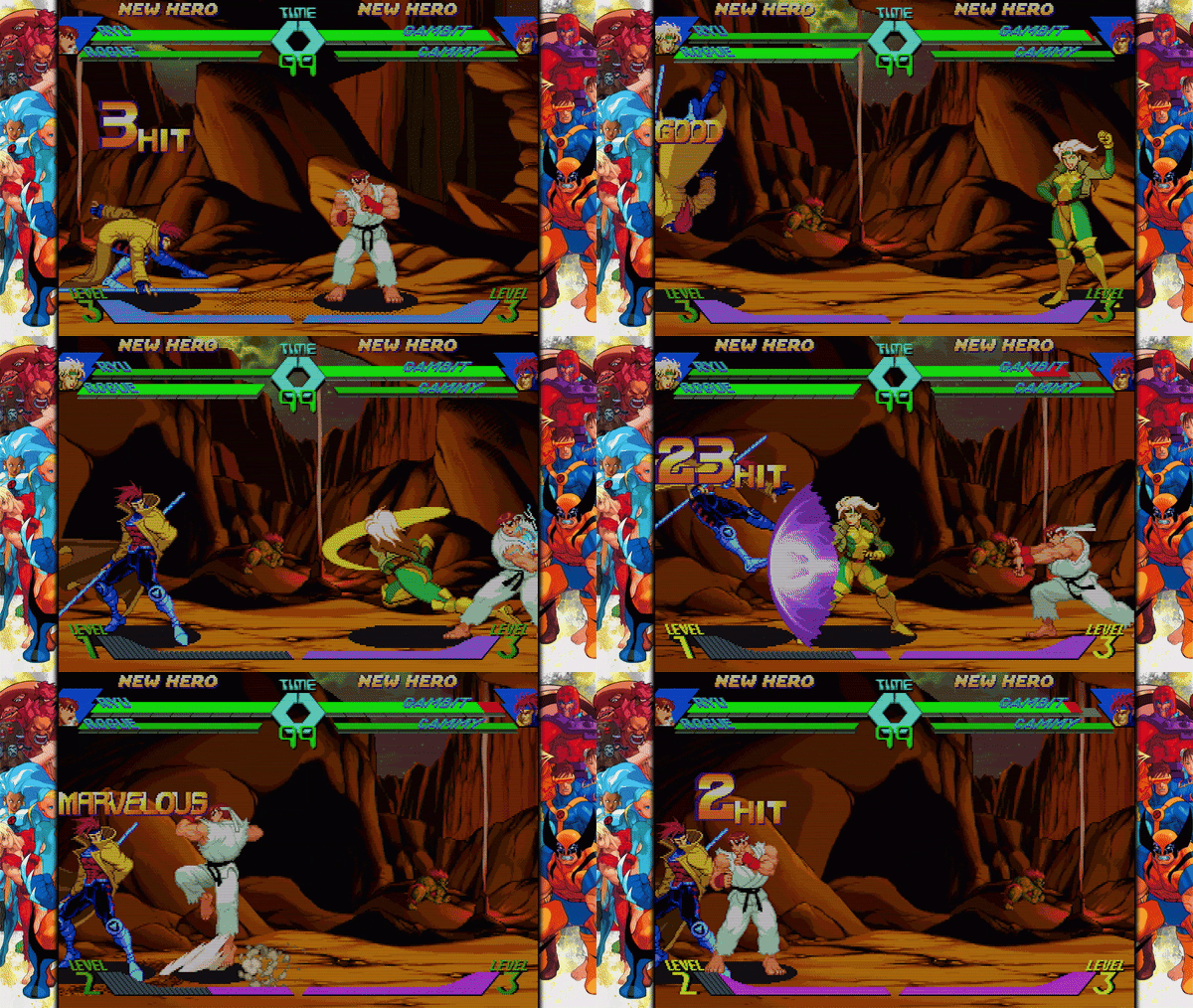
With the assets from X-Men: Children of the Atom and Street Fighter Alpha, Capcom assembled the awesome 2v2 tag-team X-Men vs Street Fighter in ‘96, a fast and intense game more the former than the latter, with hyper jumps and limited air dashes, that smartly adds partner attacks like tag in Variable Attacks, and team supers. Adding CotA’s launchers and follow ups to SF characters freshens the combat and heaps on intensity. The tag gameplay adds significant layers of strategy to Capcom’s fighting formula, down to the character management that lets a tagged-out character replenish red damage, clutch in a game with single round matches. Defensively, XvSF adds push blocks that knock an attacker and relieves pressure from the increasingly complicated combo system. The game shook up the meta concepts of picking and counter-picking your fighter, and now team compatibility was important, both to support each other and cover player inadequacies. Adding to the comic/anime style, activating a super is met with a comic panel overlay of the characters involved screaming dramatically before unleashing their move. X-Men vs Street Fighter is a magnificent game, an improbable crossover between two titans of their respective mediums.
As the scope of this new crossover series evolved, its name focused. Marvel Super Heroes vs Street Fighter added the revolutionary Variable Assist attacks where your partner jumps in to execute one of his or her specials. Suddenly, the game’s strategy shifted, and your partner could be an added strike in a combo, as a cross up to open a defense from behind your enemy, in addition to the Variable moves from XvSF. Of course, you risk your assist character getting hit for extra damage, and these Happy Birthdays can be combo’d far enough to completely KO your backup brawler. Between the juggles, fast movement speed, character assists, and special effects, Capcom’s design had become synonymous with extremely high APM gameplay and intense battles, largely while stretching its art production cost across multiple games. By the time the three CPS-2 series had amassed ten titles between them, Capcom would settle on a name for their fast, bombastic new franchise that combined characters from all of them: Marvel vs Capcom.

1998’s Marvel vs Capcom: Clash of Superheroes opened both companies’ rosters, while continuing to cram in effects and new moves. On Marvel’s side, new characters Venom and War Machine were similar to Spider-Man and Iron Man but offered differences to keep them compelling, but Capcom’s repurposed and new additions offered the chance to reinterpret other action characters into Street Fighter, with new Mega Man and Roll, Captain Commando, Strider Hiryu, and Jin Saotome from CPS-2 mech fighting game Cyberbots’ bringing unique elements inspired by their own games. DS’s fan-favorite sultry vamp Morrigan Aensland can airdash, Mega Man uses weapons from his games’ fallen Robot Masters, Jin’s supers incorporate his mech from off-screen. MvC started shaping the series into a true All-Stars crossover game, before Nintendo’s Smash Bros. hit the N64. MvC became primarily about four things: translating known characters into fighting game mechanics, over-the-top supers, tag team battles, and hyper-speed gameplay.
While MvC added more game franchises to its roster, its total playable character list stayed small because of the CPS-2’s limits, and Capcom needed to be creative with its presentation. A name like Marvel vs Capcom promises a ton of characters to satisfy, and the devs took an addition through subtraction approach. By replacing MSHvSF’s assists with a Guest Character System that randomly chooses a third character that executes a special move a set number of times in a match, it allows 20 other characters, many ripped from past versus games, to fill out the roster without having to hold three full movesets in RAM. It’s a way to retain assists in some form, while your partner’s direct intervention comes as Variable Cross attacks that controls both teammates simultaneously. MvC was the CPS-2’s Versus swansong, culminating in a 2.5v2.5 fighting game. Marvel vs Capcom hinted at the series’ true potential, but it would be more than two years before it was fully realized, running on another beloved board that would power arcades and home consoles with remarkable parity.
Many of Capcom’s fighting games stripped features moving from arcade to console, including losing animation frames or entire moves altogether. Unlike cartridge-based systems that could add processor chips to power games the base console was too weak to run, optical-drive-based systems had to rely on the existing hardware or costly separate accessories that fragmented the userbase. The Sega Saturn’s Japanese ports included carts for the system’s RAM expansion and produced the best versions of these games, but the PlayStation versions were inferior across the board. This was particularly noticeable with XvSF and MSHvsSF, whose memory couldn’t hold four characters’ worth of moves (though could work if both players selected the same characters, still just two movesets). Instead, both games, released years after their arcade versions, implemented the Variable Assist attacks where XvSF’s arcade version hadn’t had them. Console-only players got a (highspeed and frenetic) sample of what the series had in store for them, and it’s no wonder that the series stayed relatively quiet. Sega’s NAOMI board changed that.

Fully realizing the first MvC’s intentions, Marvel vs Capcom 2: New Age of Heroes, finally broke through to full 3v3 combat by simplifying the six-button control scheme down to four normals of light and heavy punches and kicks and two assist buttons that activated the teammates’ Variable Assists or held to tag them in outright. 56 characters across the two companies made for brilliant matches, and more game franchises were translated, such as Jill Valentine from Resident Evil, Tron Bonne from Mega Man Legends, and Hayato from Star Gladiator. More characters on a team meant more strategic options, and the devs smartly introduced a snapback move for every character, that punted an enemy off screen, the perfect way to bring that assist character you just caught in a double Happy Birthday back to the ring and erase that red health regenerating offscreen.
With six characters, their specials, and all their sounds, animations, and visual effects popping off, the game had to compensate. Interestingly, while each character’s movesets were reduced, the game still held the same total number of moves, bringing two characters with six normals to three characters with four normals. Because of the staggering amount of visual information appearing on screen, Capcom contrasted its 2D sprites against 3D polygonal backgrounds, both materials NAOMI exceled at rendering, and eliminated any characters from the background so players didn’t get confused tracking everyone’s movements. With all the characters on offer, balancing was downright impossible and every day the tier list of viable teams was filtered until the famous Magneto/Storm/Psylocke CotA combo rose to the top, although many others still shake up the meta. MvC2 would hold a loyal, cult following thanks to the advanced fighting franchise jumping to Sega’s more powerful arcade and Dreamcast hardware.

The anime fighter subgenre had been percolating since Darkstalkers, and new franchises would emerge as Capcom worked on their series, including Arc System Works’ Guilty Gear, whose Gatling Moves are reminiscent of Chain Combos but also incorporates airdashes and aerial combat. In the slow years following Marvel vs Capcom, the series fandom built due to MvC2’s PlayStation 2 and Xbox ports, players hungry for the chance to lock their favorite comic and game characters in the ring.
Though dormant during the first half of 2K, Capcom’s fighters came back hard with Street Fighter IV, truly bringing the series into polygonal 3D in a way Arika’s three Street Fighter EX games hadn’t. The cinematic camera angles and flexible animation routines were a great fit for anime fighters, and Capcom leapt on SFIV’s success. But rather than jump right to MvC, they pitted their fighters against a different legendary animation studio for Tatsunoko vs. Capcom: Cross Generation of Heroes, which brought characters from series like Gatchaman, Casshan, and Tekkaman against the leads from Dead Rising, Rival Schools, and Viewtiful Joe, drawn in cel-shaded graphics that captured the manga feel. To accommodate the Wii, MvC2’s two assists were reduced to one, and the four normals reduced to three, light, medium, and strong, which releases a punch or kick depending on the character and is modified with joystick direction. Once the template had been proven, TvC’s techniques were ready for MvC.
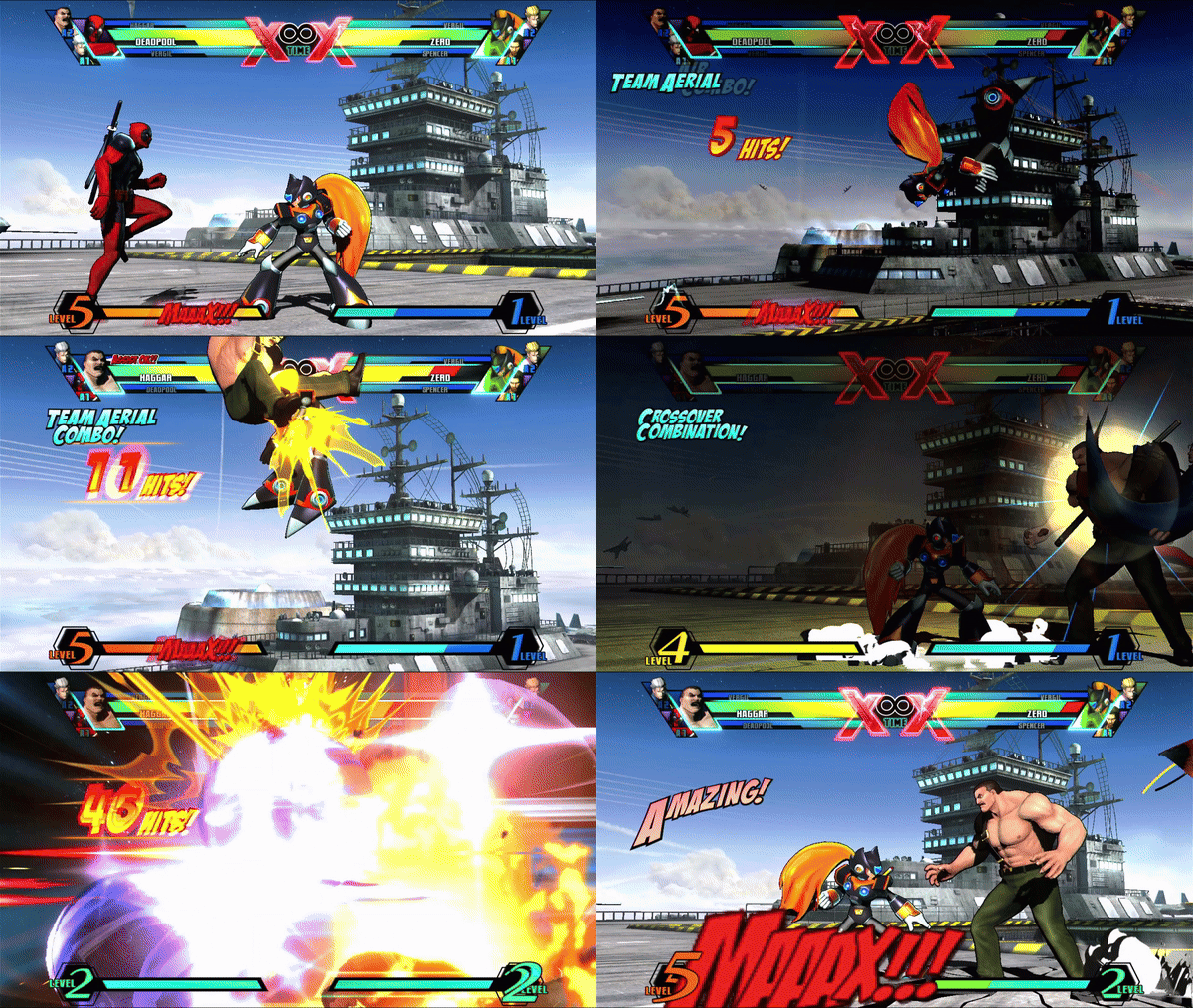
The world was different in 2011, and after years of boiling fan support for MvC2 and the Marvel Cinematic Universe’s meteoric rise, Marvel vs Capcom 3: Fate of Two Worlds was built on Capcom’s fantastic MT Framework engine. Adopting Tatsunoko vs Capcom’s simplified gameplay allowed MvC3 to appeal to a larger audience by prioritizing strategic thinking over complex controls. Framed as a spread in a comic book, the character select screen is packed with 38 cel-shaded characters with thick shadows and lines, adding new and classic Marvel characters like Deadpool, MODOK, and Super-Skrull, and translating Capcom’s newer 3D IPs such as Devil May Cry’s Dante and Trish, Bionic Commando’s “Rad” Spencer, and Okami’s Amaterasu. These characters translate well to fighting games, some of whose designs, like DMC‘s, evolved from fighting games in the first place.
MvC3‘s simplified gameplay had interesting benefits, and being able to custom set punches or kicks to the three normals on a character by character basis opened up the creativity, while using quarter circle back or forward stick rotations for a host of specials makes it easy to apply them. Where any quarter circle forward and a normal with Ryu produces some sort of Hadouken, for Dante, it will bring out his chargeable Artemis gun, his Cerberus nunchuck’s Crystal move, or pull off Hysteric on his Kalina Ann rocket launcher. The special button is a universal launcher on the ground that follows up in the air if held or a will slam to the ground if performed in the air, in addition to having a unique special move. These four face buttons result in new kinds of combos that include Team Aerial Combos that switch team members at the end of an air string, allowing for three full sets of combos before the target hits the ground. MvC3 added the X-Factor system that powers up fast health-regen and increased damage and speed, but the duration increases as your teammates are KO’d. As the world was discovering thanks to streaming and tournaments, the long development history of MvC resulted in high-octane battles that are fascinating to spectate and exhilarating to play. They are epic graphic novel brawls.
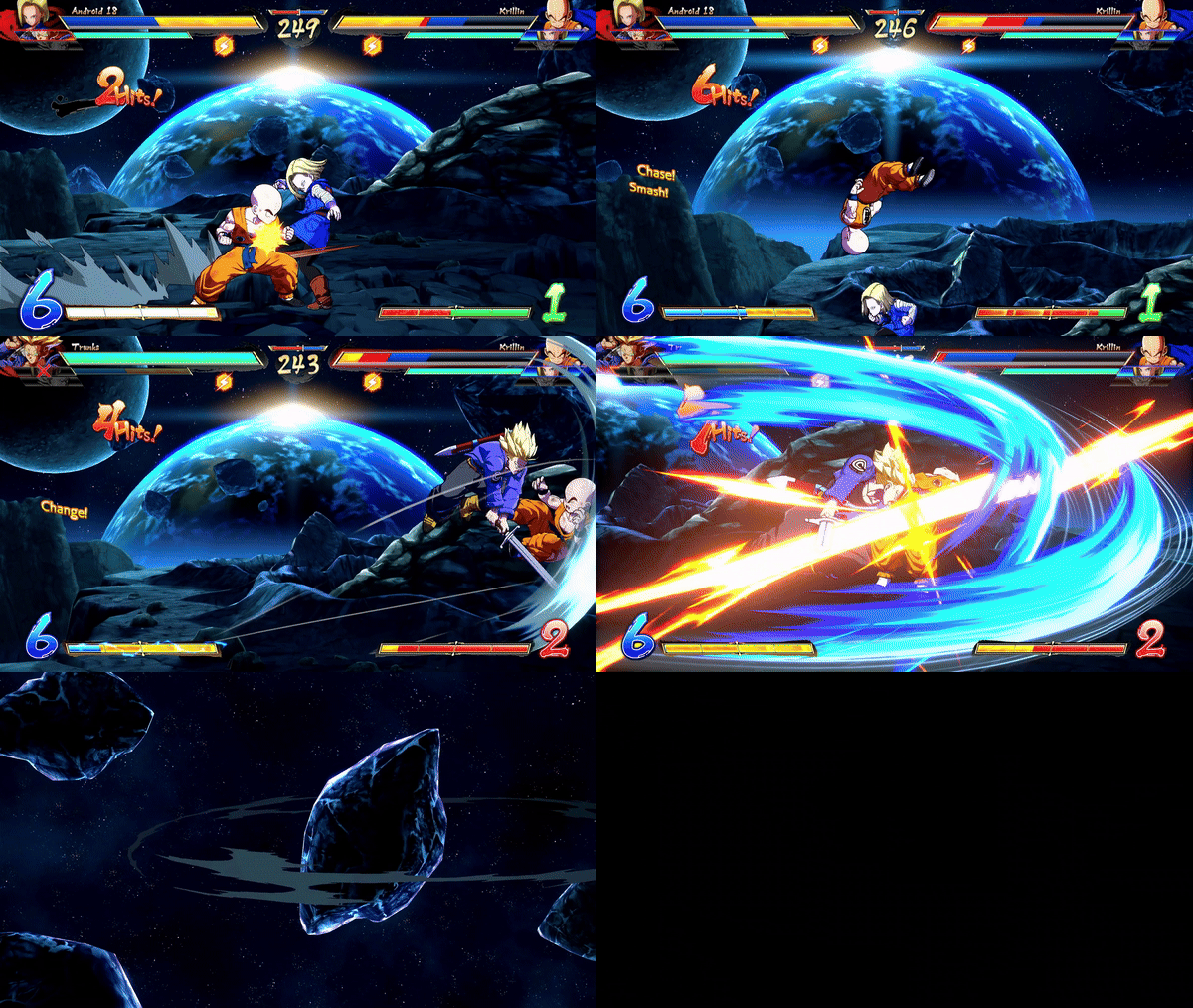
The Marvel vs Capcom series would inspire a devoted fanbase of players and artists across comics, animation, and videogames the world over, convincing classic and new franchises to use its mechanics and systems. Fighting mainstays like Dead or Alive, Tekken, and Mortal Kombat have experimented with tag battles, while Reverge Labs’ Skullgirls continued with fast-paced sprite fighters. It’s no surprise, then, that Arc System Works, following their successes with Guilty Gear Xrd, BlazBlue, and the Persona fighters, would bring MvC’s design back to a titan of Shōnen manga, with the 3v3 bonanza Dragon Ball Fighter Z, delivering spectacular fights, breathtaking cinematic super moves, and carries on the spirit of the franchise that it had inspired. MvC proves the power of product iteration, as you never know how many new games and genres can be created by playing with new ideas, even on a rock-solid foundation.
Dane Thomsen is the author of ZIGZAG, a sport-punk adventure in a world of electrifying mystery. With the voice of her people as her guide, Alex walks neon purple streets thrown into chaos, wielding the concussive force of her baseball bat the mighty ‘.357’ against the forces of evil. Print and kindle editions are available on Amazon. For sample chapters and to see his other works please check out his blog.
 scriptroutine.com