

In Miyamoto Musashi’s landmark The Book of Five Rings, the legendary Japanese swordsman illuminates a lifetime’s worth of martial arts philosophy, expressing the warrior archetype as a carpenter who must master all the tools of his trade to build a fortified defense in a world where violence has consequences. Videogames ability to convey those consequences allow for martial arts to be constructed through complex fighting systems, and in Samurai Shodown, SNK brought combatants from a dozen styles together in armed combat, creating beautiful and dynamic duels that blend hack and slash and beat ’em up combat into a single design that requires precision and patience to unleash strikes as sharp as your blade.
By 1993, SNK was throwing fists in the fighting game turf wars with Fatal Fury and Art of Fighting on its beloved NEO-GEO arcade board, but Samurai Shodown added a significant, cutting edge weapons-based system set in feudal Japan. In the throes of the Tokugawa era, an international cast of real and fictional characters come to life with lush sprite work and dense, beautiful stages using the now established strike/block/throw trinity and turning SNK’s four button design into six normal attacks and a slim set of special moves. The samurai Haohmaru, inspired by the great Musashi, is SamSho’s katana-wielding shoto, more Terry Bogard than Ryu thanks to the double slashing DP and ground level cyclone, against the evil Akamatsu, resurrected to overthrow the Tokugawa Shogunate.
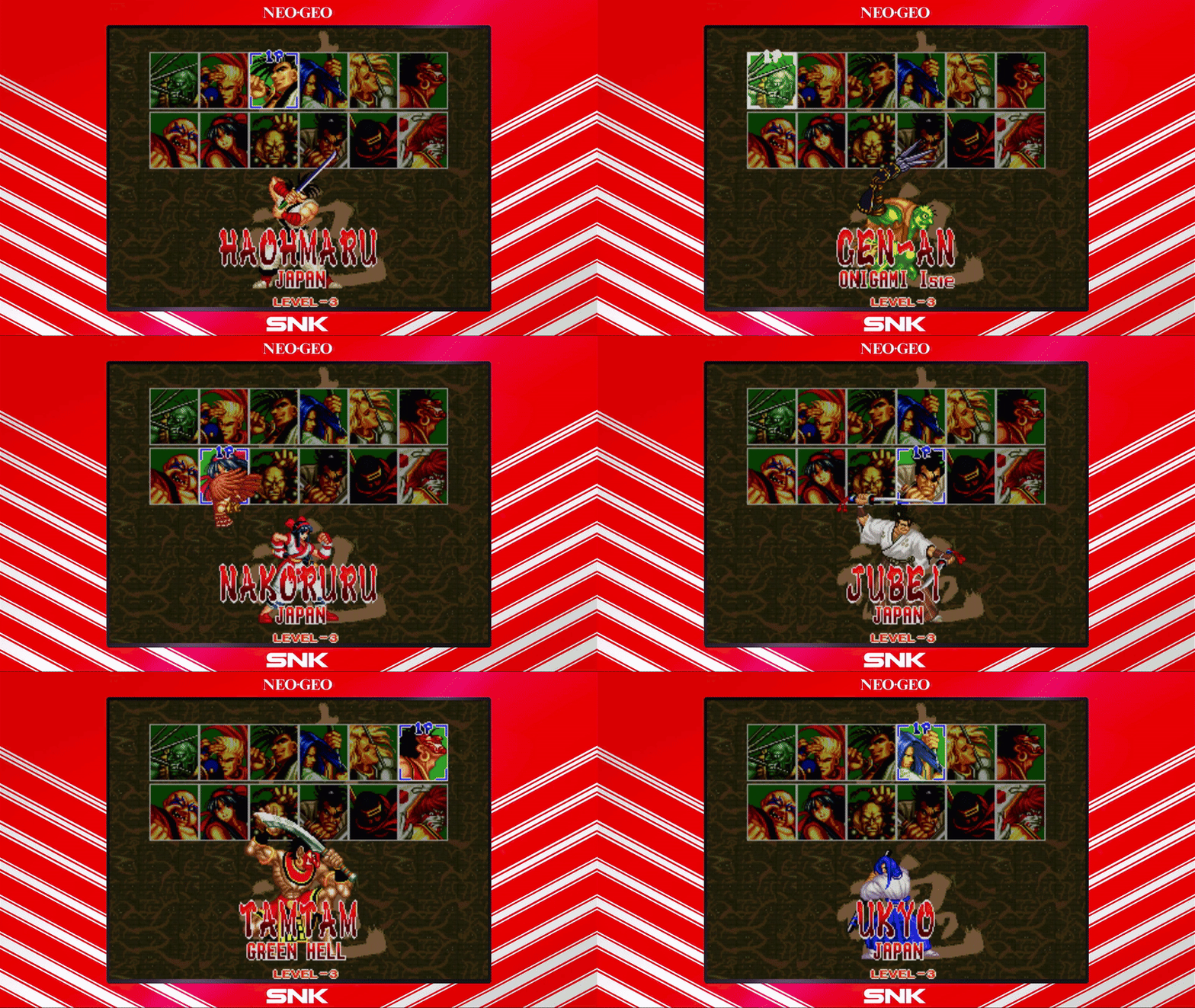
Since Street Fighter, fighting games have translated real martial arts disciplines into gameplay, and SamSho’s focus on armed combat added new gameplay styles. The diverse roster includes the shaolin swordsman Wan-fu, the fencer Charlotte, other legendary swordsman, the one-eyed double-sworded Jubei, and scissor gloved Gen-an, each an interesting combo of stats, specials, and movement speeds, such as the slow, methodical swordsman Ukyo with the large spinning aerial slash with a firebird projectile. The common tight input window required of early fighting game specials highlight the precision required to master the combat, and, when proficient, makes a weapons specialist more than capable of painting feudal Japan’s dirt paths red.
Samurai Shodown creates a cuttingly fast-paced combat while being a fundamentally deliberate game, a juxtaposition produced by pairing slow walking speed and large jump heights against the characters’ fast slices. The larger jumps are the result of more screen space thanks to the NEO-GEO’s sprite scaling tech first used in Art of Fighting that dynamically zooms in and out of the stage as opponents move towards or away from each other, while the walk speed is offset by dashes and runs when a direction is double tapped. With attack animation’s fast startup frames balanced out by longer recovery phases, the overall design de-emphasizes frantic attacking, and forces every player to become proficient with their character, and thus their weapon, of choice.
SamSho applies the weapon elements of Vega’s fighting style in Street Fighter II as a core concept and creates significantly different gameplay naturally. The benefit of armed characters over unarmed ones is that they drastically extend their attack profile regardless of the character’s size – a small character can have a larger reach than normal, and so their opponent has to deal with them differently. Since every weapon is handheld, the A and B buttons are dedicated to slicing while C and D kick. SamSho’s combos and multi-hit specials are also given greater gaps between attacks which allows blocking fighters more room to counter, which is both exhilarating to perform and makes offensive pressure more risky, especially considering that attacking while blocking will cancel the block without needing to let go of the back button.
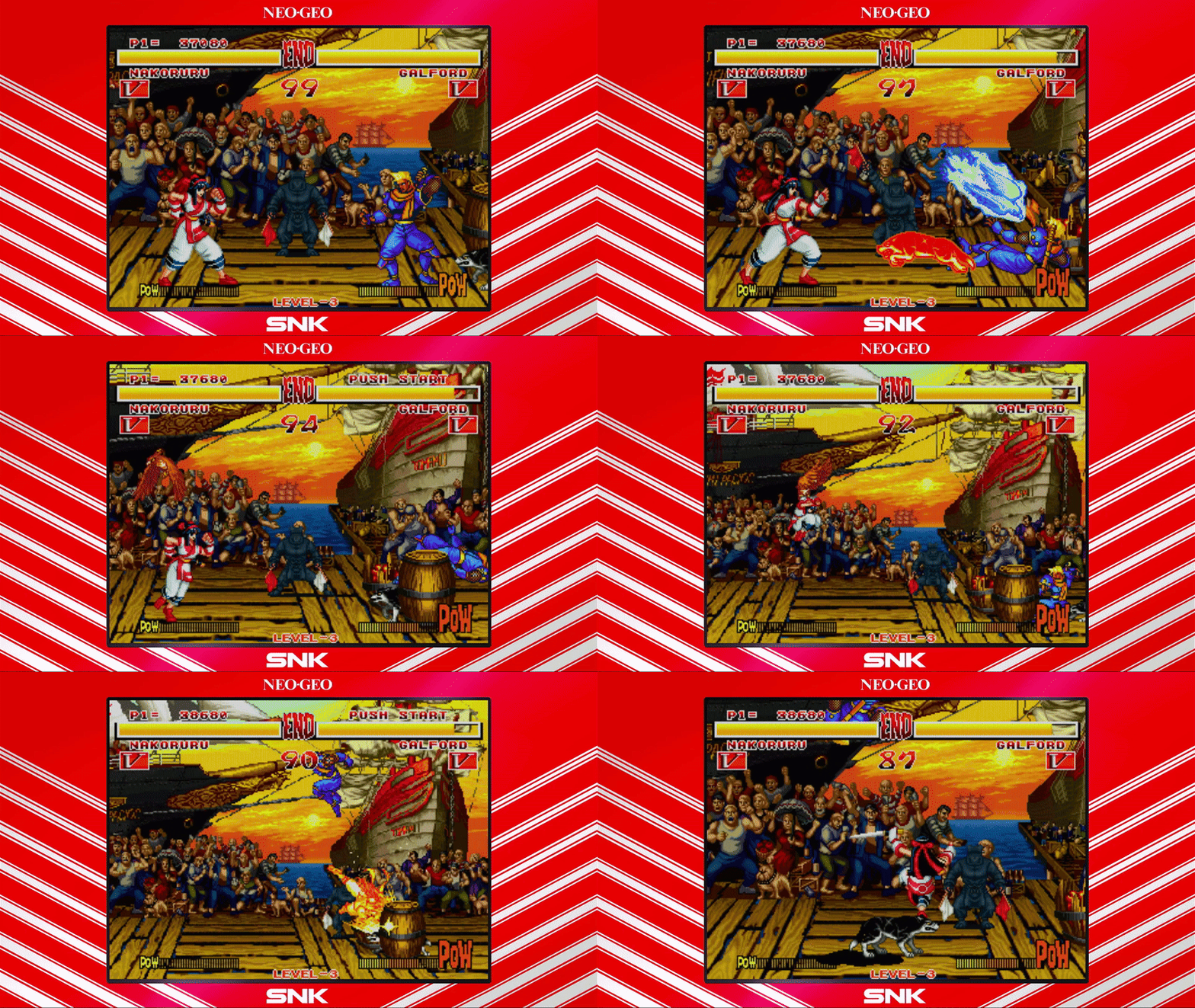
SNK varied up the gameplay by giving two characters additional weapons in the forms of animal companions, with Nakoruru’s pet eagle Mamahaha and Galford’s dog, Poppy, giving depth to both characters. Poppy adds an interesting dynamic to the American with the similar design and moveset to the ninja Hanzo Hattori, giving him low specials to fill out his ranged moves. In contrast, Mamahaha not only executes two different overhead diving attacks, which changes your block height depending on distance to target, but briefly gives Nakororu a player-controllable carry that comes with a dive slash or a downward spin.
As great as SamSho’s specials are, there aren’t enough tools to fill a kit, but do build a remarkable proof of concept, which reflects many aspects of the game and early entries in the genre. While the command inputs require precision, they also represent the core deficiencies in the gameplay. Too brief hit stun for some characters, too long animation recoveries, and few ways to link gameplay together, limit combo potential and reduce the smoothness of combat overall. However, while points can be frustrating, they do force players to be more deliberate in the decisions and approaches, rewarding patient minds to avoid frantic swinging.
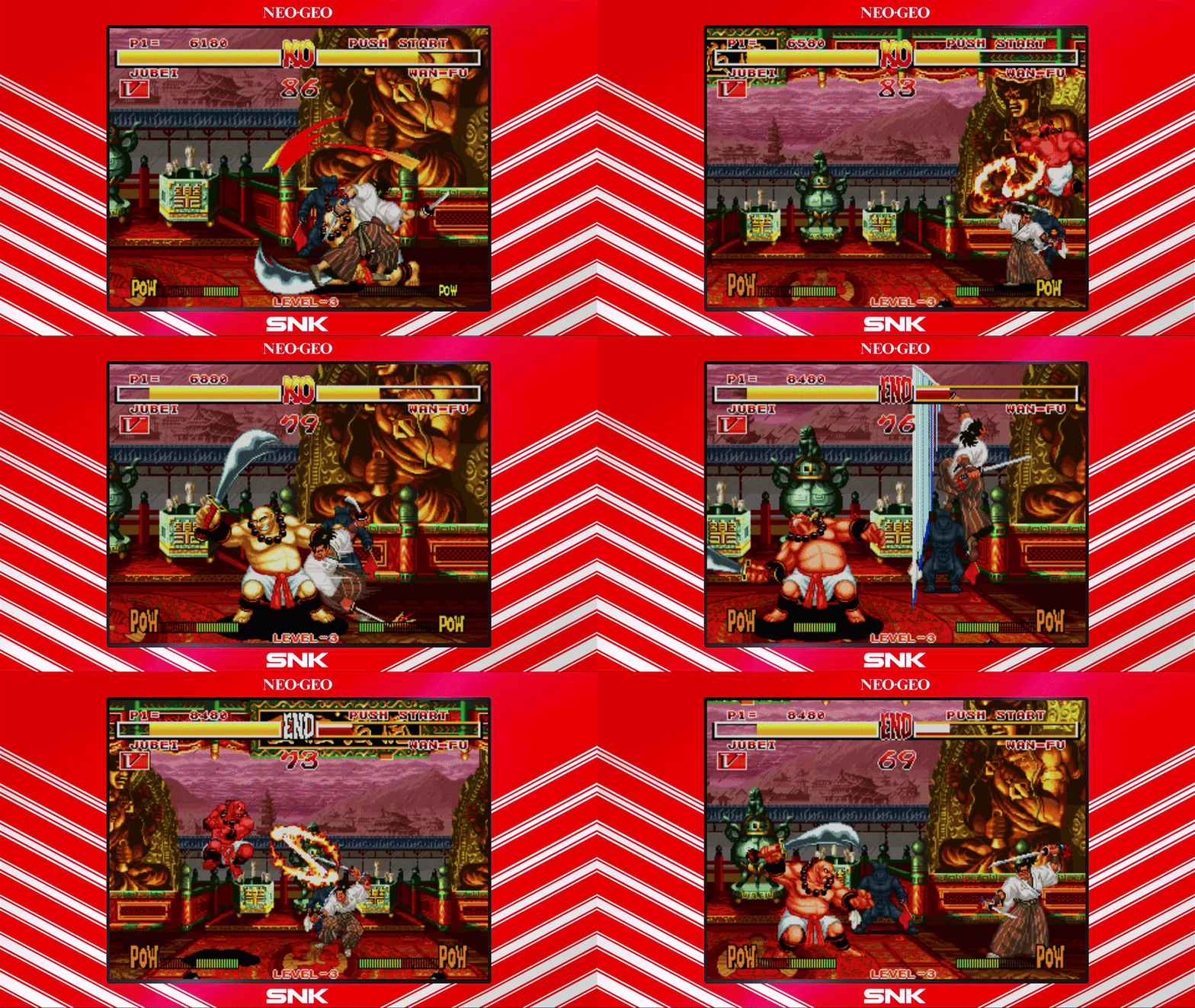
During these fast engagements, it’s easy for duelists’ weapons to violently clash together, a power struggle that requires both to rapidly mash buttons that knocks the weapon from the loser’s hands until reclaimed. Unarmed combat is a smart, obvious complement to the game’s core concept that changes the combat on the fly, transitioning between hack ‘n slash and brawling. Unarmed combatants get punches, take chip damage for normal attacks, lose or gain specials, and get a unique counter throw, a risky move executed by punching right as the opponent slashes. It’s an interesting choice to hide a third of every character’s moveset at any time but adds to the combat’s dynamism and strategic depth. As inspired as the mechanic is, SamSho doesn’t implement it enough to truly be viable strategically, with only Wan-fu’s special that throws his scimitar a purposeful way to go unarmed and no reliably strategic way to disarm an opponent.
The core gameplay here would be remarkable enough as it is, but Samurai Shodown’s Rage Gauge truly sets it apart from other games of the era. A flip on AoF’s groundbreaking spirit gauge, where using specials depleted the meter and made each subsequent special less damaging, Rage was added every time a character takes damage, making every attack more powerful until it maxes out and unleashes major damage for a set period of time depending on the character. Since the Rage bar is consistent across rounds, it’s an essential resource to manage. Rage creates dynamic situations where both characters’ meters are scaling higher and higher and ramp up the speed of the fights, forcing players to press and retreat at different rhythms to fuel their advantage or run out their opponents’. That maxed characters’ hits cause the game to pause for effect only heat up Samurai Shodown’s cooler base combat, a simple but powerful system with massive dramatic potential.
These dramatic touches were indicative of SNK’s approach to design at the time, and the game’s presentation is strong throughout thanks to great spritework and rich stage settings. The locations are filled with detail and life, from the breakable torches of Gen-an’s cave that obscure the fights to the bamboo stalks lining Jubei’s home that slice in half and falls as battle rages around them. All these stages feel alive, and given randomness thanks to the item vendor who throws health, bombs, or coins that creates increased need for situational awareness. SamSho provides environments full of life.
That Samurai Shodown is full of life highlights one of its most significant, visceral qualities: the unsettling reality of taking that life. The slow, deliberate gameplay has inherent weight to it, it’s a game that feels like effort is being exerted, whose changes of fortune imply a great sense of consequence. And the heaviest of all consequences is death, brought here by the tip of a sword. In the second round of a match, if the victor lands a heavy slash on an already critically injured opponent, they will render a mortal wound slashed down to the middle, blood spraying into the air, or sliced in half, a graphic image accompanied by a scream, that takes the weapon-based combat to its logical conclusion. And no matter which side of the body bag you end up, you realize that Samurai Shodown gives you a cuttingly precise reason to hone your skills, that violence isn’t a trivial thing to be played at, so that you can walk down the blood soaked streets rather than be the loser that painted them.

DEVELOPER: SNK
PLATFORM: NEO-GEO
1993
 scriptroutine.com