

Street Fighter And Why Ryu’s Shotokan Defined The Fighting Game
Martial arts is the science of battling external and internal threats, the meeting of anatomy and physics, philosophy and psychology, where any vulnerability in a fighter’s physical or mental defenses can be fatal. Since a fighter’s physical attributes can be measured and defined, they can be translated to videogames’ as animations and number values into a character with a central theme. Every fighting game flows from Street Fighter’s Ryu, the young shotokan warrior who battled through Capcom’s titular international tournament and became the starting point for every subsequent martial arts archetype in the genre. But as Ryu had dedicated himself to the way of the fist, Street Fighter required the player to develop the technical skill, opponent knowledge, strategic mindset, and ring positioning to beat the “Emperor of Muay Thai” Sagat and become the Street Fighter champion.
Fighting games evolved from the brawler genre, both of which kicked off with “Piston Takashi” Nishiyama’s 1984 arcade classic Kung-Fu Master. With an eight-way joystick that moved playable character Thomas left and right and crouched or jumped with down and up, the player punches and kicks up a five-story tower whose every level was packed with enemies and a 1-on-1 end boss fight. Thomas’ entire moveset, including the two attacks with different reaches and power values, was challenged by diverse enemies that can move and throw projectiles at different heights, from all around. The player was tested most with the bosses, whose life meter, like Thomas’, needed to be depleted to defeat. Kung-Fu Master’s scrolling screen that followed the player made the game more cinematic and able to emulate its martial art movie inspirations. Though the scrolling screens and level structure set the standard for every action genre afterwards, Piston Takashi would use Kung-Fu Master’s combat and boss fights as the foundation for Street Fighter.

Despite Ryu’s shotokan style bearing little resemblance to its real-world counterpart, he’s an ideal avatar for the romanticized journey of a martial artist, a lone wolf seeking mastery over himself. Since the style needed to be viable against each of the ten opponents’ styles and offer wide strategic options at different distances, shotokan needed to be balanced, a concept long associated with Buddhist ideas of harmony and resilience, elements that can lead to success in all aspects of life. As Ryu’s journey of self-discipline very much represents climbing a metaphorical mountain of knowledge, it’s fitting that rising through the Street Fighter tournament’s ranks represents a distillation of his quest, starting the player at the mountain’s base, sights set on the Muay Thai warrior at its peak. Nishiyama and Hiroshi Matsumoto used every design element to make that climb attainable.
A game’s design branches wildly when it pits the player against a single enemy rather than many, from a character’s size on screen, to his or her number of moves, to their controls. Since bouts were observed from a side view and every round started Ryu on the left facing the enemy on the right, Street Fighter recognized that in a 1v1 match, a fighter’s actions are relative as they step towards, back away from, or jump over an opponent. This can also dynamically change the joystick’s function, turning a character’s backstep into a block if held while the opponent attacks. Nishiyama already got a lot of use out of the joystick in Kung-Fu Master, but he took it even further in Street Fighter. And since SF’s movements were relative, its controls offer a large range of technical depth and strategic potential, which is crucial for a game dedicated to knocking out your opponent before they KO you.
Since the vast majority of a fighting game’s processing resources are dedicated to animating a character’s movement, they can attack from crouching, standing, and jumping positions. A move’s cost equals the skill and time it takes to activate, corresponding to real-world fighting considerations; the three sets of animation frames that constitute the startup phase where an appendage extends towards a target, the active phase where it makes contact and, if it’s an attack, causes damage, and the recovery phase where the appendage comes back and the attacker returns to a normal, neutral stance. With Street Fighter’s six-buttons, Ryu had light, medium, and heavy punches and kicks, trading longer animations for increased damage. While these normal attacks have deep tactical consequences depending on the situation, they are simple compared to Ryu’s famous special moves.

Videogames struggle capturing nuanced human movements because they are confined to joysticks/d-pads and buttons, but Street Fighter emulated technical movements in a way no other game had. Nishiyama and Matsumoto combined stick movements with button presses into revolutionary special moves: the Hadōken’s mid-height fireball, Shoryūken diagonal flying uppercut, and Tatsumaki Senpū Kyaku spinning hurricane kick. All these have unique properties, travel distances, and areas of effect and can be used as individual attacks or as setups to force an opponent into vulnerable positions, proving Ryu’s versatility as a warrior.
Ryu’s special moves are tactile characterization, a way to mentally connect him to the player. Picture the shape of the joystick movements for these specials and how they relate to their attack button: the Hadōken’s quarter circle rotation from down to towards the opponent and punch is like raising Ryu’s hands and channeling energy into his palms; the Tatsumaki’s quarter circle down to back and kick lifts his leg up and around for a powerful spin; and the forward to down Z motion and punch turns him into a coiled dragon and unleashes the Shoryūken’s bite into the air. With these techniques, the player literally transforms into a shotokan warrior.
The ten street fighters provide a decent selection of styles to fight against, including Geki, the shuriken throwing ninja that teleports around the screen, Gen with the triangle jumping pattern, and Adon’s aerial reverse flipkick. Like Ryu, these characters have unique, defined properties that players on both sides of the fist can account for. Though they have primitive behaviors, these enemies force you to find their vulnerability in lightning fast and high-damage fights that often last less than ten seconds.
Street Fighter’s fast strikes and blocks creates a super quick combat rhythm that forces players to change between offense and defense on the fly. This rhythm is made more dramatic when fighters have low and high attacks and blocks, and can reposition from crouch to stand to crouch between moves. These close-quarter brawls highlight the importance of quick strikes over powerful ones, as the fewer animation frames of the light attacks allow players to interrupt the longer wind up of heavy attacks and build a defense around a smart offense. It may seem subtle at first, but this branching move system is an incredibly important element for the later creation of custom combination attacks which transforms Street Fighter into an exercise in anticipating from where the next attack will come.
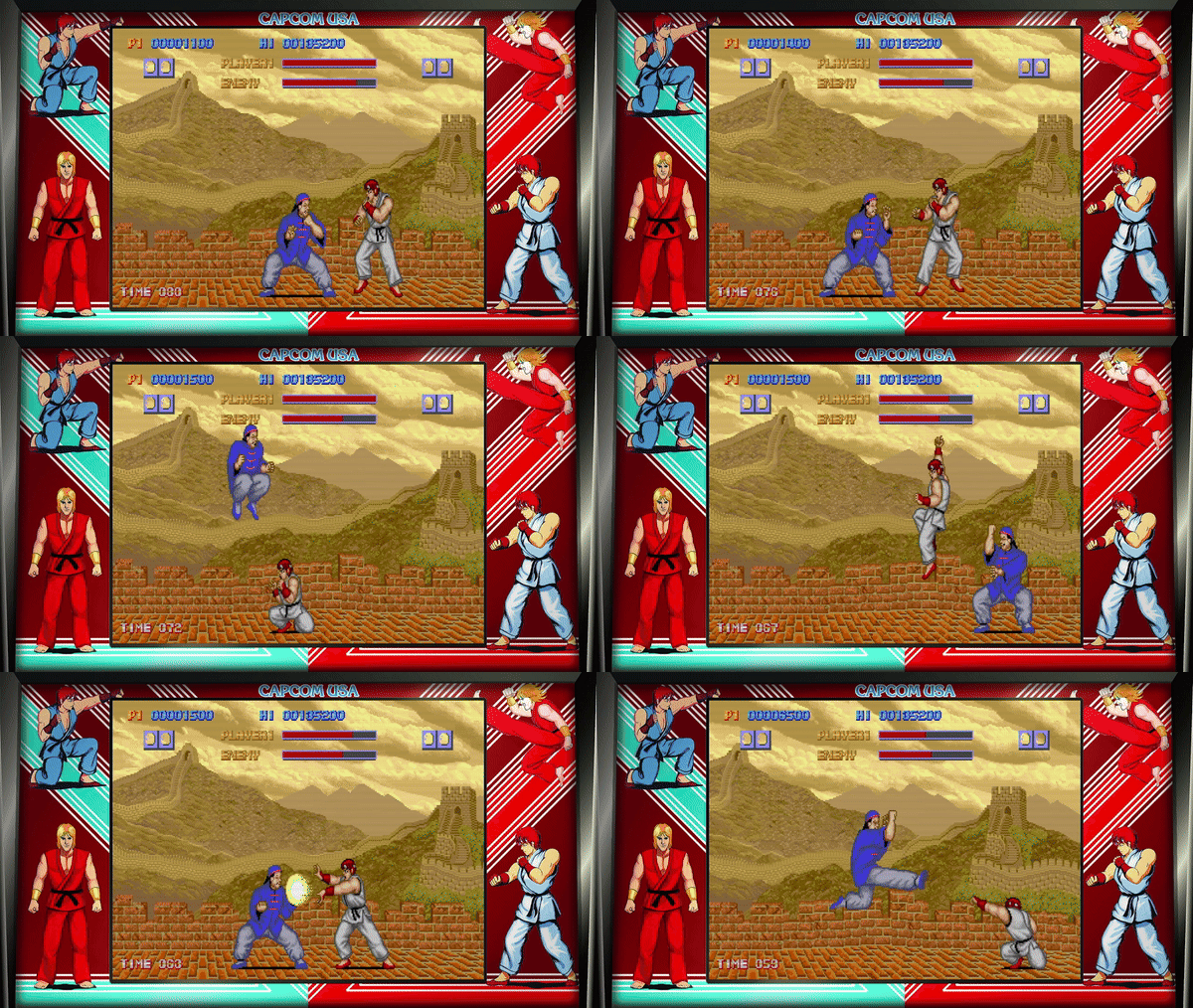
Now, all animations are a series of image frames played in a sequence to convey motion, but they can’t contain all the data to allow objects to interact with each other. Layered on top of every character, attack, and projectile, is a set of invisible boxes that causes reactions when they contact other boxes. Ryu’s attack hitbox defines where he can inflict damage as much as his hitbox defines the area where he can take damage. Blocking works the same, but the animation for it only triggers if a hitbox enters a hurtbox when the joystick is held back. The shape and location of all these boxes change depending on the character’s shape, stance, and position, which is constantly changing depending on which move is performed. All of this means that while sprites are visual representations of the combat, they are a means to convey the collision of data really happening behind the scenes.
From a larger perspective, Street Fighter is about controlling space and time and the special moves create damage zones within the screen. Where the Tatsumaki’s spin creates a vertical area of effect attack, the Hadōken’s travel forces the defender to reposition, and the Shoryūken is quick to activate but long to recover. If Ryu is the model for all fighting game archetypes, the Hadōken and Shoryūken combo is the foundation for the psychological war behind the physical one. Understanding behavior is important as when you step into the ring with Sagat.
As smart as Street Fighter’s core martial arts’ design was, the hardware still needed to mature before the gameplay was truly in fighting shape. Technical restraints kept movements feeling stiff and fights from being fluid, while slowdown and frame drops make inputs sluggish and special move execution unreliable. As primitive as its fighting blueprint was, Street Fighter’s design had a strong enough core to sufficiently train in basic maneuvering and strategy, which it’s revolutionary sequel would brilliantly expand on by refining and linking all its elements together three and a half years later.
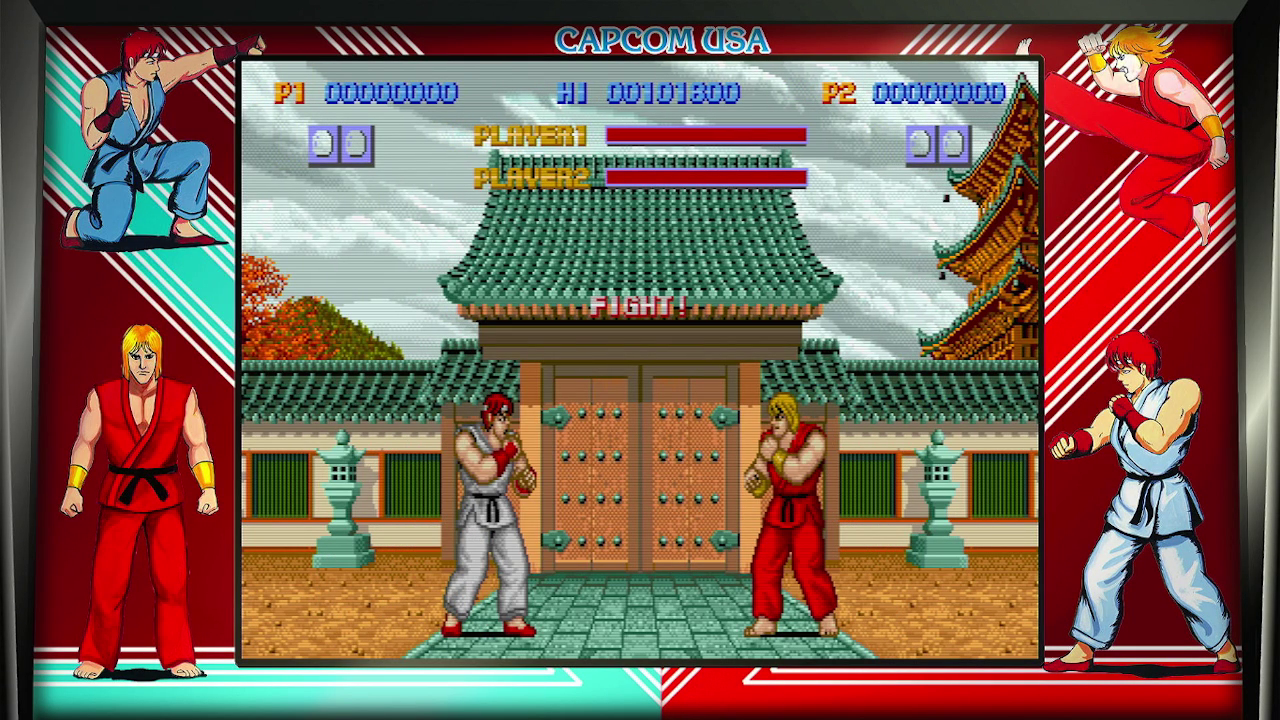
Of course, developing the basic toolset is crucial for defeating the Street Fighter tournament’s final fighter, whose Muay Thai style is similar enough to Ryu’s as to be an intermediate test in fighting yourself, down to both shooting fireballs to bait the other to jump face first into a flying uppercut. It’s knowing yourself to better defeat your opponent. The ultimate test, however, is when a second player steps into the ring as Ryu’s shotokan rival Ken Masters and starts throwing your specials back. While the lone wolf Ryu represents Street Fighter’s soul, both recognize that it’s easier to reach the martial arts summit with a friend.

Training New World Warriors in Street Fighter’s Dojo
Street Fighter’s shotokan style was an important first archetype for a 1v1 fighting game and introduced Ryu and Ken to the world, but the game had too many weaknesses to sculpt a complete, well-rounded martial artist. Like a body maturing, its strength multiplying and nervous system connecting every part, it wasn’t until Capcom’s arcade hardware improved that it could fully realize the fighting depth and dramatic spectacle to which the original game aspired. But three and a half years would prove fruitful training time to address SF’s faults, and the result revolutionized videogames forever and debuted an iconic cast of diverse fighting styles. With its improved animation system, new character archetypes, and a third core mechanic that brilliantly merged the gameplay, Street Fighter II: The World Warrior’s eight playable fighters helped solidify Street Fighter’s martial art, and took its digital dojo global.
To streamline game production and control piracy, Capcom developed their Play System in the late 1980s with a primary motherboard and swappable game boards. The CPS produced titles in popular action genres of the time, from shooters like Forgotten Worlds and U.N. Squadron, to action platformers Ghouls’n Ghosts and Strider, and beat ‘em ups Dynasty Wars and Final Fight, the latter particularly important for Street Fighter II. Designed by Akira “Nin-Nin” Nishitani and Akira “Akiman” Yasuda, Final Fight combined Takashi Nishiyama’s Kung-Fu Master’s brawling and Street Fighter’s striking and special move system, giving its large and detailed character sprites more developed combos and throws. The two Akiras’ game proved the CPS could overcome Street Fighter’s design limitations. The greater production value also upped every fight’s showmanship with thrilling sound effects, music, and announcer.
As Kung-Fu Master was the basis for Street Fighter, Final Fight was a warmup for Street Fighter II, especially its throw mechanic, here activated by pressing a direction and a normal attack. This added connective tissue to SF’s striking and blocking, turning the core game into a speed version of Rock, Paper, Scissors, where a block move beats a strike which beats throw which beats block, providing crucial balance to the combat. These three move types comprise the pillars of the fighting game genre, each built from a logical animation system that clearly communicated the startup, active, and recovery phases of a move to create a diverse roster of shotos, chargers, and grapplers with unique control schemes. Turning rock, paper, scissors into sub characters becomes a matter of combining their health, power, range, angles, size, shape, object boxes, animation frames, normal attacks, and specials in different ways.
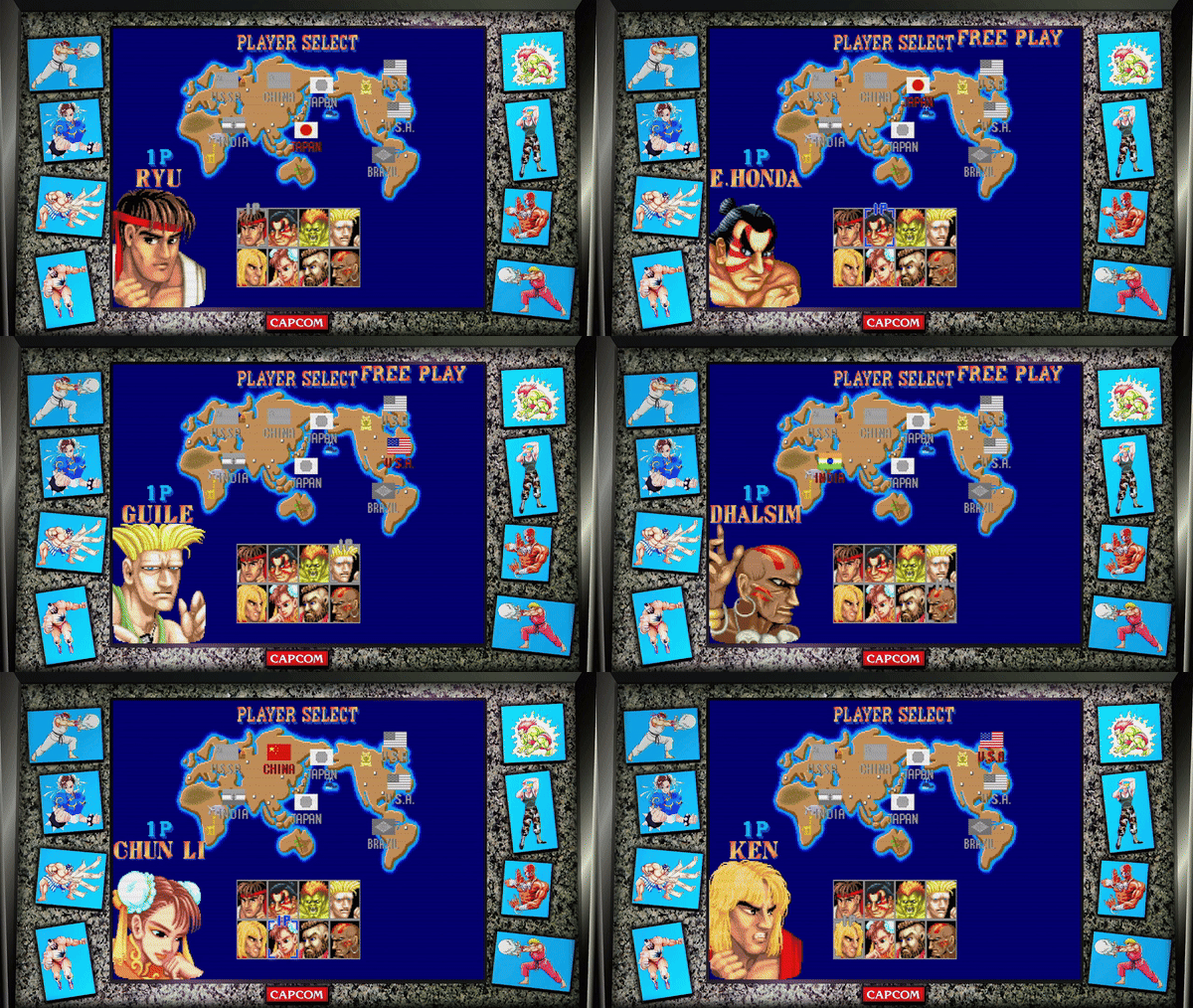
As Ryu is Street Fighter II’s default selectable character, he still represents the shotokan’s balanced style and his hadōken, shoryūken, and tatsumaki senpū kyaku are easy to execute and useful to pair. Animation improvements allowed air attack animations to trigger at different heights of a jump’s curve, which made air combat not only viable but dynamic. This highlights an important component of the air combat, the crossup, the product of the two opponents being relative to each other- when the vertical line running through a character’s center is crossed by the other character, the first character will flip 180 degrees to face their foe’s new position which flips the joystick’s relative control. By timing a jumping attack to that flip, an attacker can take advantage of their target’s block button changing, their defenses opening. The relative positioning is important for Street Fighter II’s new defensive archetype.

Charge characters are a defensive archetype and make up half the new roster, with Guile’s, Chun-li’s, E. Honda’s, and Blanka’s special moves powered by holding back or down a few moments and executed with forward or up and a normal attack. Back-toward specials attack across the screen while down-up usually go airborne. This natural fortification allows cautious play. Charging reveals that SFII assigns two functions to every input, one when pressed and one when released, or negative edge. Since all button presses happen independently of all others, a player can hold back to block, strike, and return to block without letting go of the joystick, quickly flipping defense into offense. This interrupt comes in handy with the three characters that have mashed button attacks, a useful way to punish opponents pressuring up close. Because attacking a blocking opponent pushes them away from the attacker, chargers have many places to insert their specials.
The game’s branching strikes that work at different heights means both attacker and defender must anticipate what the other’s next move will be, and to be a fully fair combat system, strikes must be paired against an equally sound blocking system. To counter attacks from three possible heights, the game provides players with two blocks where a standing block defends high and mid attacks while crouched blocks defend mid and low. With each block protecting against two thirds of possible strikes, defenders are more easily able to chain successive blocks together, and so attackers must be more choosy about how they alternate moves so their opponent stays on their toes. This biases towards the defender since they only have to select one correct choice from two options where the attacker has three, but it is brilliantly counter balanced by SFII’s primary new mechanic.
Street Fighter’s core combat was completed with the addition of throws, which beats blocks in the trinity of roshambo moves, and The World Warrior’s grappler is the large Russian wrestler Zangief, whose slow speed is balanced by big health, high damage, and more than half a dozen normal throws. That slower speed is weak against projectiles, but his Double Lariat spin, activated with all three punches, doesn’t have a center hurt box so is invincible to fireballs if timed correctly. While his Screw Piledriver’s full 360 stick rotation plus punch is confusing for newbies, hitting back, down, forward, and ending with up and punch triggers the attack’s animation before the jump registers.
Negative edge helps too, where a button press will execute its strike but only the release completes the action and executes the joystick input. Negative edge not only makes timing the stick rotation inputs easier, the button press / stick rotation / button release has a built-in multi-hit combo function, transitioning a strike into a special. Input swapping can happen across strike intensities and types, turning a Jab into a Fierce Shoryuken or a Fierce into a Roundhouse hurricane kick. This allows for any strike special combo to easily flow together.
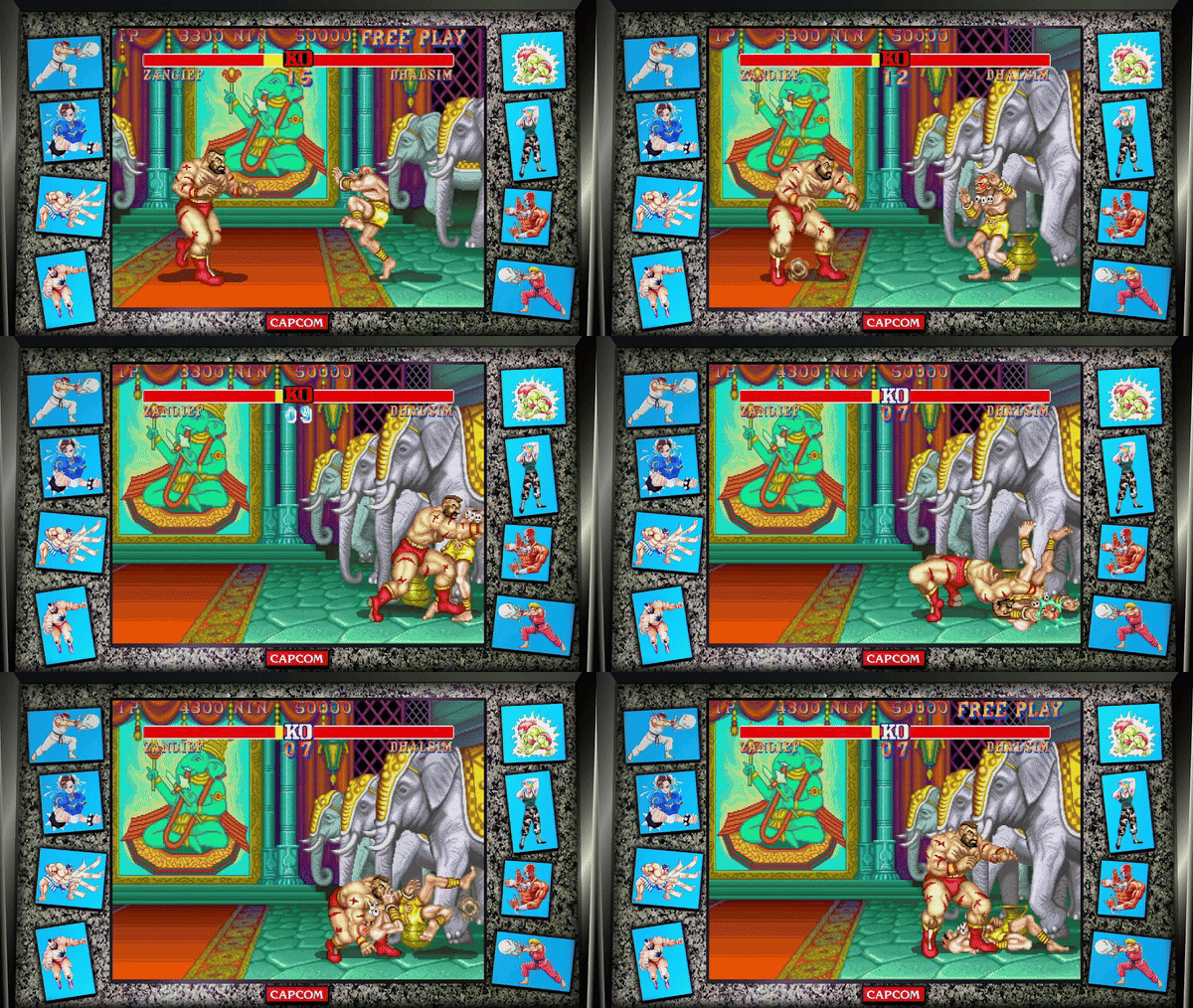
The zoner archetype controls spacing within the ring, well represented by yoga master Dhalsim’s long, stretchy normals, fire specials, floaty jumps, and differently angled aerial dives. These allow him to control the ring and pressures opponents to stay at the range he wants, which requires the different archetypes to rethink their placement, approach, and the timing and placement of their attacks. He even invalidates many mid-height attacks with his crouched kicks that are actually slide kicks, that can even safely dive under many ranged attacks. Because his fists and feet have the hitbox that cause damage while arms and legs have a hurtbox that receive damage, Dhalsim’s stretch attacks have their own advantages and disadvantages, especially from players skilled enough to anticipate the long-distance strikes. The way that zoners create unique scenarios makes them an interesting element that can disrupt any normal strategy.
Street Fighter II’s explosive global popularity resulted in many minds testing every angle of the gameplay, and Capcom took advantage of the CPS’s interchangeable board design to easily distribute revised versions. In addition to Champion Edition and Hyper Fighting making the bosses playable and increasing game speed respectively, they added character color pallettes, fixed bugs, added a new type of strike, the command normal, and, above all, tweaked animations, move attributes, and built out every moveset.

The tweaks further highlighted the game’s ability to create different characters even within the same archetype, and Ryu’s and Ken’s shotokan was differentiated towards defensiveness and aggression. Their tatsumaki is a great example of how a move’s different properties can be adjusted: where Ryu’s hurricane kicks go further and cause knockdown, Ken’s are able to land multiple hits and stay close for a followup. Ryu is designed to create distance with his opponent to hit ’em with fireballs as Ken is most effective up close, which goes well with his longer reaching shoryūken.
At the same time that Street Fighter II’s throw expanded the top level gameplay and roster, its striking system introduced a revolutionary combo system. While the original Street Fighter’s three punch / three kick control scheme was a fantastic starting point for a nuanced combat, the game’s limited animations and inconsistent input detection kept it from being reliable, predictable, and, ultimately, competitive.
Given Akira Yasuda’s art career, it’s no wonder that Street Fighter II’s robust animation system communicates its moves fluidly and consistently, which provides a tangible visible ruleset all combatants can rely on. The most obvious improvement is that the three phases of a move are better communicated due to the increased framerate, but reactions were added or improved to portray different status states, from being launched into the air to getting dizzied. Out of all of them, block and hit stun, the time it takes to recover after taking a hit, may be the most important, as they let strikes link together into combos.

A natural effect of attacks, blocks, throws, and stuns having time costs is that different moves will have a mathematical advantage in different situations, including an attack stunning an enemy long enough to execute a second, potentially stronger, attack before the defender regains control. Links are the basis for Street Fighter’s advanced technical play and allow other concepts such as juggles as a way to knock an opponent into the air and follow up before he or she lands. The combo system is balanced out by giving all hits push-back so a defender is knocked out of reach after taking a few blows and resets things to a neutral playfield. In all, these organic combinations create a thrilling and satisfying combat flow.
Fixing the special moves was important for the Akiras’ game as well, and not only did specials have different properties depending on the intensity of the normal used to execute, but the reliable input detection meant strategies could be confidently set up and performed. Since even blocking a special chipped away a bit of a fighter’s health, much of the combat took to the air, especially for those characters with no way to destroy a projectile.
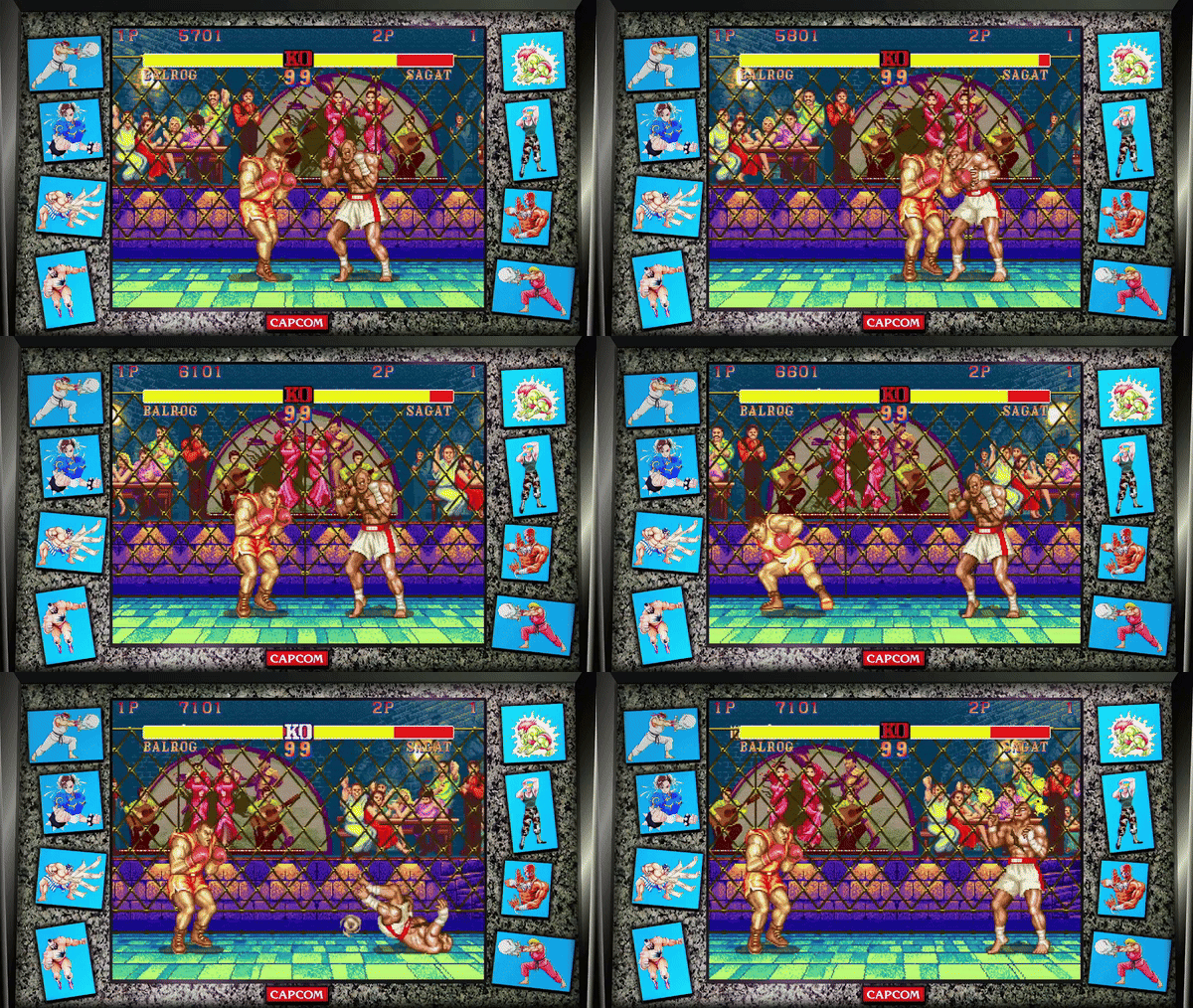
Consider how elegantly the game’s complex design comes together: multiple archetypes are built around fundamental fighting concepts and connected to a host of skill-based input techniques by a solid animation system into a single fast paced gameplay. Exploring the technical depth leads to discovering whole new mindsets- negative edge benefits from being calm of mind as you efficiently press your strike and release your special move, and confidence comes as you learn how to properly place and distance yourself in relation to your opponent no matter which character he or she controls. Street Fighter’s striking system that worked at different heights became a branching, inprovisational combat form.
Fighting games’ most important battle takes place between each player’s ears, and Street Fighter II’s mental game involves its own rock/paper/scissors choices in the medium distance between players where neither of their strikes can reach. As “Machaboo on fundamentals for those that want to become good at GG” has analyzed, this neutral game revolves around three strategies: passive play, where a player hunkers down and reacts to what the opponent does; establishing play that involves attacking in order to catch the foe off-guard; and preempting, which has a player read what the other is doing in order to anticipate an action and counter. No strategy is better than the others, although both players making the same choice can be reduced to a simple variable set- with two blockers, neither wins, with two establishers, the character with the fastest strikes wins, and with two preemptor’s, the faster striker or better reader gets the advantage. This is a powerful knowledge base from which many options flow.
Given how different archetypes are and the variation that can occur within each, matches are influenced as early as the character select screen. By the time the player has fought to the Shadaloo bosses, they will have developed a fundamental understanding of what Street Fighter II is, so these bosses throw new playstyles and trait combinations: the boxer Balrog, whose special is executed with all three punches but can be pressed and held one at a time for a combo before releasing all to finish with the special, Vega who bounds around the screen, and the Muay Thai former SF champion, Sagat, scarred from where he took a direct Dragon Punch to the chest in the last tournament. The bosses test the player’s understanding of the Street Fighter science, one whose every element can be measured, analyzed, and compared. That’s why Bison, whose Psycho Power charge moves and slide tackle that come at different angles and cross you up from behind, can be so imposing- he overlaps with the other archetypes.
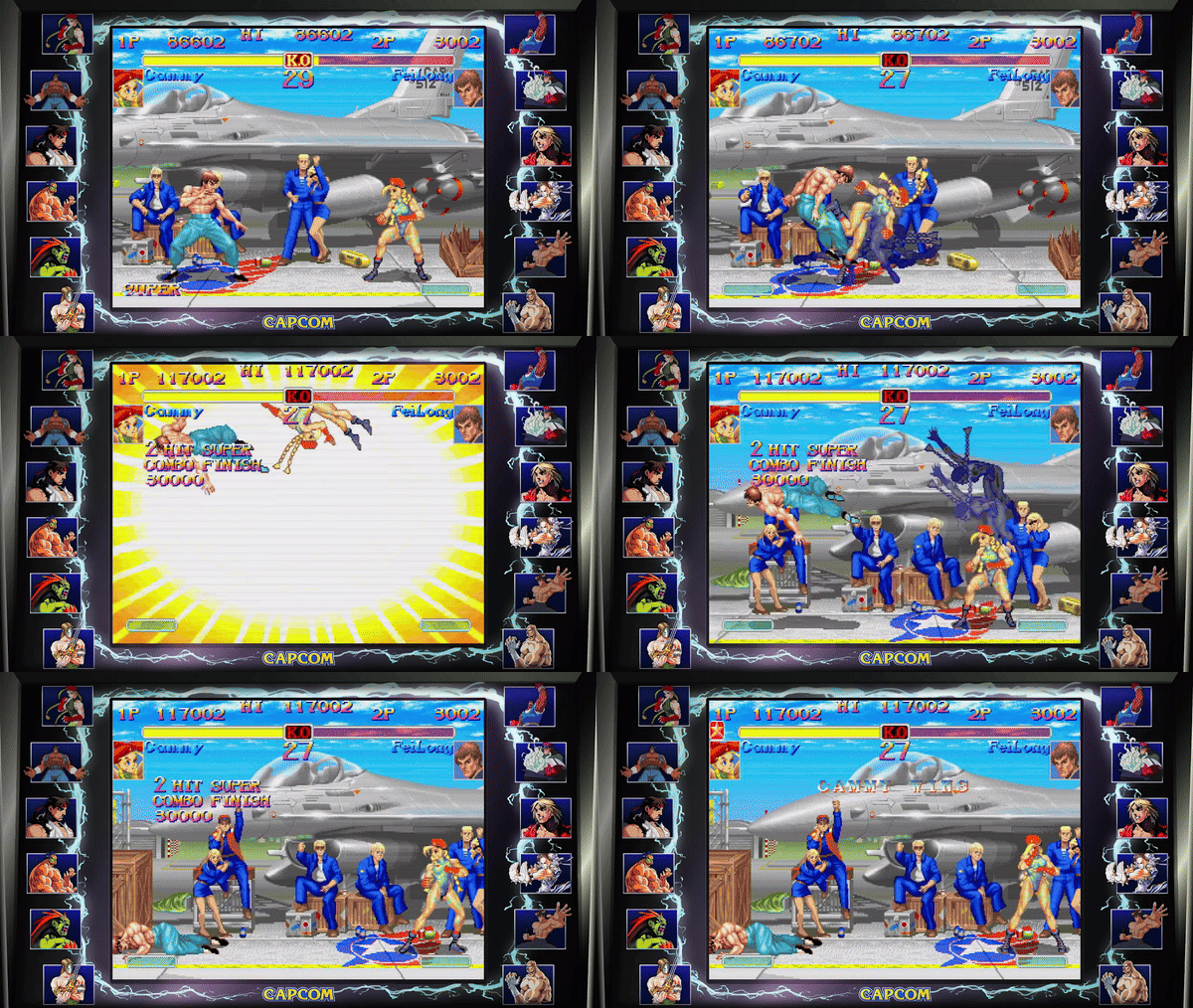
With the release of the CPS-2 in 1993, new SFII designer Noritaka Funamizu experimented with Capcom’s fighting game formula on new hardware, and created Super Street Fighter II: The New Challengers‘ rush down characters Cammy and Fei Long, grappler T. Hawk, and charger DeeJay. The new board also overlaid mid-match text for events such as first strikes and combo counters, all adding in-game commentary for bouts. But SFII’s last significant gameplay innovation was Super Street Fighter II Turbo’s Super meter, which filled by attacking and unleashed a powerful version of a character’s special that blew the screen up in color if it KO’d the target. The Super meter would influence the genre forever, further supplanting SFII as one of the most important videogames ever made.
As the Street Fighter dojo expanded to new martial art forms and produced great characters, a secret one awaited to challenge Super Turbo’s toughest players. If one practices enough to beat Sagat within 1500 seconds or earn more than 1.2 million points, Akuma, the Shotokan demon, will challenge you to a fight and fire powerful new hadōken including from the air. To keep you on the martial artist path, SF challenges you with increasingly difficult goals and Akuma is a fantastic test for the years of beatings you’ve handed out and eaten. If Street Fighter’s Ryu taught balance through a well-rounded form, Akuma’s shoto style represents strength for power’s sake, but Street Fighter II’s international cast and gameplay innovations proved that when evil steps into the ring, there are many ways to knock it out.

The Warriors’ Dream: Analyzing The Alpha Systems That Transformed Street Fighter
A lot of thought goes into a videogame sequel to progress the gameplay and characters of the original, but its changes need to justify their existence while capturing the original’s intent. So, how do you meaningfully expand on a game like Street Fighter II that defined fighting gameplay, especially when its constant revisions resulted in five major arcade releases? One trick is to build new systems over the core gameplay, useful for when a genre like 2D fighting needs to modify elements without having to redraw character animations. Street Fighter Alpha shows how modular, swappable systems can dramatically change the foundation they are built onto, its new mechanics adding depth to Capcom’s fighting game formula while dramatically improving the presentation to create exhilarating, anime-caliber battles between fast, fluid, and powerful characters.
Unlike role-playing or strategy games whose actions rely on background systems crunching numbers and rolling dice, all the elements in an action game are designed to create concrete, observable rule systems that are as 1 to 1 with real world cause and effect as possible. Street Fighter II’s excellent gameplay was the result of input and animation systems combining into a dozen+ shoto, charger, grappler, zoner, and rush characters, processing all of which was the game’s main priority. Street Fighter’s combo of archetype, stats, and movesets created fighting profiles for players to express themselves as they saw fit, and the combat made itself completely available at all times.

More fighting games entered the ring after Street Fighter II, such as Piston Takashi Nishiyama’s 1991 Fatal Fury: King of Fighters for SNK, Ed Boon’s and John Tobias’ 1992 Mortal Kombat for Midway, and Yu Suzuki’s 1993 Virtua Fighter for Sega, but none of them could match Capcom’s sheer output. While their first original CPS-2 fighting game, Akira Yasuda’s influential monster battler Darkstalkers: The Night Warriors, would be a laboratory for frantic, cartoony gameplay, working on its follow up, X-Men: Children of the Atom, gave Super Street Fighter II designer Noritaka Funamizu ideas he could take back to Capcom’s primary fighting franchise. With the boosted production value and a three-level metered system that reconfigured every main design pillar into Street Fighter Alpha, fights became more dramatic than ever before.
Thanks to the CPS-2, virtual fights could have more special effects and sounds. Capcom always had excellent sprite work, but Ryu and the gang animates beautifully and in rich color. His gi sways and his hadouken bursts with power. Every hit was more impactful. The UI and round graphics are crisp, bright, and clean and flashy text pops on screen atop a more complex, energetic soundtrack. These details added even more drama to fights that are naturally blazing fast and filled with severe reversals of fortune. Even super moves, which use up your meter energy for one giant attack, now ends rounds with more explosive, colorful effects that fill the screen. The net results make every match in Alpha feel like a spectacular martial arts anime.
Co-planned by Funamizu, Haruo Murata, and Hideaki Itsuno, Street Fighter Alpha: Warriors’ Dreams further connects the casts of OG SF, SFII , and Final Fight, a remixed set of characters from across archetypes. For its shoto update, Ryu and Ken got fire element moves, Ryu’s red hadouken and Ken’s flaming heavy shoryuken, and Ryu’s tatsu was changed so only the last connecting kick causes knockback. Alpha also automated some of its moveset with its new up-close attacks, strikes that automatically change to a unique move when executed close enough to an opponent.
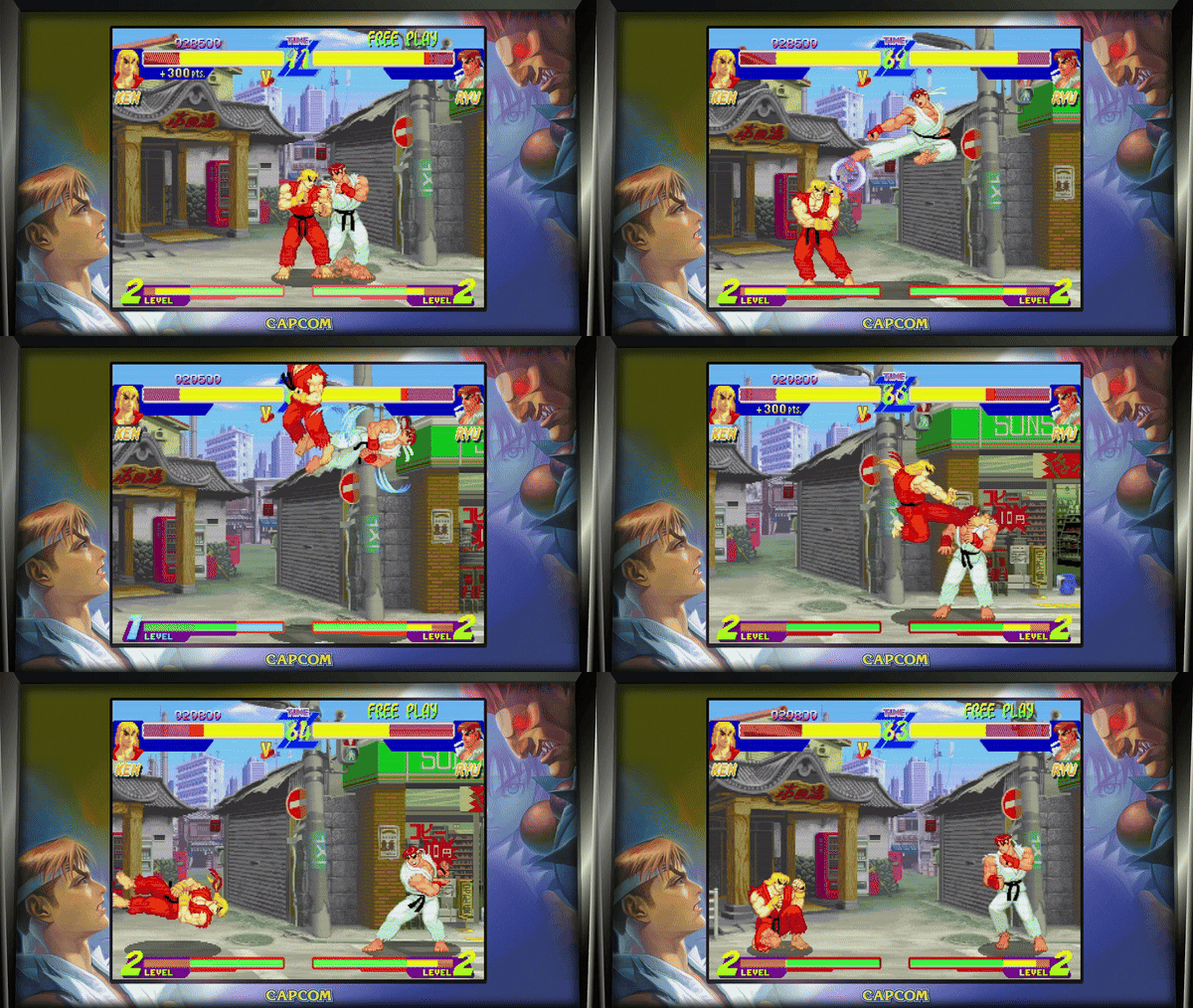
Alpha adopted many of Darkstalkers’ innovative ideas, including the chain combo system, where hitting increasingly strong punches and/or kicks cancels the recovery time of the previous strike and naturally builds branching combos. Chains simulate fighting with multiple limbs, where a left jab easily transitions to a left kick or medium punch, great for landing multiple hits to your opponent. Chains work with SF’s classic link combo system to finish with a special move, and since the three-level meter allows multiple supers per character, you have more situations in which to accrue massive damage. To make up for the increased combo systems, attack values were recalibrated lower to make up for so many coming in quick succession.
Darkstalker’s airblocking significantly changed Alpha, biasing it more towards quick reactions, which paired well against the new air combo system. Of course, air blocking lowered the effectiveness of classic Street Fighter strategies, including Ryu’s famous hadoken/shoryuken combo, which forced players to rethink what they had known for years. The meter-consuming Alpha Counters allow a guarding player to beat back an attack, up to countering a super move, and send the attacker flying backwards. Since the attack requires a quarter circle back to down motion plus a character-specific strike, Alpha Counters sit at the crossroads between technique and meter management. Meter was even applied to recovery states, letting the player pay to land safely from of a throw or roll out of a knockdown, avoiding damage or quickly returning them to the fight.
So far, Alpha’s systems have been to benefit the player’s fidelity of control, giving you a universal toolset you could use on command, but it also bundled offensive and defensive actions into a computer controlled assist system called Auto mode. Chosen at Character select, Auto mode defaults the player to a block state when attacked and all super moves are activated simply by pressing all punches or all kicks. While it makes Street Fighter more accessible to newcomers, it is no less than the game playing itself, which takes resources away from the its focus on performance.

Alpha 2 got more characters from SF, SFII, and FF, and tweaked existing Alpha move lists. At system level, it replaced chain combos with the Custom Combo system that counts the meter down and gives the player four shadow images that repeat all the player’s attacks, quadrupling the hit rate and giving time to reposition and juggle. The new characters and increased archetypes prove the versatility of system-driven gameplay to create modular fighting game profiles where large sections can be swapped out at will, allowing a character to play incredibly differently even between iterations.
As Capcom was prototyping their fighting game formula in 3D on Sony’s ZN-1 / Playstation system boards, both by hiring the Akira’s new Arika studio for Street Fighter EX and practicing in house with Hideaki Itsuno’s Star Gladiator and Rival Schools, Noritaka Funamizu would become a prolific producer across all major CPS-2 fighting franchises. This perfectly positioned him to fulfill Darkstalkers’ legacy: he combined the assets from X-Men: Children of the Atom and Street Fighter Alpha to create a new subgenre of hyper fighting games with X-Men vs. Street Fighter. Upping the intensity and speed, the 2v2 tag battles were fast and frienzied, as combatants chain combo’d, air blocked, super jumped, called in assist specials, and canceled a Hyper Combo into doubles. The over-the-top gameplay would iterate until almost every Capcom action game was present for the 3v3 Marvel Vs Capcom 2: New Age of Heroes on Sega’s Naomi board. But before Capcom proved that it could run six different characters worth of fighting profiles at once, it tested how many it could load into the same character.
No other Alpha game highlights the power of systems better than Alpha 3, which replaced Auto mode with three selectable “Isms” and allow each player to enter a match with a system profile inspired by earlier SF entries, each with their own stats, special move tweaks, and metered abilities. To emulate the first Alpha, A-Isms provide its three-level Super meter, multiple Super moves, air blocking, and Alpha Counters. V-isms gives you Alpha 2’s Custom Combo system and adjusts attack damage down to accommodate the increased DPS. Inspired by Super Turbo, X-Ism is a single meter mode that removes air-blocking and Alpha counters and increases attack damage and lowers defense, so hits are as valuable as they were in Street Fighter 2. By emulating the previous three Street Fighter games’ systems on the CPS-2, a considerable amount of Alpha 3’s gameplay variety is determined before the match, slotting three gameplay modules for each of the 35 characters, a total of 105 unique profiles, that are run two at a time, one per player. Street Fighter Alpha’s plug and play profiles show how much system level changes can have dramatic effects on a game’s characters and versatility.


Mixin’ Knock Out Beats in Street Fighter III’s Hip-Hop Battles
With its rhythmic striking system that hits at different heights, Street Fighter‘s combat system was expanded to become a branching, freestyle duet in SFII, sung by the sound effects and character voice samples. After Street Fighter Alpha’s swappable systems pushed the series’ fighting game formula to it’s limits, Capcom streamlined its base mechanics and meter functions for Street Fighter III, using the CPS-3’s CD format for gritty, stylized art on detailed stages against a funky soundtrack. Street Fighter III: New Generation’s refined mechanics maxed its beats per minute and rewarded improvisation, turning it into a fluid hip-hop fighting game.
Street Fighter’s controller is comprised of two instruments: a striking six button keyboard and a scratchable joystick turntable that winds the character forwards and back. Street Fighter’s every strike is a note with a pitch between quick and sharp and slow and blunt, sustained by negative edge, linked in natural progressions, and accentuated by chorded special moves, creating melodies set against the stage’s background music. The ticket to Street Fighter’s striking symphony is earned with timing, synchronicity, and harmony, and, starting with Super Turbo, crescendos with a high-damage Super combo that can knock out an opponent to an explosion of color and sound.

As action game characters are collections of movements with sound effects, they are essentially person-shaped instruments with different kinds of notes. In SFII, that means meaty notes when striking, muted when blocking, and high pitched when taking damage. SFIII’s Target combos replaced Alpha’s freeform chain combos that allowed a succession of kicks and punches to be canceled by higher intensity strikes, instead giving every character more than a dozen predefined strike patterns of complementary moves like musical scales to be memorized and build upon.
A player’s style, be it aggressive, frantic, defensive, calm, deliberate, or whatever, is imbued with a natural tempo. If Capcom’s fighting game formula creates a melodic rhythm in the back and forth, then its harmony depends on the player’s ability to properly tune their playstyle to their instrument. Alpha 3’s swappable Ism system that could slot a character with Super Turbo’s, Alpha’s, or Alpha 2’s rulesets was an attempt to flex the natures as much as possible, essentially able to turn a guitar into a harp or a violin because they all have strings. Street Fighter III corrected this complexity, adding more tools to the core mechanics so characters could hit more notes every moment as the stage music sets the rhythm. Learning to play with intention is the difference between making noise and building a tune.
Negative edge has long been fundamental to Street Fighter‘s design, where a button consists of a down press and a release, so a strike press runs the animation, the joystick inputs the instructions for a special move, and the button release executes that special. The series’ musicality is accentuated by the advanced input swapping- pressing and holding a strike button while a completely different animation is playing makes the second button the new active input, and so it can easily transition any strike into any special of a different intensity or outright change strike types. If every button is a musical note, these chords have a tight window to be struck, requiring a tatap rhythm on your combat keyboard that beautifully sustains Street Fighter’s beatboxing symphony.
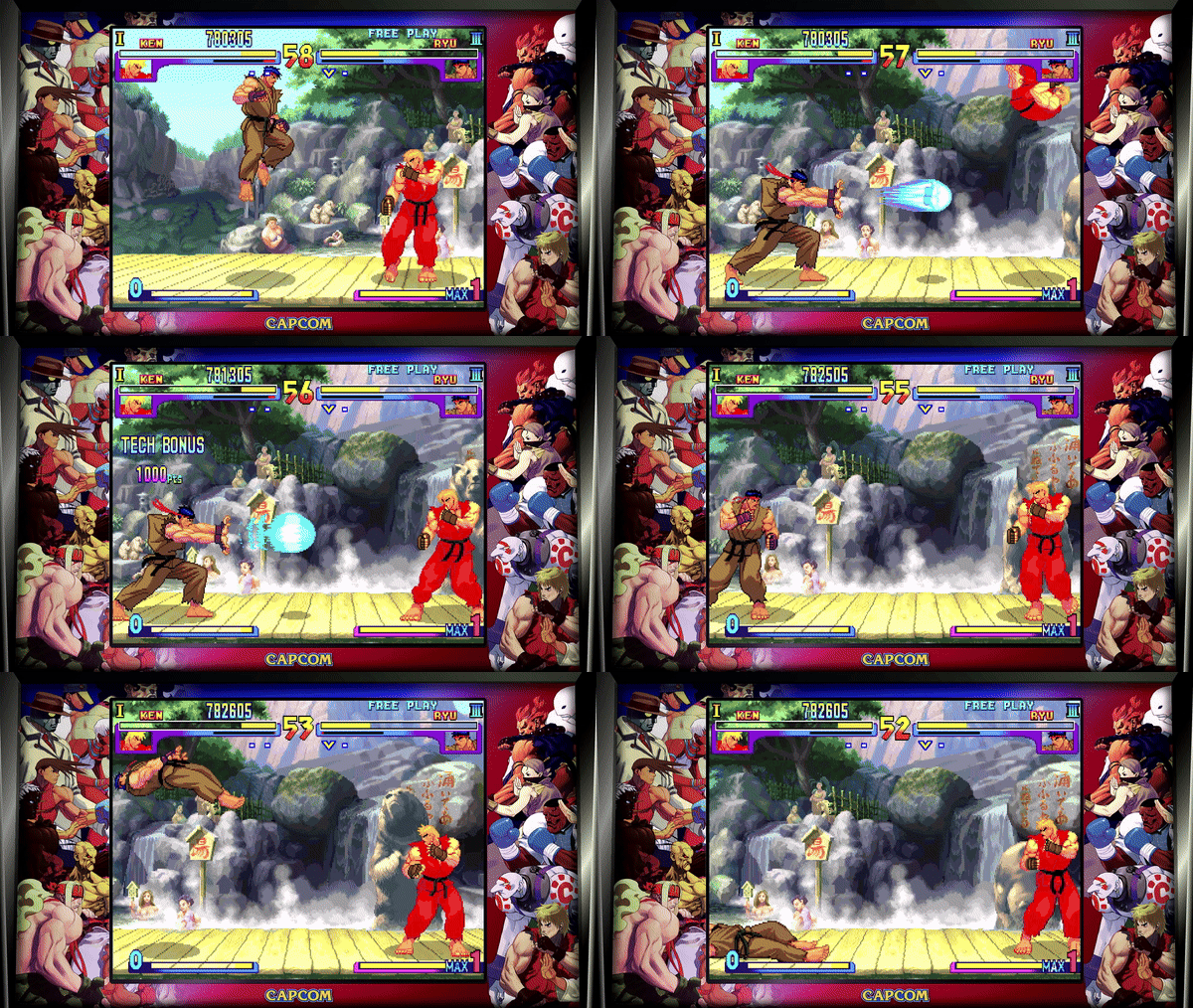
New Generation’s big innovation was its awesome parry mechanic, a complement to blocking that blurs the line between offense and defense. By pressing towards a mid/high attack and down at a low attack the moment before it connects, the player deflects the hit to a satisfying clashing sound, negating damage and blockstun to create an opening to hit back before the attacker recovers. Since every blow could be parried, it was beneficial for players to learn all the characters so they can anticipate what moves would be used against them. Because players can parry in mid jump, air blocking could be removed all together which brought the gameplay closer in line with Street Fighter II without being limiting. The parry keeps gameplay on the ground for close quarters fighting, keeping the pressure high without reaching hyper fighter speeds.
Mapping the parry mechanic to an always available button exemplifies SFIII’s desire to maximize technique, but the goal affects everything from throws to character mobility. By executing throws with Low Punch and Low Kick rather than pressing a direction and a strike, they become more reliable to execute than combining a directional input and a strike, which was more likely to cause errors in the heat of battle when a player is pressuring a character up close with strikes. Similarly, the new dashes forwards and back made matches faster by letting players quickly change the distance between combatants. Dashing drastically changes your ability to approach and is a phenomenal way to add or relieve pressure. When added to combo strings, dashing can provide follow up after knockback or chase down launched enemies to perform juggles, which lengthened combo strings and raised Street Fighter’s already high skill-ceiling.
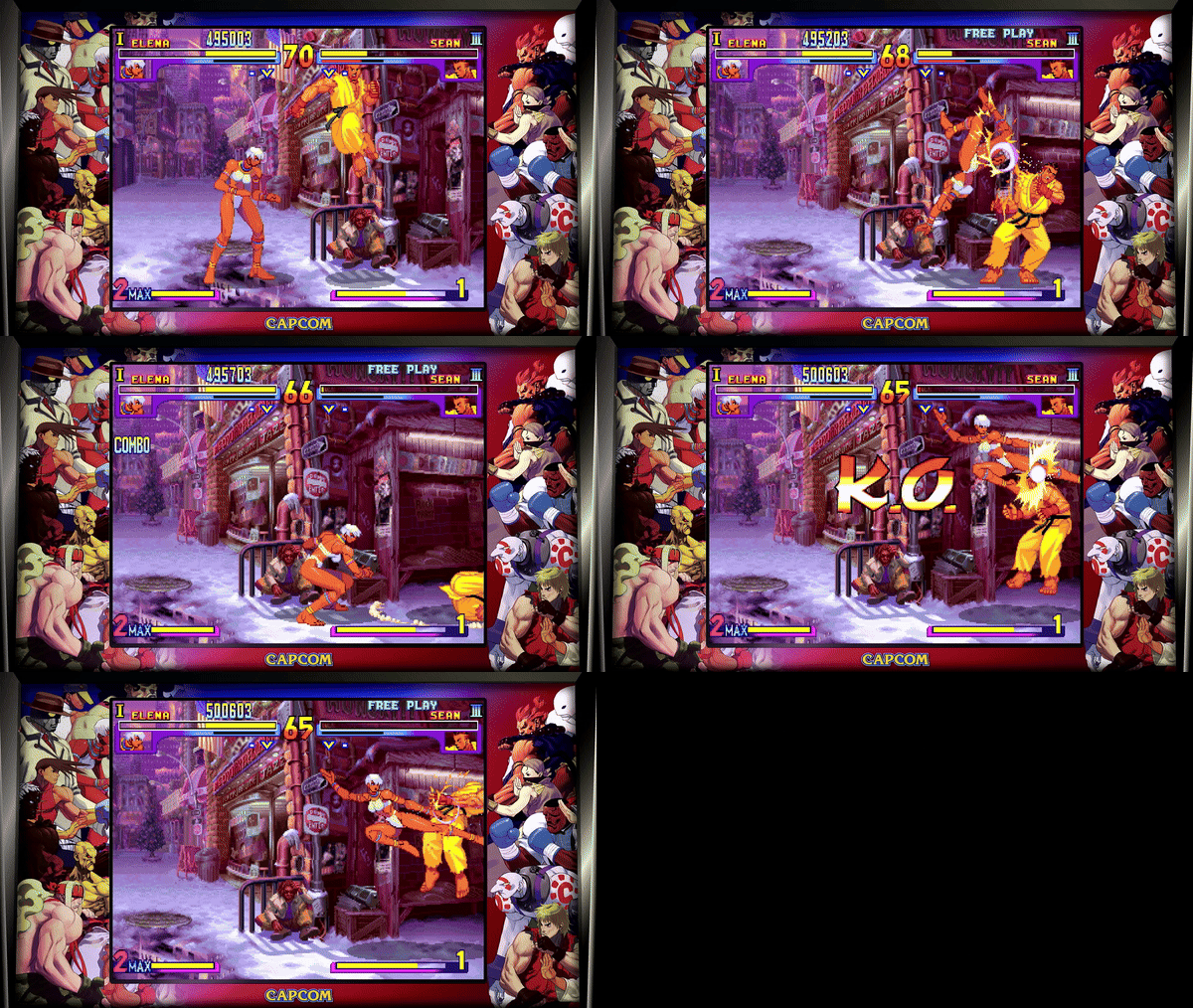
Street Fighter III’s additions to the series’ every aspect adds up to significantly different matches than before. Since players can charge their opponents quickly and deflect attacks, the gameplay can create momentum that dynamically flows between players. This energy pairs well with character details such as moves that blow clothes back, which adds to the sense of weight and consequence. The characters themselves have expressive personalities thanks to their additional animations. Because of this matured design, Street Fighter III’s fights are strong, physical duels between well-defined characters and set against an energetic soundtrack, the fidelity of which simply could not be equaled by 3D polygonal games of the time.
As its predecessors had, iterations changed SFIII into its own subseries that added new characters and modified movesets, but together added new offensive and defensive options. With 2nd Impact, SFIII implemented meter costing EX Specials, enhanced fourth versions of every special that often have invincibility frames or low startup frames and added properties. It also brought meter consuming tech throws provide a tossed player a smooth landing, and taunts gave the ability to tease the person that tried throwing you. 3rd Strike added guard parries, available during block stun, giving more time to interrupt an opponent’s combo patterns. Parrying allows any fighter to take over the duet, letting their fists beat out their solo.

SFIII reworks Alpha’s system heavy design heavy, adapting ideas into mechanics like the parry system or into background calculations, as with the character health and damage scaling. While counter attacks in Alpha did more damage than regular attacks, SFIII’s combo heavy gameplay would end matches too quickly and let veteran players dominate new challengers if left unchecked, so each successive attack in a combo are given damage reductions to balance it all out. The combat is gorgeously sophisticated and simple.
With these new mechanics and systems, precision becomes that much more important. Executing Target Combos, nailing your parries, and dashing to juggle an enemy is all about control and timing, and when two fighters are hitting their BPM, the game dramatically ramps up its speed. This is especially true with the advanced timing of 3rd Strike’s Red Parry mechanic, which is activated during blockstun rather than right when getting attacked. Red Parries counter combos and end the branching guessing game of blocking successive attacks that comes with SF’s classic branching exchanges.
In skilled hands, Street Fighter III’s rhythmic striking system can mix a music video of offense and defense on every stage, and fighting the fire and ice shooting Gill proves the beautiful music that battling DJs can spin. I’ve whittled down his life a little more than he mine, and go in for the last combo. Dashing him down, I jump when he raises his hands to fire a ball, and fly towards the diagonal shot he faked me on. I recover quickly and charge again only to head straight towards a medium punch, but I bat it away and take the advantage to jab him in the face, smack him with a cross, and fierce into my EX special to lay him out. But then his Super Art executes and he is resurrected with a full health bar and he stands before me unfazed by my exhaustion. That’s a lesson on establishing a quicker tempo, balancing beats and rests, and taking control of the energy flowing between players.
By the late 1990’s, players were transitioning to home machines with 3D graphics and long, story-driven campaigns, marking an end to arcades and Street Fighter’s dominance. While Capcom’s premier fighting game evolved a satisfying and complex combat system, it required high technical ability from an increasingly small market wooed by the flashy style of Hyper Fighters like X:Men vs Street Fighter and the visual allure of polygonal fighters such as Soul Calibur. As Street Fighter’s sprite era closed, it solidified mechanics and streamlined systems into its fighting game formula, fast and fluid, and would be ready for the day the world stepped back into the ring. Because while the song may change, the Martial Artist remains.

 scriptroutine.com