

The first chapter in Transformers: Devastation showcases the game’s strong design, pitting the Autobots led by Optimus Prime against the Constructicons. Transforming between their bot and alt forms, the Decepticon construction crew is deadly individually and tricky when grouped, and both sides unleash melee weapons and guns before transforming again and hitting turbo. These cool-looking cel-shaded animations allow Devastation to provide the tools to create awesome, exhilarating battles. And as the last Constructicon is defeated, they all combine into the mighty Devastator, helping Megatron cyberform Earth into their home planet, Cybertron. With Transformers: Devastation, Platinum Games provides virtual action figures so players can direct a never-aired episode of the legendary brand’s iconic G1 cartoon with heavy metal soundtrack.
Transformers’ history is deep and rich, with Hasbro licensing different toys for the U.S. while Marvel Comics developed the mythology, establishing one of the greatest rivalries in pop culture between the Heroic Optimus Prime and Tyrannical Megatron, brought to life by the show’s legendary voice cast. There has long been a commercial relationship between cartoons and action figures, providing stories and personalities that kids can reenact in their playsets. Videogames combine these mediums into one package. Move animations are composed of key frames, still images of characters in dramatic poses shown in a series to portray movement, creating the same kinds of stop motion videos people make with action figures. With each of its seven chapters about thirty minutes long, Devastation is a full-blown cartoon mini-series with the original voice actors, giving players a chance to play with their favorite figures again.
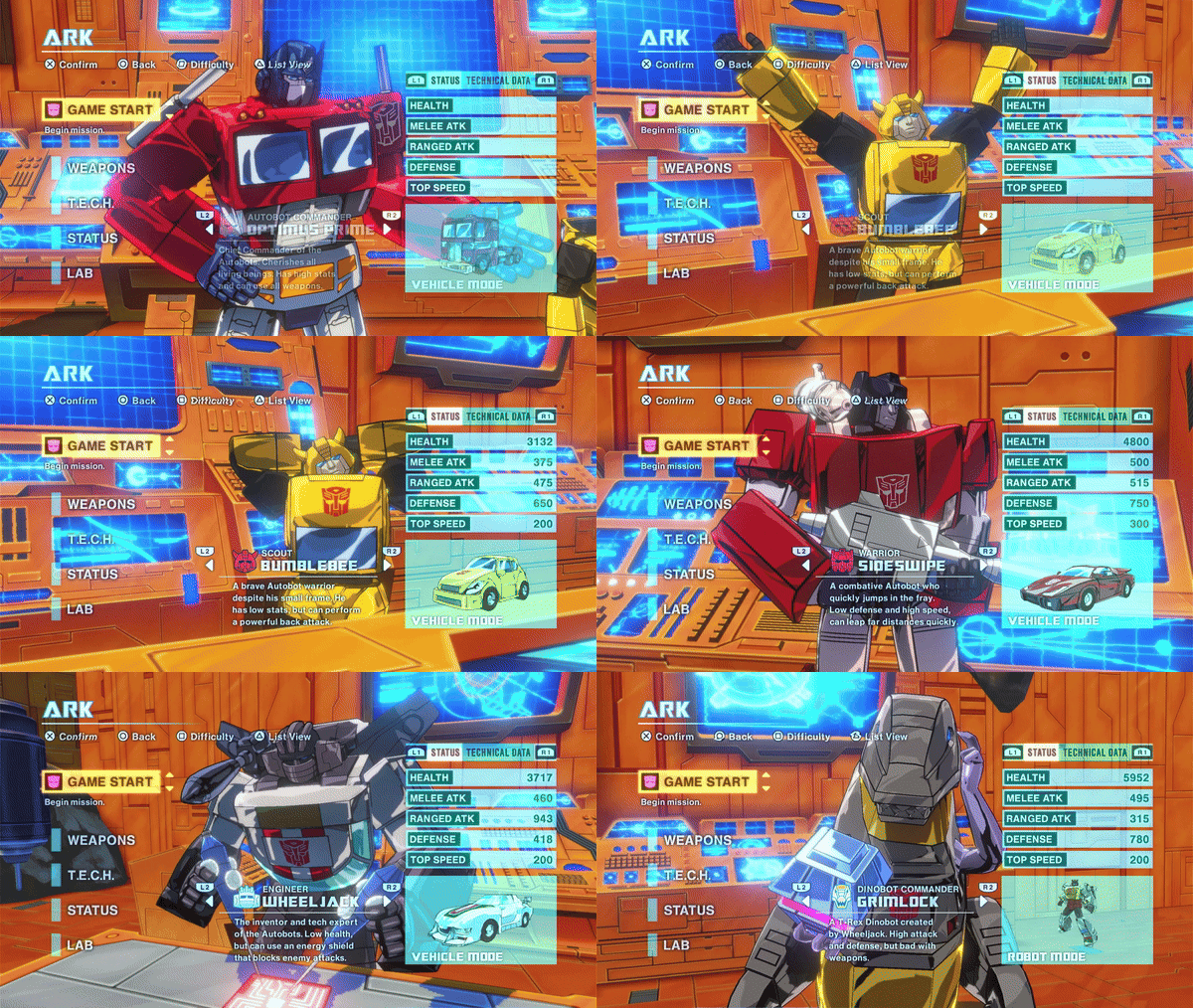
Transformers’ brilliance is its one character/two modes that in videogames naturally transition between four fundamental gameplay genres, creating 3D hack ‘n slash shooter racing platformers. After his over-the-top directorial debut Metal Gear Rising: Revengeance, Kenji Saito’s next Platinum title smartly combined Bayonetta’s deep and fluid melee with Vanquish’s high-octane third-person shooting, the perfect tools to capture the promising action of TF media. Platinum had already played with controlling an army of action figures in Wonderful 101, but Devastation is a much more tangible game, and the five playable Autobots each have unique personality traits biased to one of the gameplay styles.
If Optimus is the game’s well-rounded fighter without any significant pros or cons, Bumblebee is its DPS machine with lighter, quicker strikes and improved back attack but lower health and damage, and show how different game elements can be tweaked to create different characters. Devastation’s combat model smartly used Hideki Kamiya’s Bayonetta design that’s built around two types of strikes, command abilities, and a Dodge offset evasive roll into a time slowing Focus. Rhythmic strikes build into combo strings and can end with a special Vehicle Attack. Weapon selection with the D-pad increases combo potential, with each character able to equip a four-weapon arsenal including their signature weapon. This system is highly modifiable, and the weapons, stats, models, and unique abilities, can be diversified into unique characters.
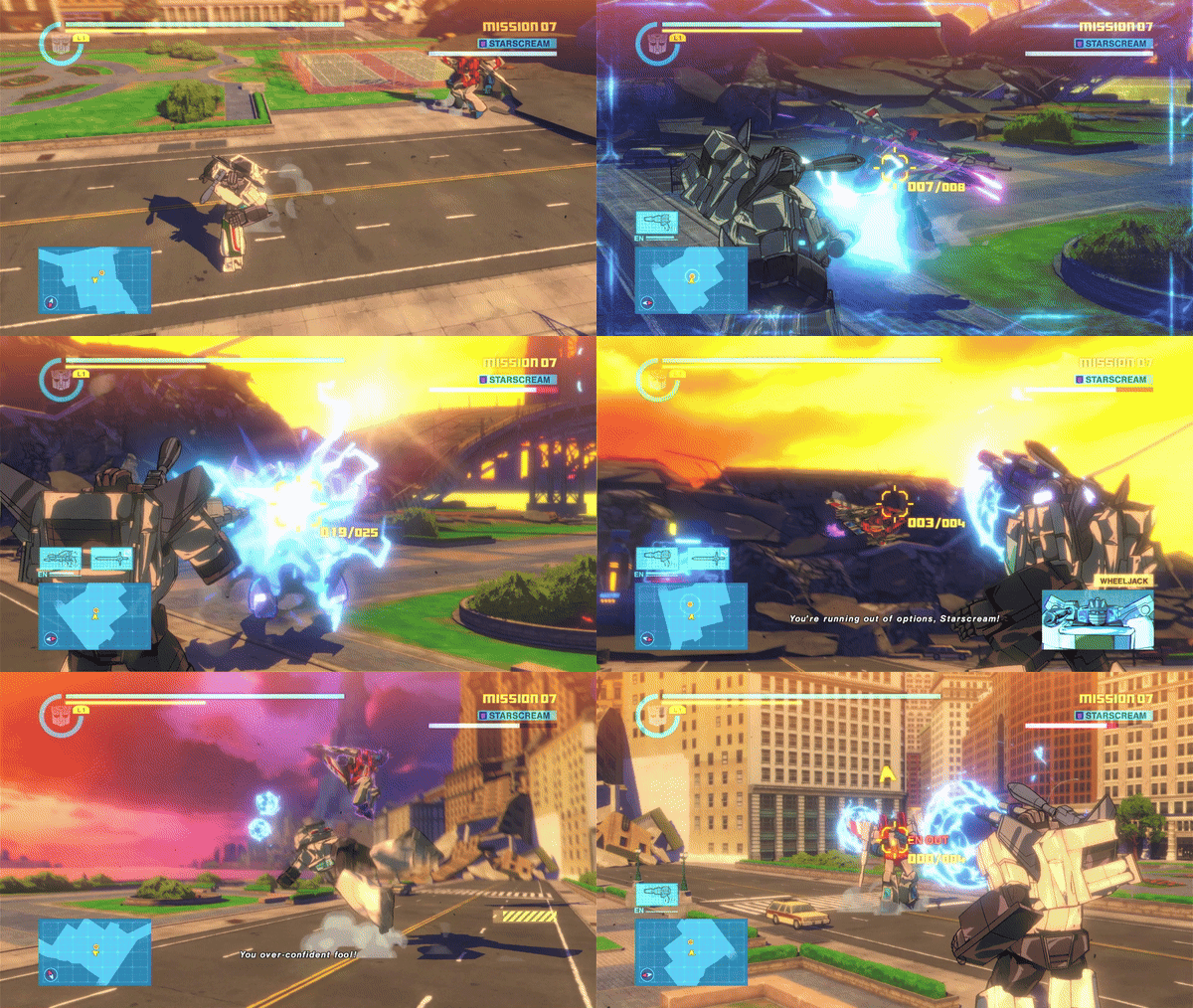
The streamlined melee combat slots well with simple shooter controls where R2 shoots and L2 aims, which is helpful for fights like against the Seeker leader Starscream. In alternating phases, he strafes you with lasers and bombs from above until he can transform and get in close. Wheeljack’s super high Ranged Atk stat, missile and grenade Vehicle Attacks, and shield ability make him a great choice for long-range engagements. Being able to stack his arsenal with up to three guns makes the engineer the perfect bot to shoot down the subversive, traitorous Decepticon jet down.
The duality of ranged and melee combat justifies a broad selection of enemies, and the generic Ground Soldiers and ranged Seeker enemies have a direct relationship to both of the player’s main abilities, as do the light and heavy versions of them that mirror the player’s two strikes. This simple design creates a large number of different combat situations. The D-pad weapon selection is great, too, allowing player’s to assemble flexible arsenals of one melee weapon and three guns or vice versa, and lets each character play to their strengths while maintaining player freedom. That you have car and bot forms, racer and platformer, means these varied options are a necessity when the rubber hits the road and a close brawl changes to a long-range firefight.
Transformer’s design wouldn’t be dynamic if the controls weren’t consistent across modes, and the characters’ moves work well whether bot or car. When adding gunplay to the car forms, including Lambo speeder Sideswipe, Devastation is a Twisted Metal-esque car-combat game that transforms into Shinji Mikami’s Vanquish with a time-slowed evade. Since the camera is relative to the player and not the character, cars can zip around the playfield while tracking enemies coming close or sniping from far. The car combat comes into play during the freeway race against the Stunticon leader, Motormaster, pelting him with bullets and evading until close enough to wreck him. Beat him down or beat him to the goal, the option is yours.

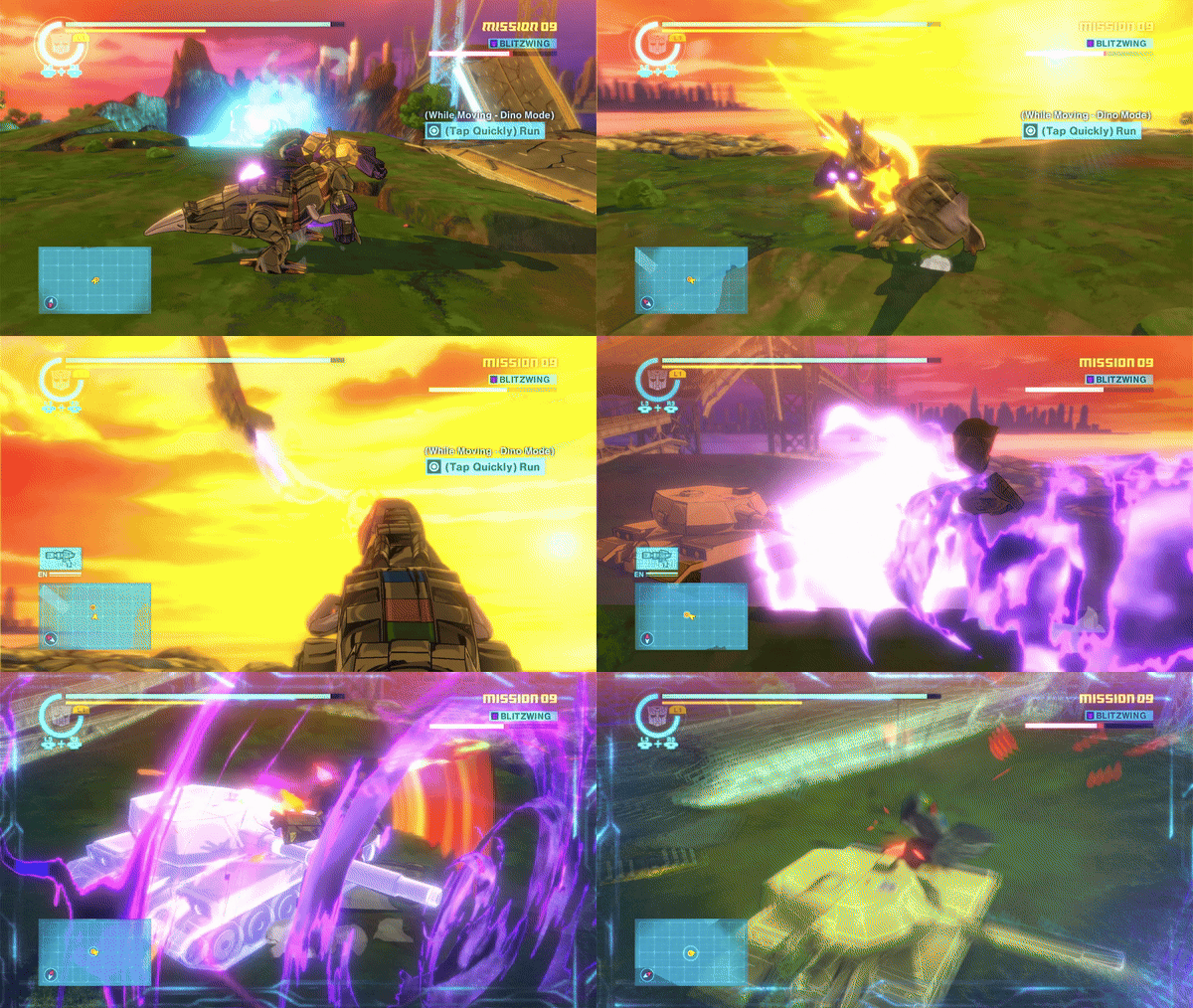
The game’s design allows each Autobot to excel in different areas, but its flexibility shines with the Dinobot leader Grimlock’s two melee forms. Like in bot mode, the flame throwing T-Rex has both strike types, with light ending in a Vehicle Attack. Since all his attack strings in both modes end in an automatic transformation, Grimlock’s combat can naturally loop between forms forever. If the Dinobot King shows how Transformers’ gameplay can be varied for the player, then the Decepticon triple changer Blitzwing exemplifies how dynamic the battles can be, easily changing from jet to bot to tank and back fluidly to build fast, tough skirmishes and exciting set pieces. Putting all these different characters, with their vastly different combat profiles, in one place creates wildly different scenarios and exciting exchanges.
Despite being a licensed budget title, Saito and team detailed every aspect of the game, and its narrative feels good in the classic mythology. Transformers has long analyzed liberty versus tyranny, and Devastation is a debate on cultural preservation at the cost of another. The narrative smartly assumes the Autobots are always together and take part in every major scene, but each playable character has their own battle dialogue, making the scripted boss battle exchanges feel like it was written for you every time. The character action genre excels at making every action and situation cinematic with a high energy soundtrack, and the electronic instrumentation by beloved Transformers: The Movie and Rocky IV composer Vince DiCola cranks up the voltage. Platinum’s game is a love letter to the brand.
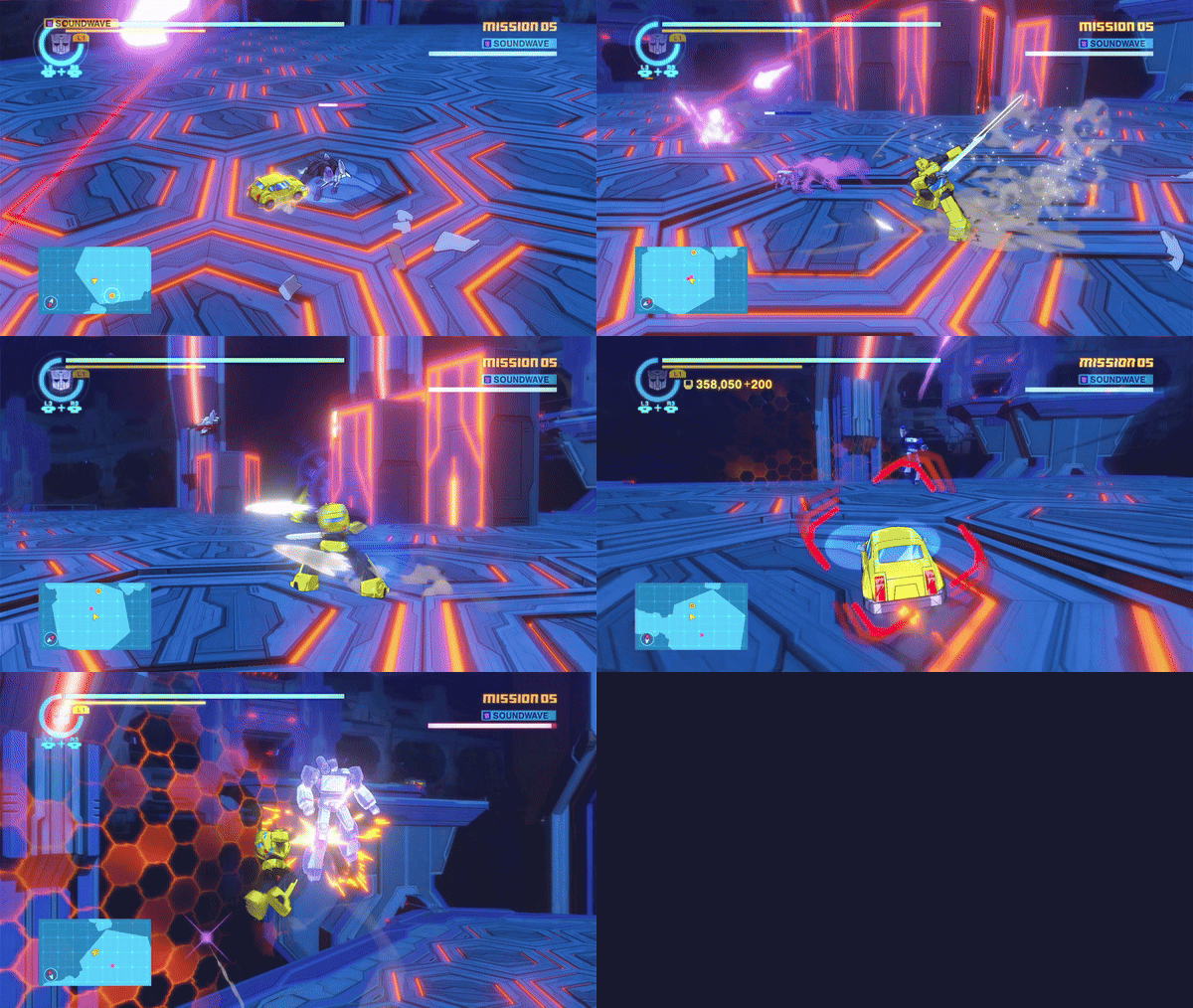
Of course, any collector’s toy box will be stuffed with accessories, and the game’s staggering number of weapon drops is perfect to extend the combat and tailor your abilities to a situation. Weapon skills boost stats and a synthesis system allows you to transfer skills. Between the five playable bots, upgrades, and weapons, Devastation has remarkable variety, which is useful against Soundwave who ejects his army of cassettes that transform into the melee Rumble and Frenzy, the speedy Ravage, or flying ranged Laserbeak and Buzzsaw, that can swarm any Autobot.

Devastator is a major threat that requires full use of your abilities, and Devastation made transitioning between forms and gameplay as easy as possible by mapping many transformation paths between bot and alt mode. From bot, you can simply hold R1 when dodging, after a a combo string ending Vehicle Attack, or doing a ground pound. That you can burnout from a stop to bash into enemies means you can quickly charge ahead in vehicle form then transition into a high-speed bot Rush Attack by hitting the light or heavy attack, perfect to break shields, knock the enemy away, or up to juggle. This flowing combat has been essential to Transformers since the original comics and so is crucial to nail in the games, and Platinum’s design makes the fight against Devastator energetic and spectacular, doubly so when the formidable Stunticon combiner, Menasor, enters the arena.
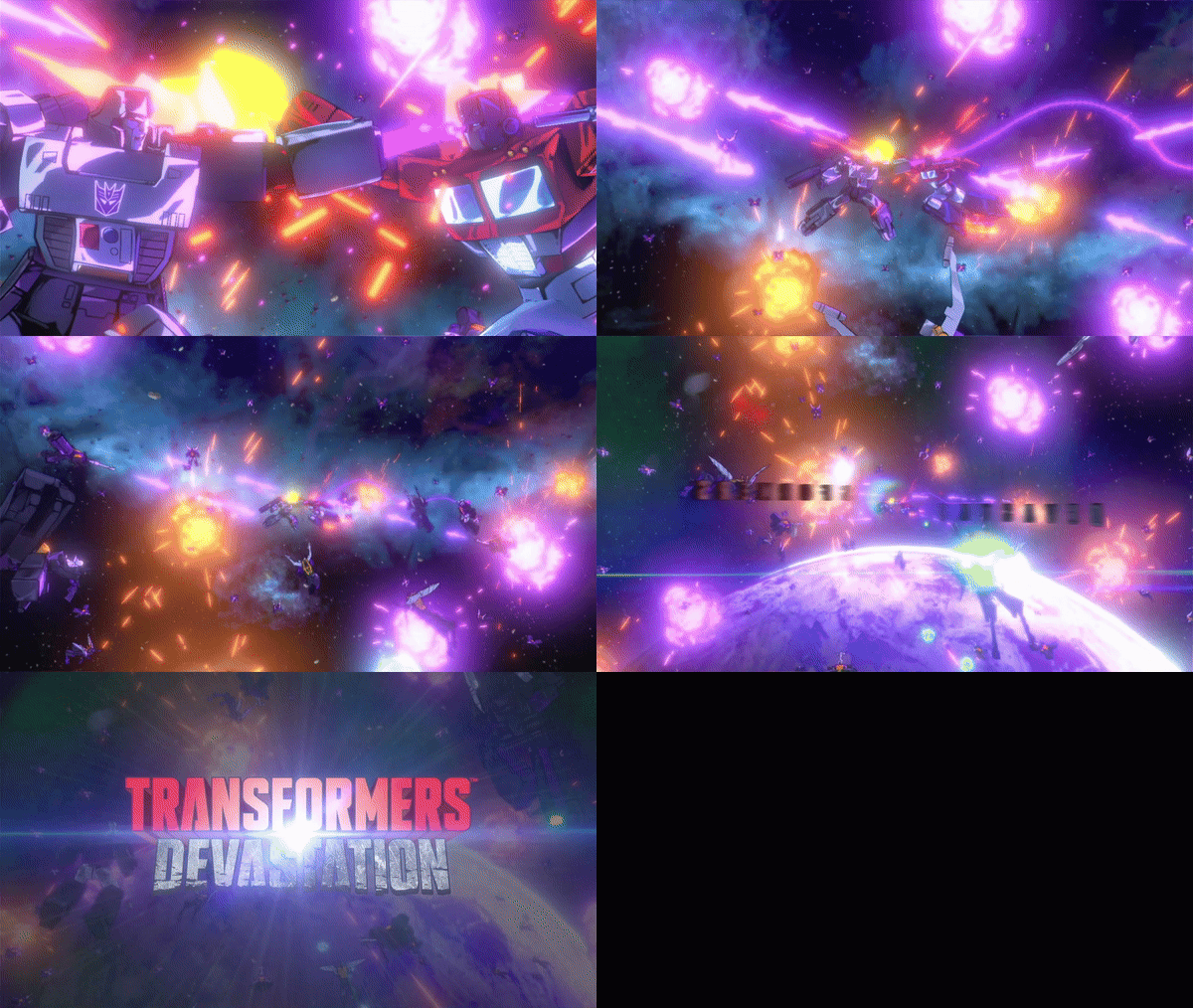
The climactic fight between the Autobot and Decepticon leaders appropriately takes place in space, with Optimus and Megatron’s brawl set against the stars. It’s a fast and furious one-on-one brawl between old rivals. The power of Platinum’s gameplay model is found in the replayability of its games, from the depth of the combat to the mission-based structure and greater difficulties. That it is beautiful in motion and fun in practice makes you want to tune in for reruns over and over, with different figures and accessories. Like the massive green beast that inspired its name, Transformers: Devastation is a magnificent cartoon builder greater than the sum of its parts.
PLATFORMS: PlayStation 4, PlayStation 3, XboxOne, Xbox360, PC
DEVELOPER: Platinum Games
2015
 scriptroutine.com