

If the original Street Fighter represented Ryu’s quest to climb the metaphorical mountain of martial arts mastery through willpower and multi-disciplined training, then Seth, Street Fighter IV’s boss, is the antithesis, an engineered creation that technologically combined the moves of the greatest fighters to leap straight to the top. By SFIII, the series’ core evolved into a deep combat model with flowing hip-hop style, but its complexity made the climb nearly insurmountable for new players at a time when gaming was going through dramatic changes. What was needed was a break until new tech could re-evaluate the series’ design and still capture its artistry. Street Fighter IV returned to the canvas nine years later, able to balance traditional gameplay elements from throughout the series to help fighters at any skill level reach the martial arts’ stunning, stylish summit.
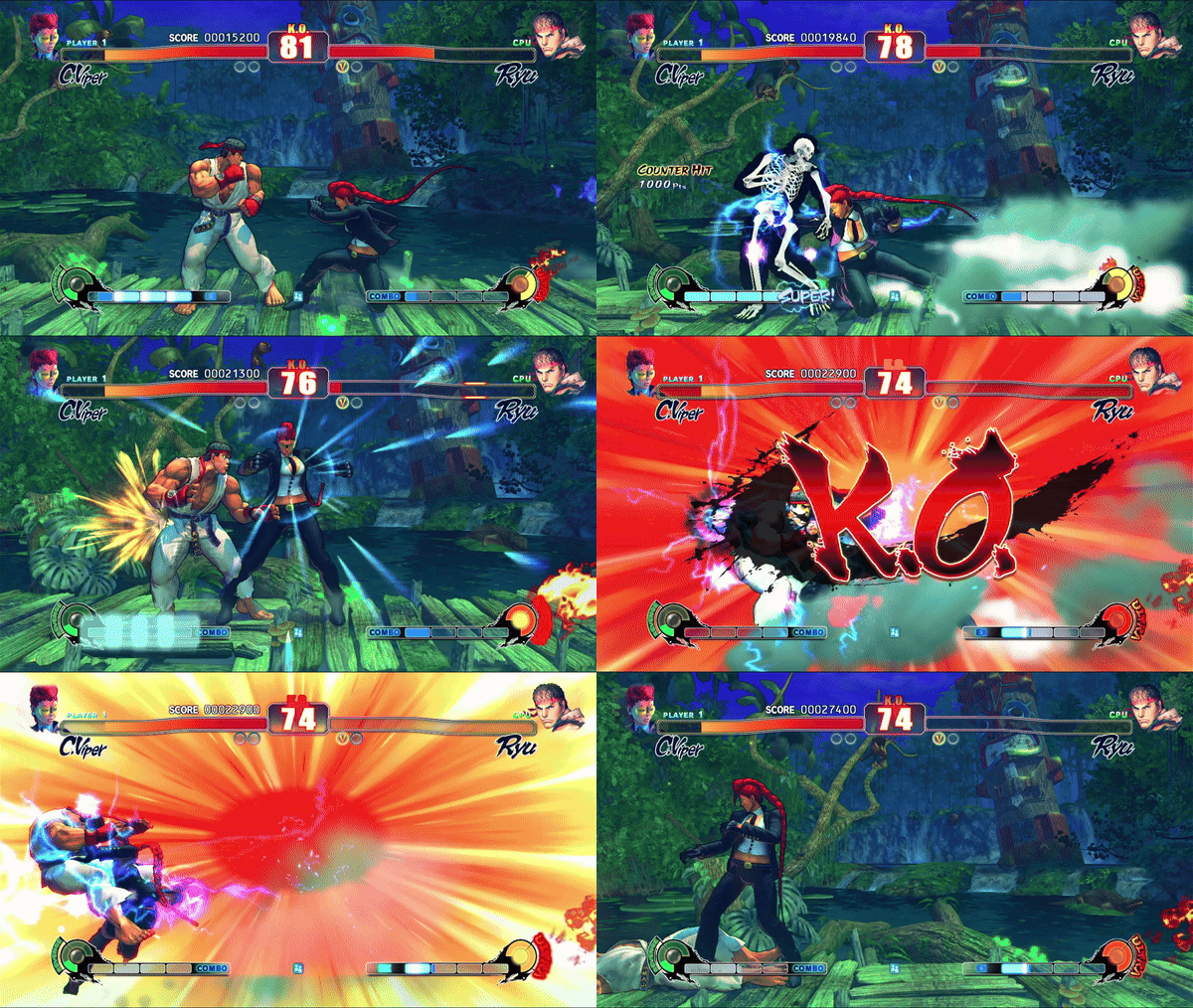
The world was different when fighting games reigned supreme in the mid ‘90s, and the power difference between game cabinets and home consoles justified people quartering up at the arcade, especially as the ring started to be painted by processor-heavy polygons rather than pixels. While Street Fighter EX was an attempt to transition the series into 3D by the legendary SFII creative team, the low-poly PlayStation tech running Arika’s spin-off meant less detailed character models compared to sprites, which required blockier animations to communicate movements that now spanned feet rather than inches, which ultimately lowered precision and speed. By the PS2, Capcom, whose in-house 3D fighting output was largely handled by Alpha co-designer Hideaki Itsuno on series like Rival Schools and Power Stone, transitioned to new best-selling console franchises like Devil May Cry that merged SF’s depth with Resident Evil’s level progression and cinematic stories. Though produced by Capcom’s own Yoshinori Ono, this meant that when tech evolved to truly capture SF’s detail and speed in 3D, its return would again be handled by an outside team which, amazingly, was run by another returning Street Fighter legend: its father, “Piston Takashi” Nishiyama.
After continuing his fighting game work at SNK with the Fatal Fury, Art of Fighting, and King of Fighters series, and playing a crucial role in making the Capcom Vs SNK collaborations a reality, Nishiyama formed the studio Dimps, which would develop licensed games, including shonen fighters for Dragon Ball Z and Naruto. Luckily, other fighting games like Dead or Alive and Soul Calibur had still been duking it out in the background, so SFIV could debut in Japanese arcades on Taito’s modular Type X2 board before being ported to the powerful Playstation 3 and Xbox 360 consoles and their high-speed internet. It’s almost poetic that by returning to the series’ basics for Street Fighter IV, taking inspiration directly from the game the general population most associated with the franchise, Nishiyama was finally overseeing a version of Street Fighter II. The new game revitalized the genre its classic predecessor had established.

Even though expert SFIV play has the naturally steep learning curve of the series’ evolved rhythmic gameplay, a novice can still load in, press buttons, move the stick, and have fun with its bright and colorful 3D character models and gorgeous effects. But jump into the option-filled training room to learn the basic gameplay, check out character movesets or try the combo trials, and you can make significant improvement. Capcom’s fighting game formula let a player skill up by learning focused Target Combos and adding EX specials and Super Combos managed by the four-bar gauge. The new Ultra Combos are a great way to level the playing field, as the gauge builds up when taking damage and unleashes a character’s most powerful, hard-hitting combo to an exhilarating cinematic. Of course, the more complicated a game needs to be in real time, the more hardware needs to be able to store all the effects, animations, and systems and process it all quickly, and this time the consoles’ version rivaled the arcade’s.

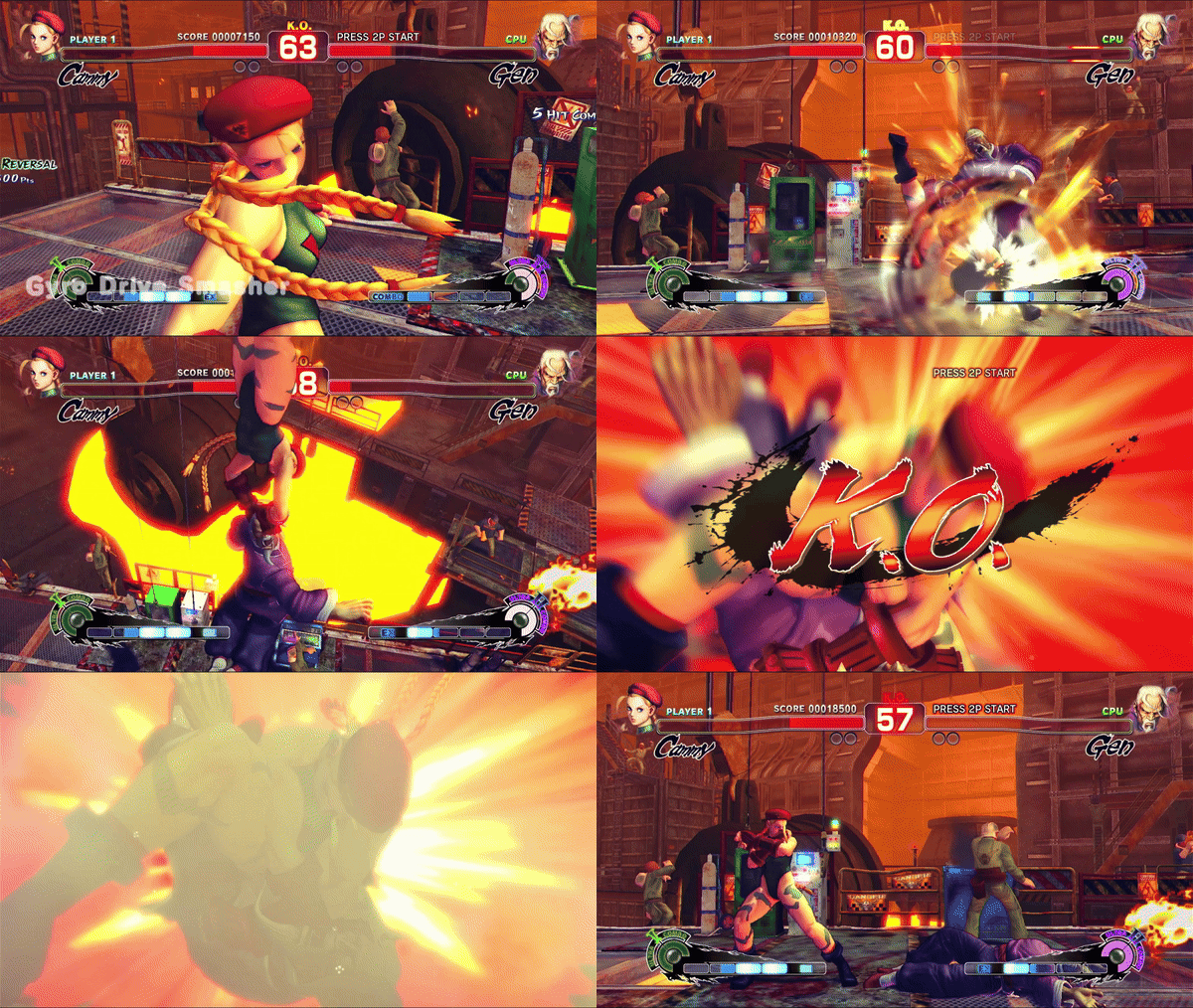
The fighting is accentuated by the evocative calligraphy art style that adds paint splashes to a character’s Focus Attack, a beautiful touch considering that brushstrokes, like a punch or kick, are the products of pressure, timing, and fluid lines. These stylish accents accompany expressive moves that combo, flowing characters across the screen. The polygons mean dynamic camera angles, but also make it easier to apply universal model rigging for animations, allowing all characters to have similar reactions without having to be completely redrawn like sprites, so that when Zangief executes a Spinning Piledriver on Ken, Cammy, Dhalsim, Blanka, or anyone else, they can all have the same facial expressions and body positioning when they slam into the ground. The combo of movements and paint effects are beautiful in motion, showing confidence and purpose from the artist’s strokes, perfect for a fighting game.
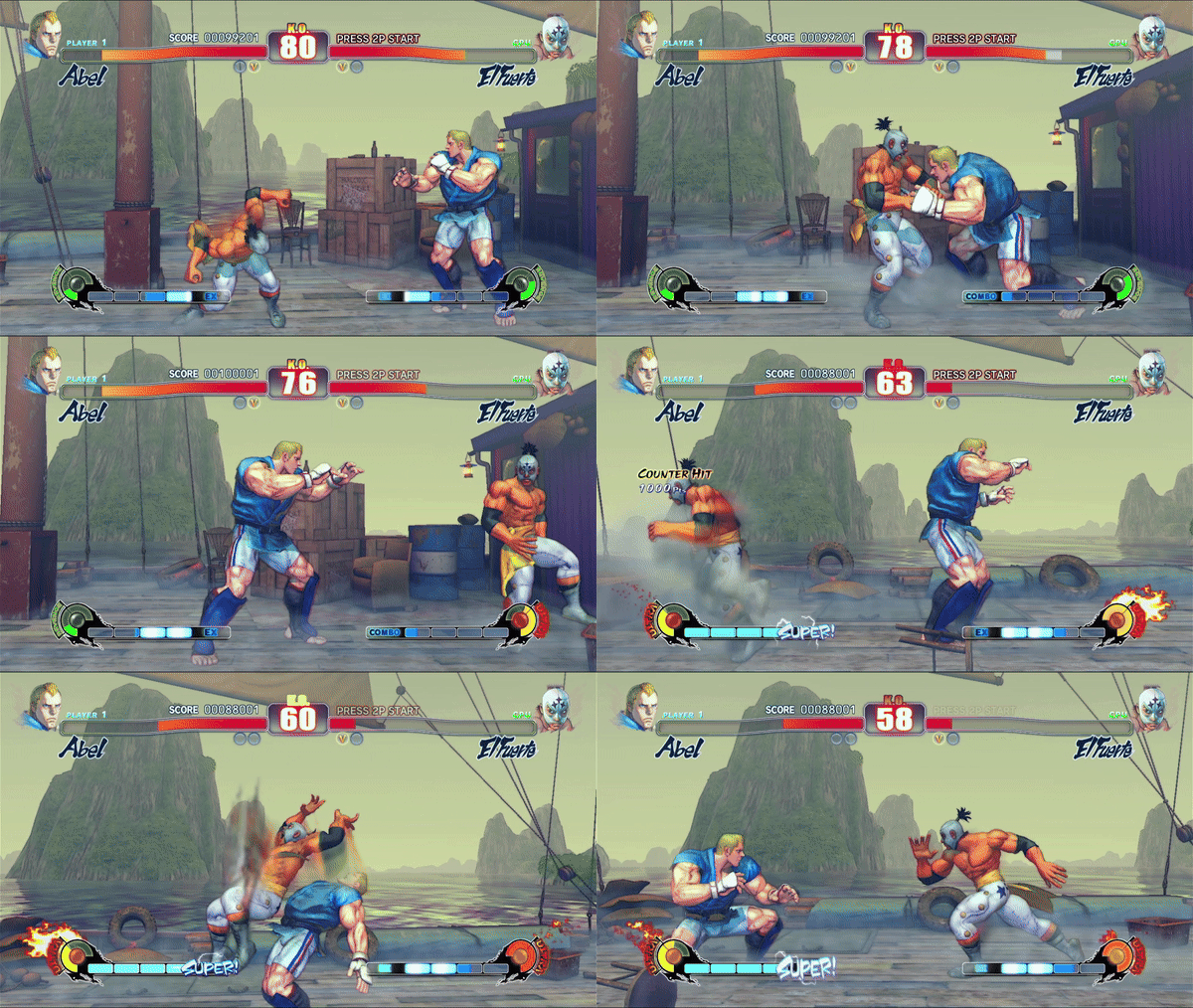
Street Fighter characters are shaped by their Specials, and IV uses the increased system memory to experiment with two new move types. Based on SFII’s archetypal roster, its four initial new characters are either built around different variations of a single special or branching combo sequences. On one end of the spectrum is C. Viper, who uses the Terry Bogard-esque Thunder Knuckle, a horizontal DP that goes low, high, or diagonal depending on intensity, while on the other side is the Judo using Abel, whose three-move string alternates between high and low depending on the button and ends with a choice of throws. Rufus combines both these schemes into a wide but close quarters package, while frantic luchadore El Fuerte jumps off walls and has a Messiah Kick special that automates his run forwards or back and ends with a feint or handful of different strikes. These were useful prototypes to expand Street Fighter mechanically.
Since its core was based on Street Fighter III’s design, IV’s major new gameplay mechanic was its Focus system, a seemingly simple new move with considerable depth that wonderfully incorporates the painted slashes. Activated by pressing both medium punch and medium kick, each character’s Focus attack can charge up to three levels with different properties and all with super armor to absorb a single hit whose damage regenerates unless hit again. A quick press and release Focus attack has an opportunity to crumple an enemy if it lands as a counterattack where a roughly 0.7-second long charge will definitely crumple them while a full charge of about 1.5 seconds becomes unblockable. These aspects alone make them similar to past games like EX’s guard break and SFIII’s parry, but Focus is essential for unlocking combos and offers the game’s greatest technical depth, emulating the powerful cancel combo systems from a different Street Fighter.
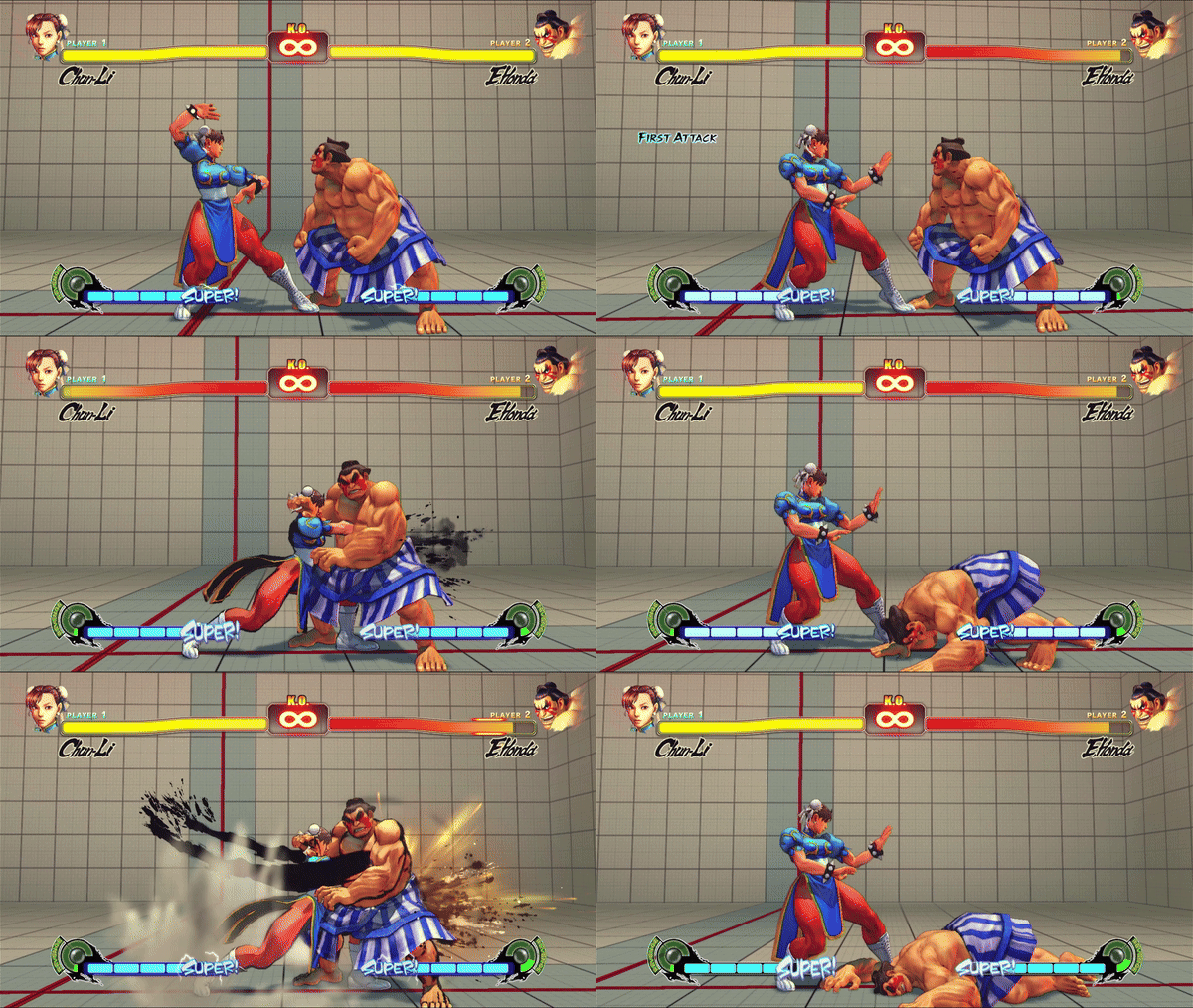
The Alpha series experimented with several new systems, especially to cancel moves into other moves. Since IV already implemented crafted Target Combos for every character, sets of strikes that would naturally cancel into others and often ended with a special, Focus could cancel moves to execute others. Unlike Alpha’s Chain or Custom Combos, Focus can build custom move strings as long as there’s meter to spend on it, with EX Focus canceling specific strikes and specials at different moments in their animations at the cost of two of the meter’s four bars, a mechanic that doesn’t provide armor and shows success when the character flashes yellow. At the same time, a Focus Attack Dash Cancel can stop special moves out right, making ones with long windup or recoveries safer while allowing the move to be followed up easier. The one-two punch of Dash Canceling a Focus Cancel allows Street Fighter’s gameplay to string together massive combos or juggles dynamically.
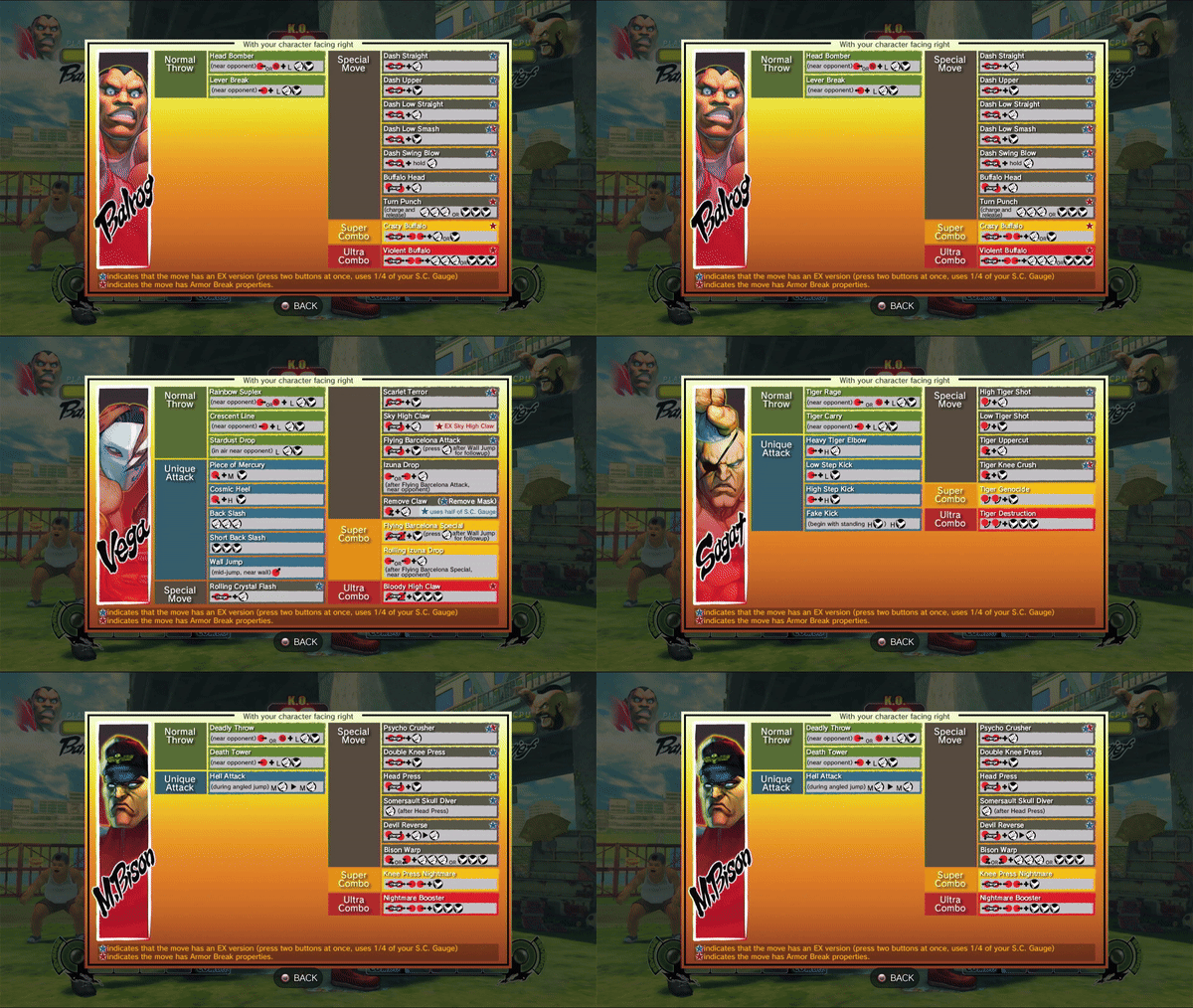
Once a fighting game’s core is designed, each character is custom crafted as an expression of it, with an archetype guiding how the character’s elements will be built. Each individual strike must be designed relative to all others, and specials complete the overall profile. A dozen target combo patterns are mapped so that certain moves naturally cancel the previous one. Considering that Focus Attacks also cancel moves in different ways, every move is programmed to react to different inputs in different ways, how a strike reacts to another strike versus how it reacts to a Focus cancel. A ton of thought can go into a single character and must be developed relative to all the other characters in the game. The result is a complex if/then flow chart with a staggering amount of branching options.

With more combos customizable, players have an increased knowledge burden- attackers need to know the properties of every attack to maintain combos as defenders must anticipate and react to pressure and guess the next move flying their way. Add this to the fact that provisional damage from Focus parries build revenge meter to allow a dominant player to unleash Ultra Combos and still win the round with a perfect. Calmness becomes that much more important to maintain precision and predict what’s coming next. The Focus system is the fundamental connective tissue uniting all SFIV’s gameplay, deep and dynamic.
Because of the competitive, community-driven nature of fighting games, the genre was vulnerable between the death of the arcades in the late ‘90s and widespread high-speed internet adoption of the late 2000’s. Of course, smaller fighting communities existed and sustained by regional and international tournaments like EVO, but the internet made the arcade global, and it’s no surprise that SFIV, which had great internet integration, ranked matches, and a tournament mode, exploded in popularity and helped bring fighting game back into the mainstream spotlight. Suddenly, a fight can be as international as the series’ famous roster had promised. Even more than the earlier arcade games, the series benefited from millions of minds banging their heads against the mechanics and systems, and the tech put Capcom in a better posture to react accordingly.
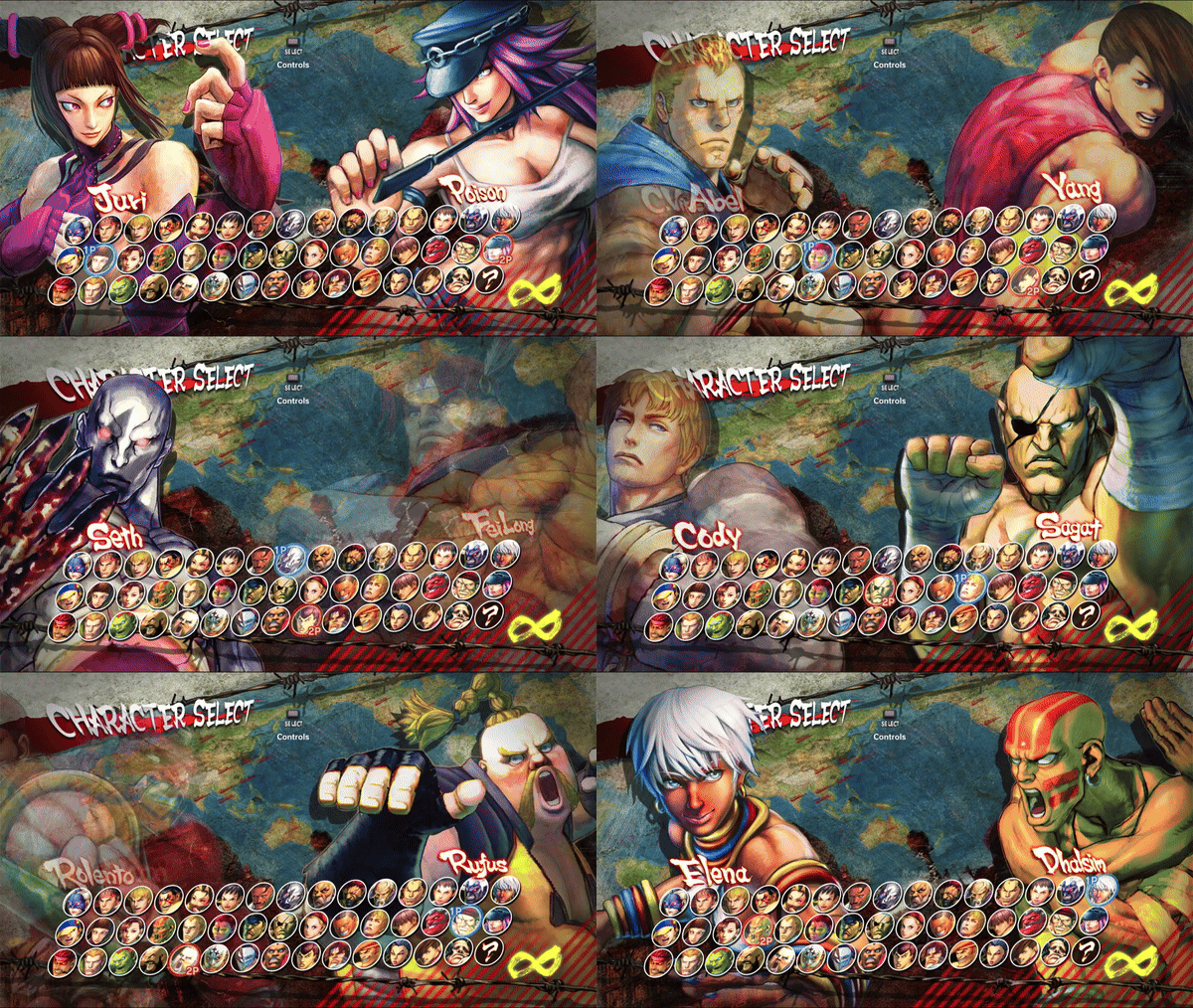
The sheer variety of players in the global audience changed the feed back loops for a fight. New players and their friend groups tend to develop slow initially as they experiment with moves and characters, and react to each other’s behavior before starting to anticipate commonly used moves and adjusting their overall tactics. When local arcades were a fighting scene’s main hub, random players could see how differently their neighbors use characters, and their own styles would increase in variety, and these regional styles would square off in hotel tournaments. But once the internet put all these styles in one place and in quick succession, it meant people needed to adjust their styles within a single match since they were unlikely to see their opponent for a while, if ever again. Now, in order to win, a fighter’s pattern recognition needs to be immediate.
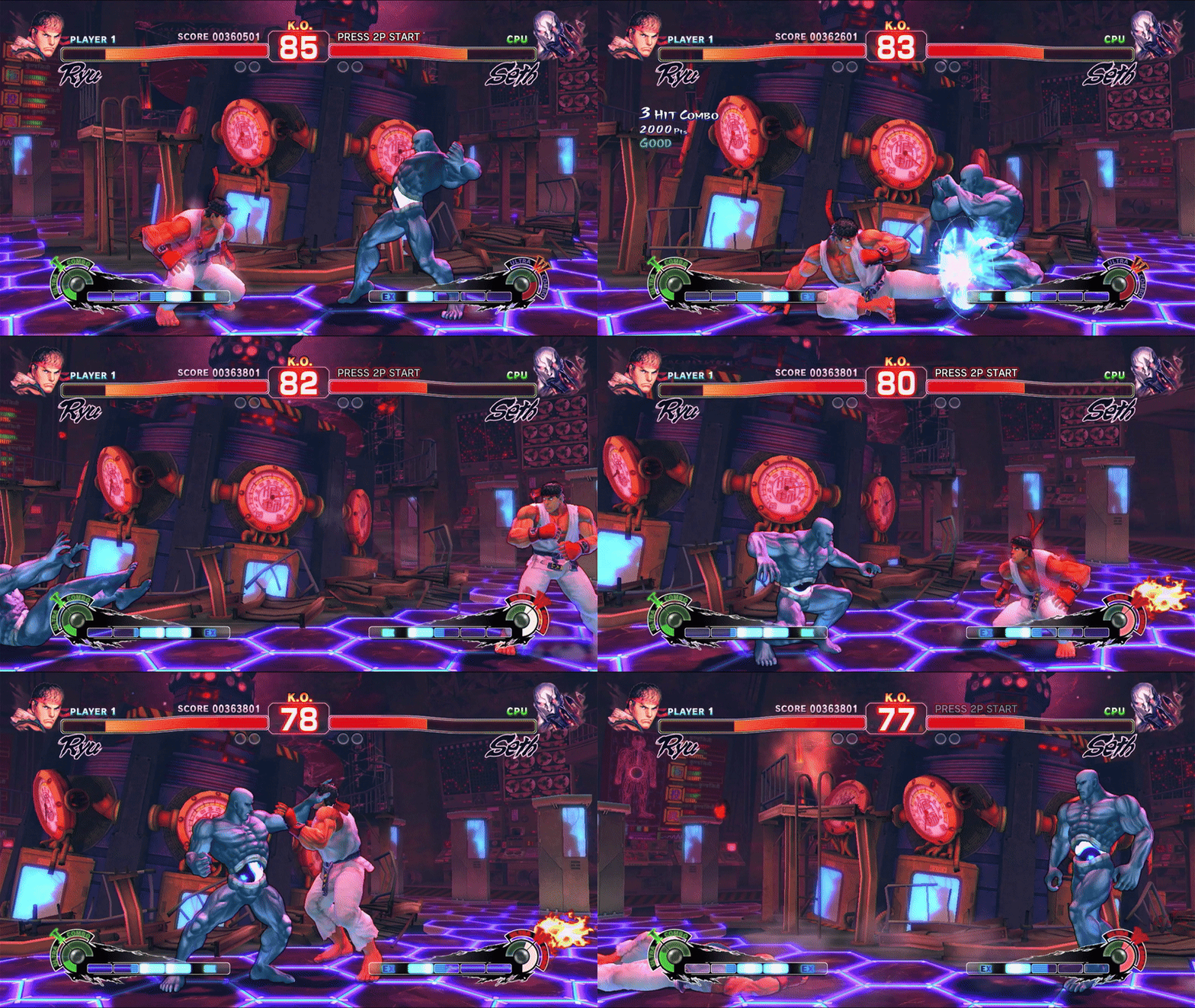
Online patches made balancing the gameplay significantly easier, and the expandability of the Type X2 boards and its NESiCAxLive digital distribution system streamlined Capcom’s production to modify movesets, modes, and add characters for 2010’s Super Street Fighter IV and 2011’s SSFIV:Arcade Edition. This culminated in Ultra Street Fighter IV on the Type X3 in 2014, which brought 44 total players, delayed wake up mechanic, and new three-button activated Red Focus attack, which does 50% more damage, provides infinite super armor, and adds comboability for characters. The internet made Capcom’s long tradition of re-releasing their fighting games easier to grapple with, and Street Fighter’s combat was further refined.
Like any quest, victory takes willpower and focus, but requires acknowledging your strengths and weaknesses, and so the duel between Ryu’s and Seth’s approaches to climbing the martial arts mountain represents Street Fighter IV’s unifying philosophy. And in doing so, it drew a map for others to follow. By redefining the traditional form with modern technology, Capcom shows that the best way up the martial arts mountain, especially as the scene shifts underfoot, is to strike a new path and reshape the landscape.
DEVELOPER: Dimps
PLATFORM: Taito Type X2, PlayStation 3, Xbox360, PC
2008
Dane Thomsen is the author of ZIGZAG, a sport-punk adventure in a world of electrifying mystery. With the voice of her people as her guide, Alex walks neon purple streets thrown into chaos, wielding the concussive force of her baseball bat the mighty ‘.357’ against the forces of evil. Print and kindle editions are available on Amazon. For sample chapters and to see his other works please check out his blog.
 scriptroutine.com