Splicing Gen(r)es: Investigating Resident Evil’s Survival Horror

A Biohazard Outbreak

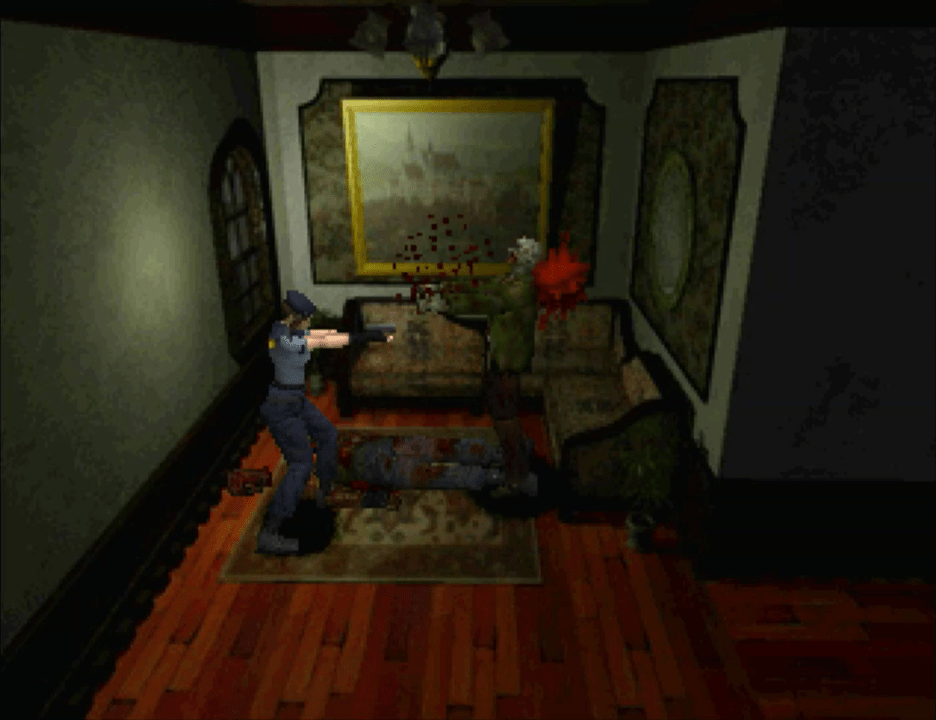
When Special Tactics And Rescue Squad’s Bravo team goes dark in Raccoon City’s Arklay Mountains while investigating grizzly murders, the Alpha team rescue party finds itself in a firefight against bloody claws and gnashing teeth, a scene Resident Evil brings to life with real actors dashing through the woods towards the safety of Spencer Mansion. Though primarily told through cinematic in-engine cutscenes framed by an static camera system, this live-action scene transitions the player into the B movie game’s world filled with zombies, mutated dogs, giant spiders, and, at the end, the perfect bioweapon, manufactured by the international conglomerate, Umbrella Inc. A controllable, branching B horror movie starring S.T.A.R.S.’ Chris Redfield or Jill Valentine and supporting characters, Resident Evil tests your delicious brain’s skills to survive a different kind of haunted house, discover the truth about a biological outbreak.

Continue reading “Splicing Gen(r)es: Investigating Resident Evil’s Survival Horror”

Reclaiming the Peak: The Master Strokes Painting Street Fighter IV’s Martial Arts Canvas

If the original Street Fighter represented Ryu’s quest to climb the metaphorical mountain of martial arts mastery through willpower and multi-disciplined training, then Seth, Street Fighter IV’s boss, is the antithesis, an engineered creation that technologically combined the moves of the greatest fighters to leap straight to the top. By SFIII, the series’ core evolved into a deep combat model with flowing hip-hop style, but its complexity made the climb nearly insurmountable for new players at a time when gaming was going through dramatic changes. What was needed was a break until new tech could re-evaluate the series’ design and still capture its artistry. Street Fighter IV returned to the canvas nine years later, able to balance traditional gameplay elements from throughout the series to help fighters at any skill level reach the martial arts’ stunning, stylish summit.

Continue reading “Reclaiming the Peak: The Master Strokes Painting Street Fighter IV’s Martial Arts Canvas”

Mixin’ Knock Out Beats in Street Fighter III’s Hip-Hop Battles

With its rhythmic striking system that hits at different heights, Street Fighter‘s combat system was expanded to become a branching, freestyle duet in SFII, sung by the sound effects and character voice samples. After Street Fighter Alpha’s swappable systems pushed the series’ fighting game formula to it’s limits, Capcom streamlined its base mechanics and meter functions for Street Fighter III, using the CPS-3’s CD format for gritty, stylized art on detailed stages against a funky soundtrack. Street Fighter III: New Generation’s refined mechanics maxed its beats per minute and rewarded improvisation, turning it into a fluid hip-hop fighting game.

Continue reading “Mixin’ Knock Out Beats in Street Fighter III’s Hip-Hop Battles”

The Warriors’ Dream: Analyzing The Alpha Systems That Transformed Street Fighter

A lot of thought goes into a videogame sequel to progress the gameplay and characters of the original, but its changes need to justify their existence while capturing the original’s intent. So, how do you meaningfully expand on a game like Street Fighter II that defined fighting gameplay, especially when its constant revisions resulted in five major arcade releases? One trick is to build new systems over the core gameplay, useful for when a genre like 2D fighting needs to modify elements without having to redraw character animations. Street Fighter Alpha shows how modular, swappable systems can dramatically change the foundation they are built onto, its new mechanics adding depth to Capcom’s fighting game formula while dramatically improving the presentation to create exhilarating, anime-caliber battles between fast, fluid, and powerful characters.

Continue reading “The Warriors’ Dream: Analyzing The Alpha Systems That Transformed Street Fighter”

Street Fighter And Why Ryu’s Shotokan Defined The Fighting Game

Martial arts is the science of battling external and internal threats, the meeting of anatomy and physics, philosophy and psychology, where any vulnerability in a fighter’s physical or mental defenses can be fatal. Since a fighter’s physical attributes can be measured and defined, they can be translated to videogames’ as animations and number values into a character with a central theme. Every fighting game flows from Street Fighter’s Ryu, the young shotokan warrior who battled through Capcom’s titular international tournament and became the starting point for every subsequent martial arts archetype in the genre. But as Ryu had dedicated himself to the way of the fist, Street Fighter required the player to develop the technical skill, opponent knowledge, strategic mindset, and ring positioning to beat the “Emperor of Muay Thai” Sagat and become the Street Fighter champion.

Continue reading “Street Fighter And Why Ryu’s Shotokan Defined The Fighting Game”

Devil May Cry And How Character Action Burst Onto The Gaming Scene In Style

The character action genre is hard to fully define considering how wildly different one title can be from the next, but it largely comes from the stylish combat defined by Capcom’s 2001 milestone, Devil May Cry. DMC’s action design was so strong that it could seamlessly transition between melee and ranged combat, where you can launch an enemy into the air with your sword and juggle them with gunfire. These fast fights are made from a simple yet complete moveset that works well at different distances. Director Hideki Kamiya translated hack ‘n slash games and brawlers into three dimensions, emphasizing twitch action and fair but challenging difficulty by imbuing it with fighting game mechanics and systems that grade your performance in real time. It offers players the means to create spectacular combat sequences where the goal isn’t just to defeat your enemy but to stylishly wreck them.

To understand how it all came together, we have to look at DMC’s family tree.

Continue reading “Devil May Cry And How Character Action Burst Onto The Gaming Scene In Style”

Surviving Deadline: An Exposé on Dead Rising’s Absurd Zombie Apocalypse

Survival depends on your ability to properly manage your supplies in a complex world where dangers lurk around every corner. With Dead Rising, Capcom reworked the survival horror concepts of its more famous zombie-fighting series to challenge players to survive three days against an endless mob of monsters and their own hunger. By fighting his way through the Rogue-like structured brawler, photojournalist Frank West will document an absurd horror-comedy about dying and coming back again.

Continue reading “Surviving Deadline: An Exposé on Dead Rising’s Absurd Zombie Apocalypse”

Scoring Devil May Cry 4’s Smokin’ Sick Style

Devil May Cry may be revered for merging fighting game’s pugilist science with brawler’s crowd management, but it was driven by its arcade-inspired scoring system. Dedicated fans can easily spend dozens of hours honing their skills against the game’s difficult enemies and massive bosses, all to improve their final scores. With DMC3, Hideaki Itsuno expanded the single player fighting game’s combat and worked in replayable missions. When that amazing foundation jumped to the PS3 and Xbox360 for the fourth release, Itsuno could further distill the series down into an arcade experience and offer new characters for those chasing that high score high. Let’s look at how it succeeds.

Continue reading “Scoring Devil May Cry 4’s Smokin’ Sick Style”

Devil May Cry 3: Bearing Witness To Dante’s Awakening

On Characterizing Potential

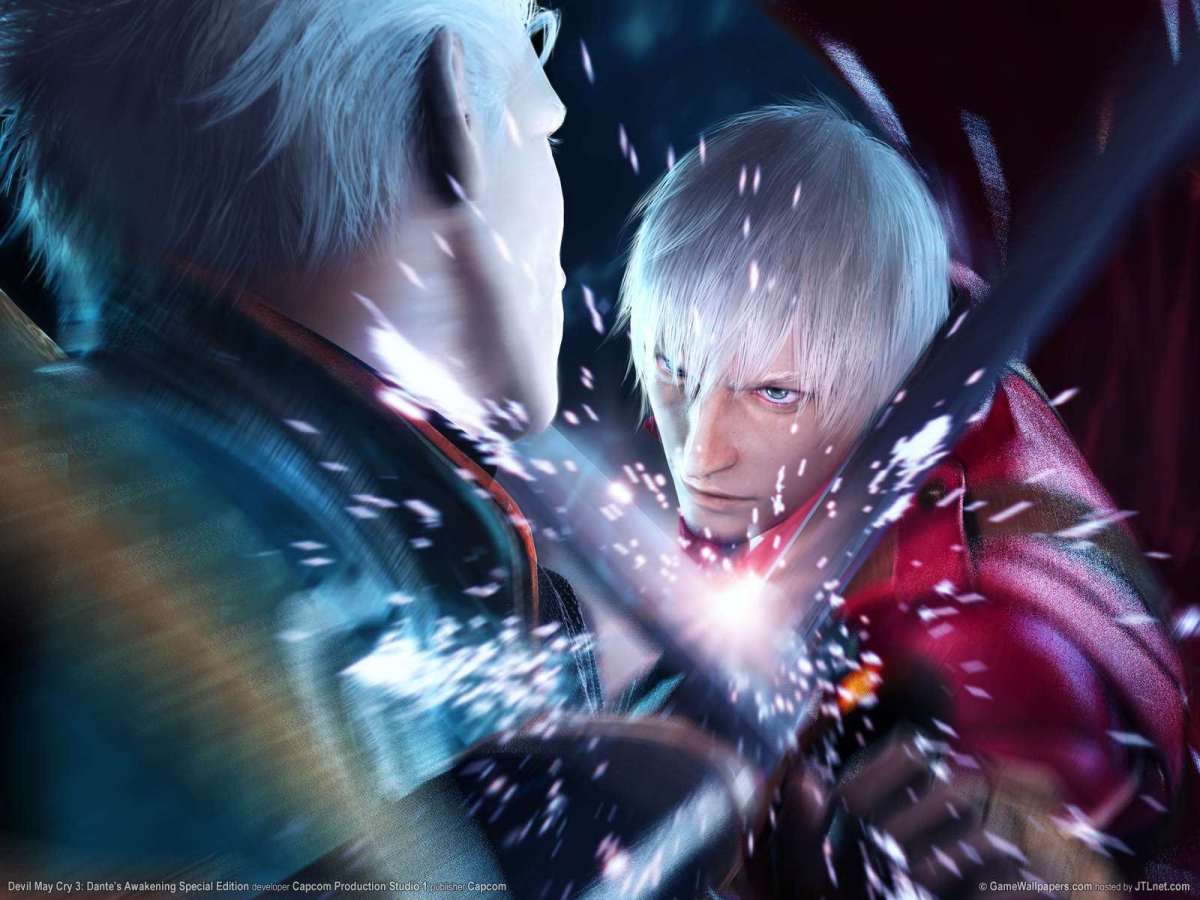
Devil May Cry 3’s first fight between the twins Dante and Vergil is set at the highest point of a large tower jabbing from the Earth, lit by the full moon. The differences between the brothers’ fighting styles are as striking as their fashion senses, the hot-headed Dante in his red trench coat unleashing his Rebellion sword and dual pistols a contrast to the cool-as-ice Vergil in his blue jacket and air slicing katana, Yamato. The two rivals clash swords and exchange gunfire, taking advantage of any opening in the other’s defense to chop ‘em down. And then they flaunt their success with a cool taunt, unconcerned by the time it takes to mock their opponent. Every second of this brawl is intense and fast, and, by product of the game’s design, requires the player to fully realize the personalities of the sons of the legendary demon warrior Sparda.

Continue reading “Devil May Cry 3: Bearing Witness To Dante’s Awakening”

Shoulder to Shoulder We Find Our Way Through Lost Planet 2

Even after the snow had melted on the harsh planet E.D.N. III, Thermal Energy is such a scarce commodity that the scattered human factions are still locked in a brutal war for its reserves, a conflict that further leaves them vulnerable to attacks from the insectroid race of Akrids native to the land. Of course, when a load of T-Eng is being transported by train, a worm-like beast attacks that is so massive, it dwarfs the four people that are forced to fight it back, even with the racks of weapons littered about. As it takes out the rear cars and any player left behind, the only thing that can counter its immense size is the cumulative strength of those standing against it, all focusing their fire into its mouth and tender insides. And when the worm finally falls, the group makes off with the spoils. With its in-mission economy, Lost Planet 2 portrays an ecological system reminiscent of Frank Herbert’s Dune, showing that, on E.D.N., every second is a fight to survive. It’s a metaphor ripped from the history books of every life form that’s ever lived.

Continue reading “Shoulder to Shoulder We Find Our Way Through Lost Planet 2”