

The Japanese ad for The Saint’s Flow Energy Drink shows Pierce, the hip and youthful face of the Third Street Saints brand division, being mercilessly beaten on a basketball court by armed punks. The situation looks bleak, until an anthropomorphized purple can of Saints Flow descends from heaven and gives him the strength to throw off his attackers, unleash a savage volley of fists, kicks and a clothesline before shooting a Ryu-style fireball from his hands and closing out the performance by atomic dunking a basketball that appeared out of nowhere to a shower of neon stars. The Third Streets Saint’s lifestyle has been canned and is ready to be swallowed.
A Super Mario World: Exploring Dinosaur Land Through Play

Super Mario World starts at Yoshi’s House and gives the pudgy Italian plumber the freedom to explore the overworld to the left or right. To the left is Yoshi’s Island 1, a bright and colorful place with tank top-wearing koopa’s, small purple dinosaurs and giant goddamn bullet bills. Beat it and the area around will come alive underfoot. The path dead ends at the Yellow Switch Palace sitting on top of a cliff and the large button that causes matching boxes to fill in throughout the world. With this one action, large scale change has swept across Dinosaur Land. It will never be the same.
Continue reading “A Super Mario World: Exploring Dinosaur Land Through Play”
Mother 3: A Game’s Story
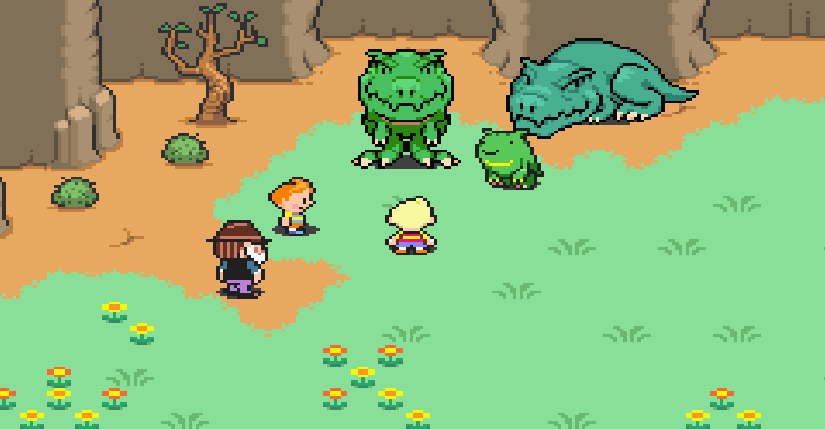
For all their merits, traditional JRPGs haven’t exactly positioned themselves as videogame’s most cohesive narrative experience. One reason is foundational to the genre: the separation of world exploration and menu-based combat breaks player immersion from the story and characters. The other reason is true for the majority of games period: they all know how to implement a story but few understand how to exist as one. While still very much a traditional JRPG, Mother 3’s story takes root at its core, finding ways to incorporate all its elements into a whole that is surprising and emotional.
It’s All Been Done Before: Bioshock’s Infinity
NOTE: Franchise Spoilers
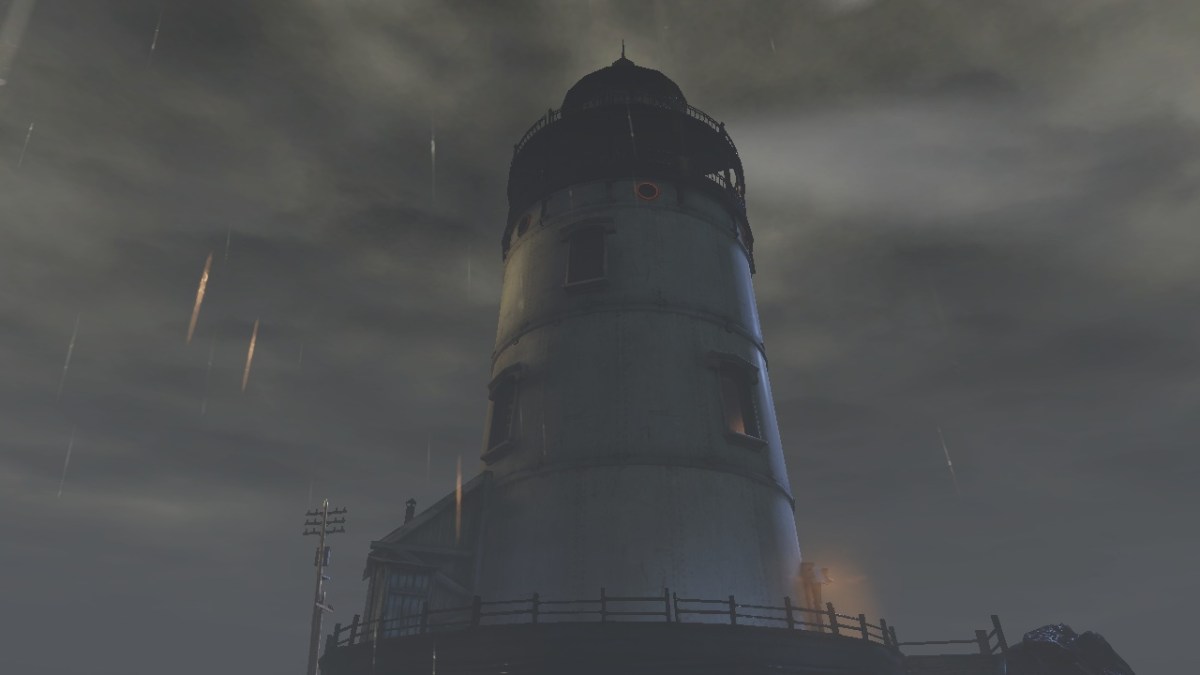
Two lighthouses stand tall. In both Bioshock and Bioshock Infinite, walking through their front doors is the first step in your adventure in two cities that share more in common than their architecture would lead you to believe. In Bioshock proper, the door leads to a bathysphere that takes you to the cold blackness of the underwater city of Rapture, deep below the sea. In Infinite, it contains the rocket that will launch you to the sun washed floating city of Columbia, high above the clouds. You only need to play the first five minutes of both these games to observe the duality at their heart- one is a descent into Hell, the other the ascension to Heaven.
Continue reading “It’s All Been Done Before: Bioshock’s Infinity”
Mega Man Legends & The Future Archaeology
For a decade across the 8 and 16-bit generations, Mega Man had been an action-packed dynamo, but after some twenty odd games, his aging framework was in need of some vital upgrades. Powered by the PlayStation hardware, Yoshinori Kawano and his crew of robot masters successfully forged a new Blue Bomber, translating his action concepts onto a three-dimensional world.
The new 32 bit tech gave the series a chance to break away from the techno-future aesthetic found in both the Classic and X series with their cities dependent on robots for manual labor. Mega Man Legends is an adventure in a world covered in endless water where diggers explore the ruins of a lost civilization amongst the scattered land masses for Zenny and treasure.
Continue reading “Mega Man Legends & The Future Archaeology”
StarCraft II: Heart of the Swarm: Astro Creep

Note- This text refers to the Campaign only.
As the Queen of Blades defiantly stands over a besieged Terran city watching her Zerg swarm breach its defenses and tear humanity to shreds, you remember again that the woman once known as Sarah Kerrigan’s thirst for revenge has killed the last bit of it in herself. But for all the great and terrible power she once wielded, Sarah has been confined to a sterile white-walled lab, a woman once more. Fitting of the ravenous brood at its core, StarCraft II: Heart of the Swarm’s campaign evolves Wings of Liberty’s versatile DNA into a powerful new beast.
Continue reading “StarCraft II: Heart of the Swarm: Astro Creep”
Blast Corps’ Controlled Demolition
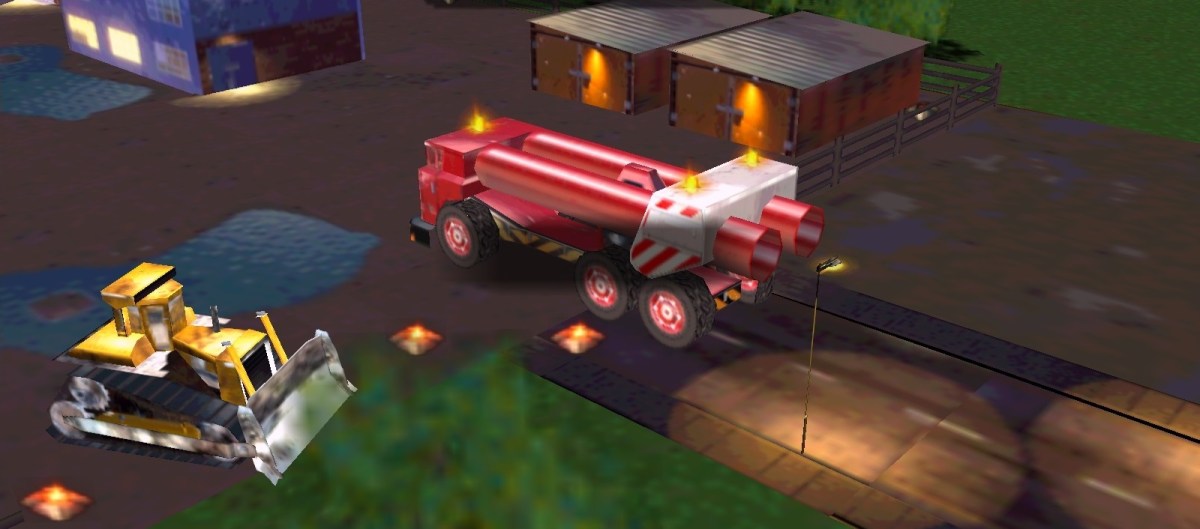
For anyone who used to make believe with a box full of Tonka Trucks and action figures, Rare’s Blast Corps is a special kind of game, one that takes you back to the timeless parts of your childhood that don’t fade just because you’re now an adult. It allows you to relive the freedom that comes from the act of playing and the simple joys that come from pretending that you’re taking control of a roughneck crew out to save the world through demolition.
Crisis Core: Final Fantasy 7: The Cinematic ‘Not Quite Action’, ‘Not Entirely RPG’ Action RPG
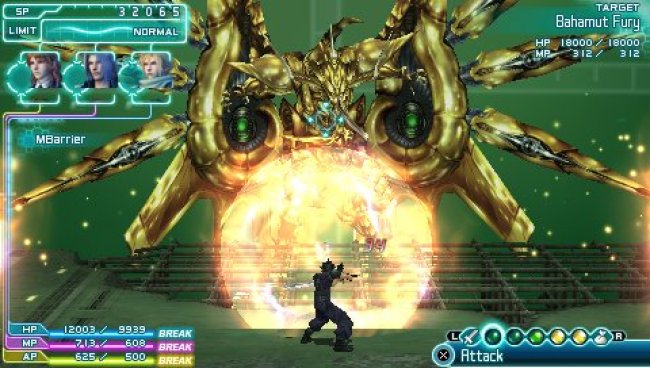
Final Fantasy 7 so thoroughly revolutionized JRPG’s that its legacy was long and wide reaching. From it’s move to polygonal graphics that allowed its characters a deeper range of expression to its dense and layered environments that didn’t rely on sticking the perspective in the ceiling of the world to look down on its inhabitants to its mind-blowing CG cutscenes, it tolds its story of good and evil with a memorable cast of characters with cinematic (though not always consistent) flair. So it’s fitting that as a pivotal entry in the Compilation of Final Fantasy 7’s timeline, Crisis Core is the snake’s jaws wrapped around the back of its own head, further realizing the cinematic ambitions of that important milestone.
Mega Man 9’s Speed Metal
Mega Man 9 fixed Mega Man by distilling the Blue Bomber’s staid gameplay to its essentials: moving and shooting. By striving to limit itself to the restrictions of twenty year old hardware, Inti Creates game highlights how bogged down with its own design the series core gameplay had become over its evolution. What they made is a long lost NES game.
The story immediately sets the tone in sprites full of personality. Having again been defeated by our blue hero, Dr. Wily swears off his evil ways. But its not long before the residents of Monsteropolis are in danger from a collection on renegade robots again. But its Wily that steps up to protect the city, claiming innocence and insisting the robots were created by the good-natured Dr. Light. To clear his name, Mega Man heads out.
Metroid: Zero Mission: A Screw Attack to the Cerebral Cortex

Go immediately left from the start of Metroid: Zero Mission and you’ll find the Morph Ball upgrade exactly where it was in the original Metroid. This is the first in a series of discoveries that shows how the remake beautifully modernizes galactic bounty hunter Samus Aran’s first adventure that celebrates the past while recognizing the journey her series embarked on following it, rebuilding the original release in the structure of influential classic Super Metroid.
Continue reading “Metroid: Zero Mission: A Screw Attack to the Cerebral Cortex”

