
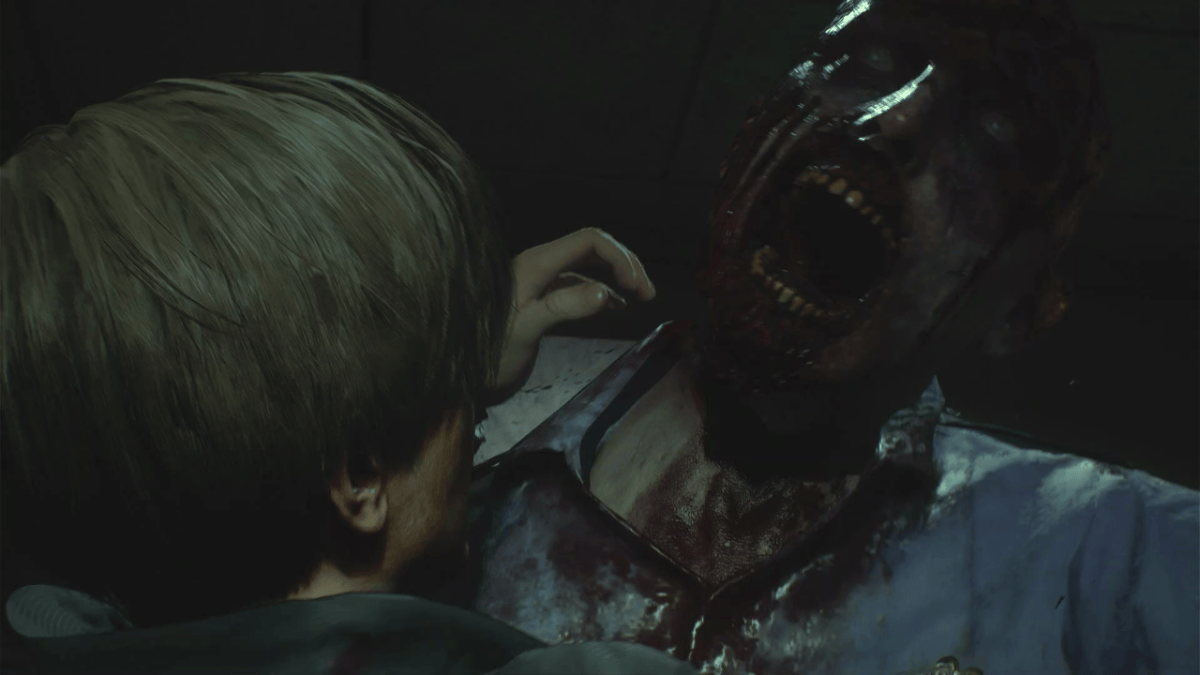
The Racoon City Police Station is perhaps the most iconic location in Resident Evil, whose large marble entrance and tight hallways made 1998’s RE2 simultaneously beautiful and haunting, personal and claustrophobic. This created an oppressive tone that multiplied as supplies dwindled and made fighting the undead horde and mutated freaks inside that much more terrifying. But after that, Resident Evil’s survival horror gradually broke from the slow burn atmospheric terror into the tense action era, which reworked the resource management into revolutionary fast-paced third person shoot outs. But the genes that made Capcom’s viral horror design continued to mutate over the next two decades, until it was time to return to Racoon City and merge the eras, bringing atmosphere, consequence, and vulnerability to the tuned gameplay. The 2019 Resident Evil 2 remake is both the reimagining of an amazing genre classic and the sequel to a legendary remake.
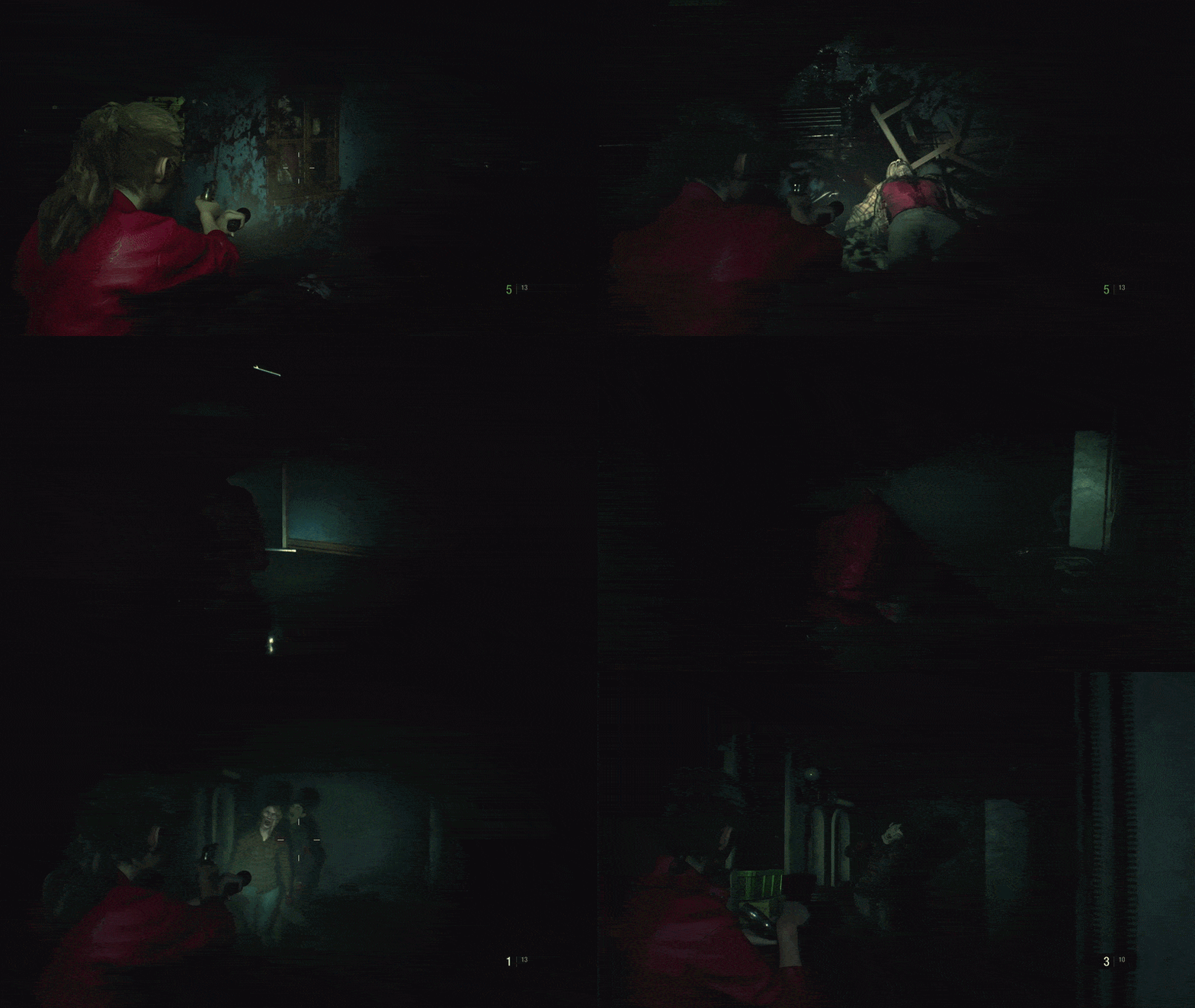
Hideki Kamiya’s original Resident Evil 2 is the cumulative adventures of Leon S. Kennedy and Claire Redfield fighting through a Racoon City overrun by zombies and Umbrella’s G-virus, discovering the saga of the Birkin family who engineered it, and meeting their own cast of memorable characters. It built off the first game’s two separate stories by allowing you to start with either character and finish with the other, carrying certain actions along, both stories weaving a cohesive narrative. RE2 expanded RE1’s gameplay by adding enough weapons, boss battles, and scripted events to change the campy B movie stylings into a slickly produced action horror story. 2002’s RE1 remake would draw on a generation of Capcom survival horror games into an ideal reimagining of the famous Spencer Mansion mission. It was a capstone on RE’s defining era before it jumped to the action-packed RE4, rebuilding the mansion into a hi-res polygonal environment with layers of ambient light and deep shadows, and giving players a consumable knife that also lets you fight off grabs. Remake stripped out the action elements that had developed over those classic games to express what Resident Evil’s survival horror could, and should, be.
Twenty years’ worth of experiments provided the lessons Capcom needed to bring RE2’s classic survival horror back to life. Over the course of the two Revelations games, Yasuhiro Anpo paired down RE5’s gameplay into a tightly-directed, personal action horror game. While Koshi Nakanishi was creating classic RE in first-person with RE7: Biohazard, Anpo and Rev 2 designer Kazunori Kadoi were reimaging Leon’s and Claire’s richly detailed nightmare layered with deep shadows cut by your powerful flashlight, and forced an intense, brutal combat. It provides a checkpoint-based system for action fans and a resource intense hardcore mode for vets. While Resident Evil 2 remake successfully merges both eras’ design philosophies, it also captures the spirit at the heart of the series, providing an adventure in a haunted house, with ranged action horror combat, in a scarcity-based economy, portraying a duality of characters, through a cinematic, character driven story.
Exploring the Haunted House
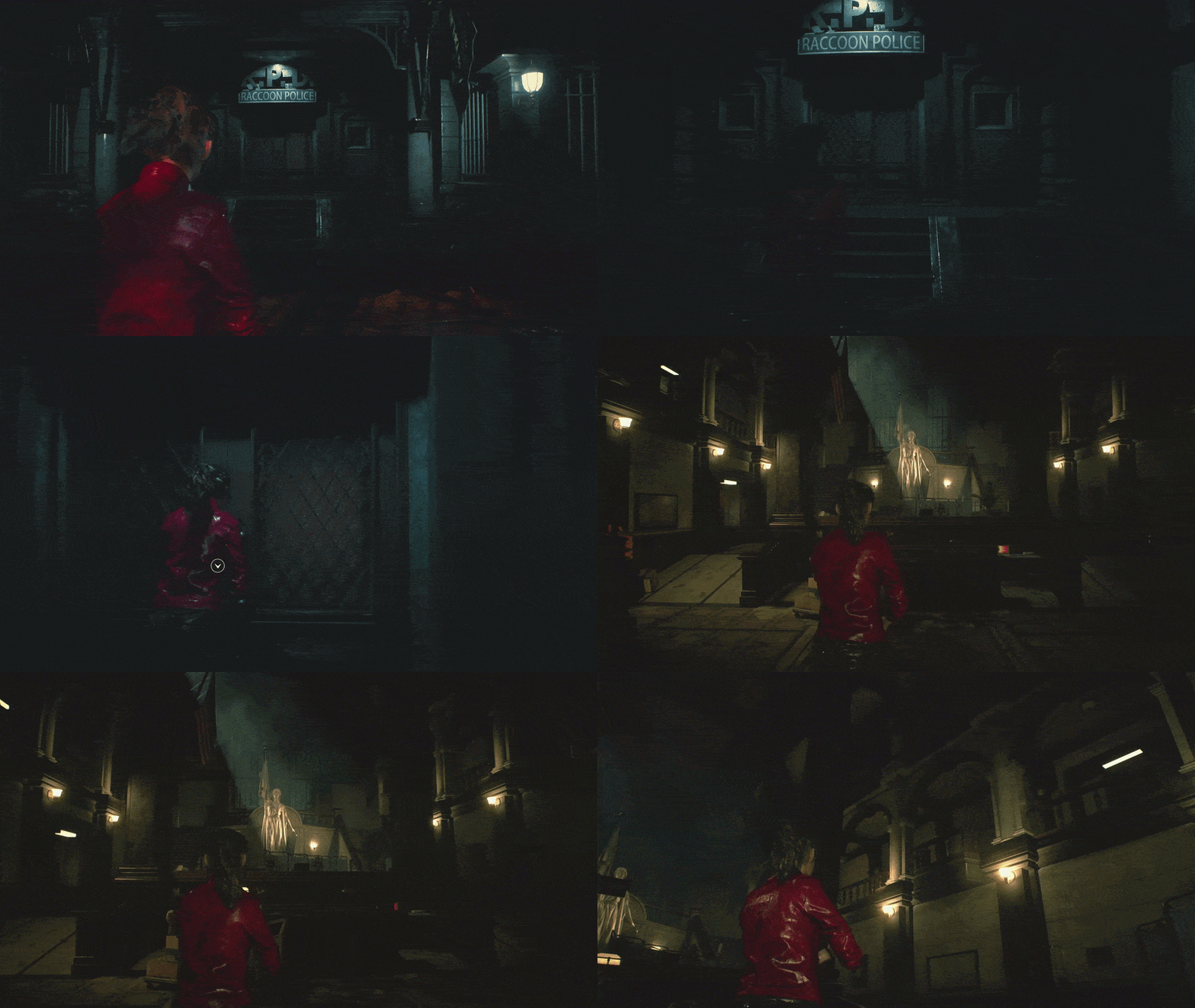
The dash to R.P.D.’s safety is short but tense, dodging zombie claws through the Racoon City streets and past the heavy entrance doors. Even more than with Resident Evil 7, Capcom’s proprietary RE Engine renders the police station with rich atmosphere and intricate architecture, seemingly providing a haven. But minutes reveal a place that lost a siege, the only path available found by opening heavily damaged steel shutters leading into a dark hallway, the close up over the shoulder camera helping the tension strangle the player. It’s a disorienting push into unknown territory, seamlessly loading the map to keep the suspense ramped. You don’t even get the company of a soundtrack, no main hall theme, just the high-quality audio design that is so still that you find company in the gnashing sound coming from the dark.
The haunted house setting requires investigation, observing your surroundings to find its particular brand of ghosts and keys, with RE2R’s level design intuitively guiding the player to look at what it wants, when it wants, and organically framing its events in cinematic style. The beginning is a long stretch of survival and acclimation as you look for anything to protect or heal you, the unfolding story revealed by the environment and explained by the recovered documents. It nails the feeling of isolation the game demands. It’s all presented with a naturalness that doesn’t need to explain itself, that you are in danger and need to find a way out. And it shows hope through an objective: find three medals to open a secret path to the sewers and out of the doomed city.
But first, you gotta get past the zombies. The action era justified removing the iconic foe because it’s an inherently slower target than what the new action gameplay was designed for, but Remake 2 solves this by designing complex models and behaviors that test players’ survival skills. Combining satisfyingly destructible bodies, a weighty animation system with momentum, and a variety of situational behaviors, the classic zombie is reborn better than ever. Their heavy shambles cause them to sway as they stalk the tight corridors, making distance less safe and their heads harder to target the closer they are, until they suddenly lunge mouth first. RE2R is physical and grounded, responsive and tactile.
Ranged Action Horror Combat
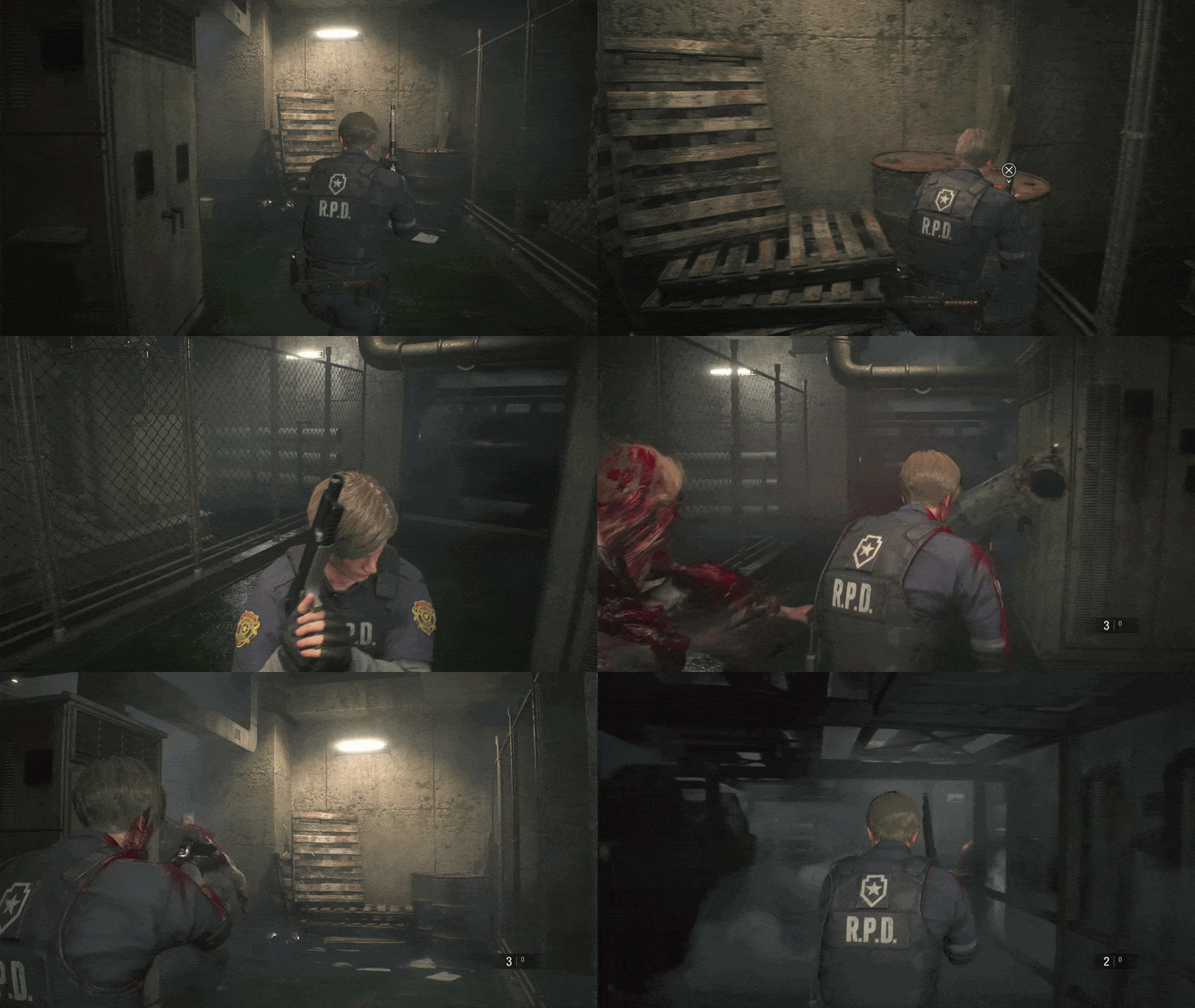
Survival horror is about vulnerability, provoking a sense of weakness, and is expressed as limited resources within a larger gameplay economy. Resident Evil’s famous ammo dependency is the most obvious version of this, but the abilities and controls given to the player have been discussed as far back as tank controls. Increase the running speed or add the dodge and zombies get a lot less scary, and, importantly, makes it easier to conserve ammo. RE2R’s characters’ methodical walking speed and bulky models area easy to grab, and so time and speed are a resource that needs to be weighed as much as herbs and grenades. Remake 2 brought back the support weapon saves from Remake 1, allowing you to evde a bite by stuffing a knife or grenade in the mouth, which saves a heal at the cost of a future attack. In addition to the finely tuned gunplay, RE2 lets characters move 360 degrees when running, finally separating character control from camera orientation for when it’s time to make space so you can regroup, aim, and get that satisfying pop as a critical headshot saves you precious bullets.
The zombie designs make them slow but durable, which is both obvious and profound, as it makes them a pressing threat that gives you sophisticated options that they can also react to. Sure, you could just tag them in the head enough times to tip them back and over or you could shoot out their legs and slash them before they can stand back up or start crawling your way. The zombie lunge that lets them close on you is appropriately terrifying and tense, often breaking a perfectly lined shot and forcing a frantic correction. Group complexity requires a constant re-evaluation of the situation, immediate decisions and investments. Leon and Claire get different weapons, which produce surprisingly different effects, the spread in his shotgun versus the damage over time of her different grenade rounds. And even when you are strong, RE2R isn’t an over-the-top action film, but a personal fight for ordinary lives in an insane situation.
The police station creates engaging fights in its tight hallways and decorated rooms and does a great job of creating obstacle courses to control the flow. Tight spaces decrease the speed but shorten the distance. Smart pathing and scripting make each map interesting, dispersing the zombies in interesting ways and frequencies, changing up the ways you progress. Zombies banging on destructible windows adds tense prioritization and a shifting battle ground, as it can be difficult enough to deal with what’s inside to add more because you were too slow nailing the boards up. Lickers, now made blind but follow sound, make progress more thrilling as you creep past by silent inches. That one battle can easily spill into another means that every section of the police station is a combat puzzle across connected maps, creating an oppressive tension that’s multiplied when the teeth outnumber the bullets.
A Scarcity-Based Economy
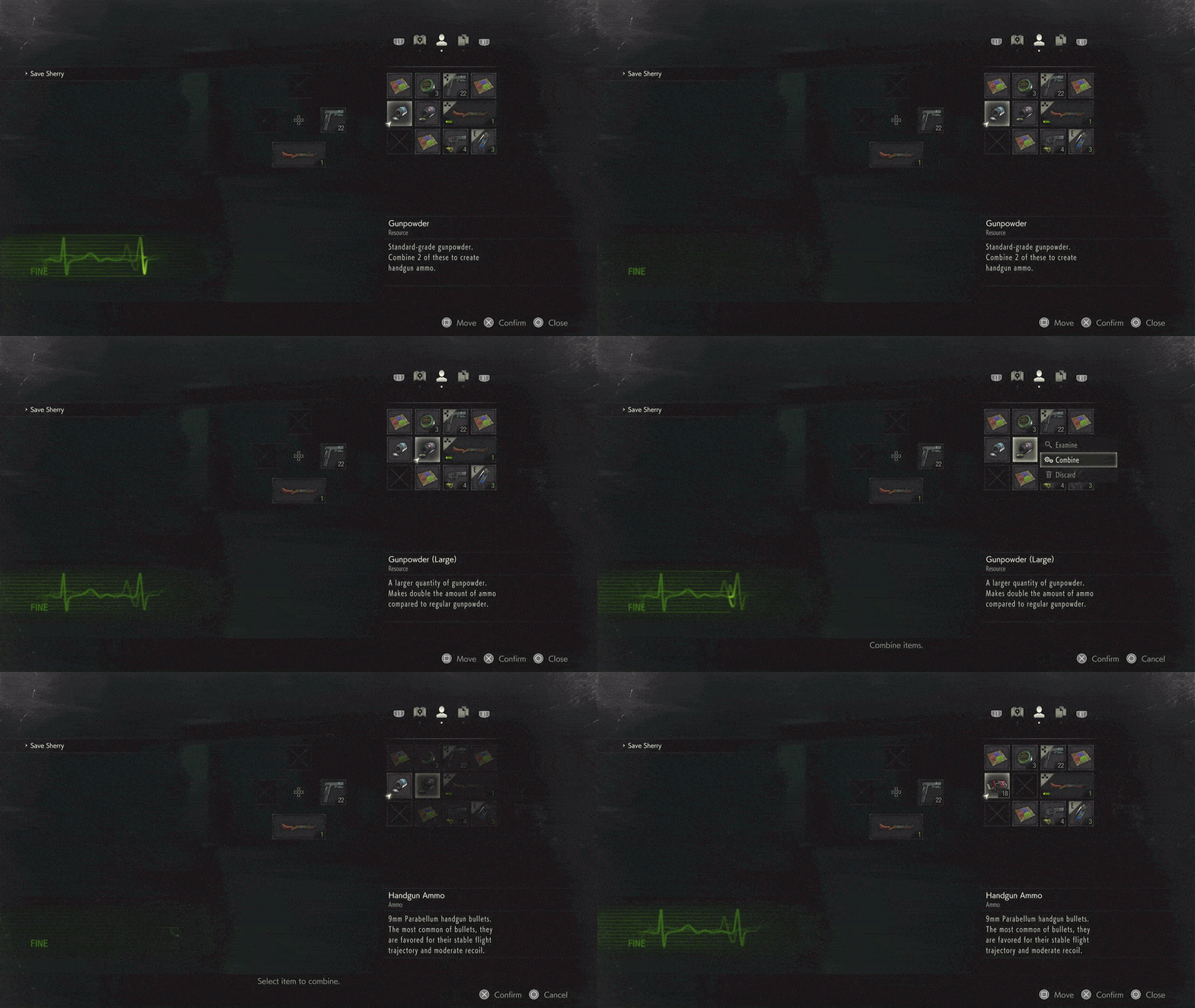
The Racoon City Police Department is an ecology of defined resources and somewhat less defined threats. Its conference room, armory, and medical station provide a variety of logically placed items, creating a great overall place to ransack supplies. Using The Legend of Zelda’s lock-and-key progression since the series’ inception allowed the environment to guide players from adventure’s opening straight to the end. The remake’s progression properly captures the original’s while adding enough to regularly present a path of plotted objectives. If anything, the routing can become too segmented, and you start seeing how the devs just made different versions of a lock. In the early sequences, the game’s scarcest resource is an explicit story, with immediate survival and discovering the environment your primary concern, items the means to push forward.
While modern design made classic Resident Evil more agile, the remake wisely includes a Hardcore mode, that increases the enemy damage, reduces ammo, and returns ink ribbons as the save mechanism, making death that much more consequential. With how spread out the typewriters can be, the game becomes about earning the best run, seeing how well and how far you can progress, before saving again. Some sequences easily require a handful of tries to get through, as you puzzle out efficient kill paths and grab everything you need before feeling comfortable enough to move on. The herb crafting was joined by a simple but deep ammo crafting system that forces interesting choices in desperate times. Those breakable windows make this harder, every new zombie that climbs through eating up more ammo. The game constantly fluctuates between vulnerability and confidence based on your supplies and distance from safety, creating waves of stress better than others in the genre. The frantic item procurement of the main game is distilled into the boss battles, primarily against mad William Birkin whose been transformed into a grotesque monster, as the player scrambles for every piece of ammo in the area.
While the original Resident Evil 2’s Scenario A, the first playthrough regardless of selected character, did a great job making this item economy tangibly tense, Scenario B that continues with the other character found a brilliant way of changing things up with the bald behemoth Mr. X, a powerful trench coated tyrant that stalks the halls and even when defeated stands back up again. But X significantly changed in the remake, appearing as early as the return from the police motor pool in Scenario A and chasing players all over the station, his large steps echoing his ever-present hunt. The big issue with X’s repurposing is that he steals the thunder from RE3’s rocket-launcher equipped Nemesis who was a fast, unpredictable agent of suspense for Jill, and served the same function. Sill, Mr. X makes RE2 a much different game than the original, refreshing the anxiety and adding dynamic encounters in the now well-traveled police station and its survival economy for both Leon and Claire.
Duality of Characters
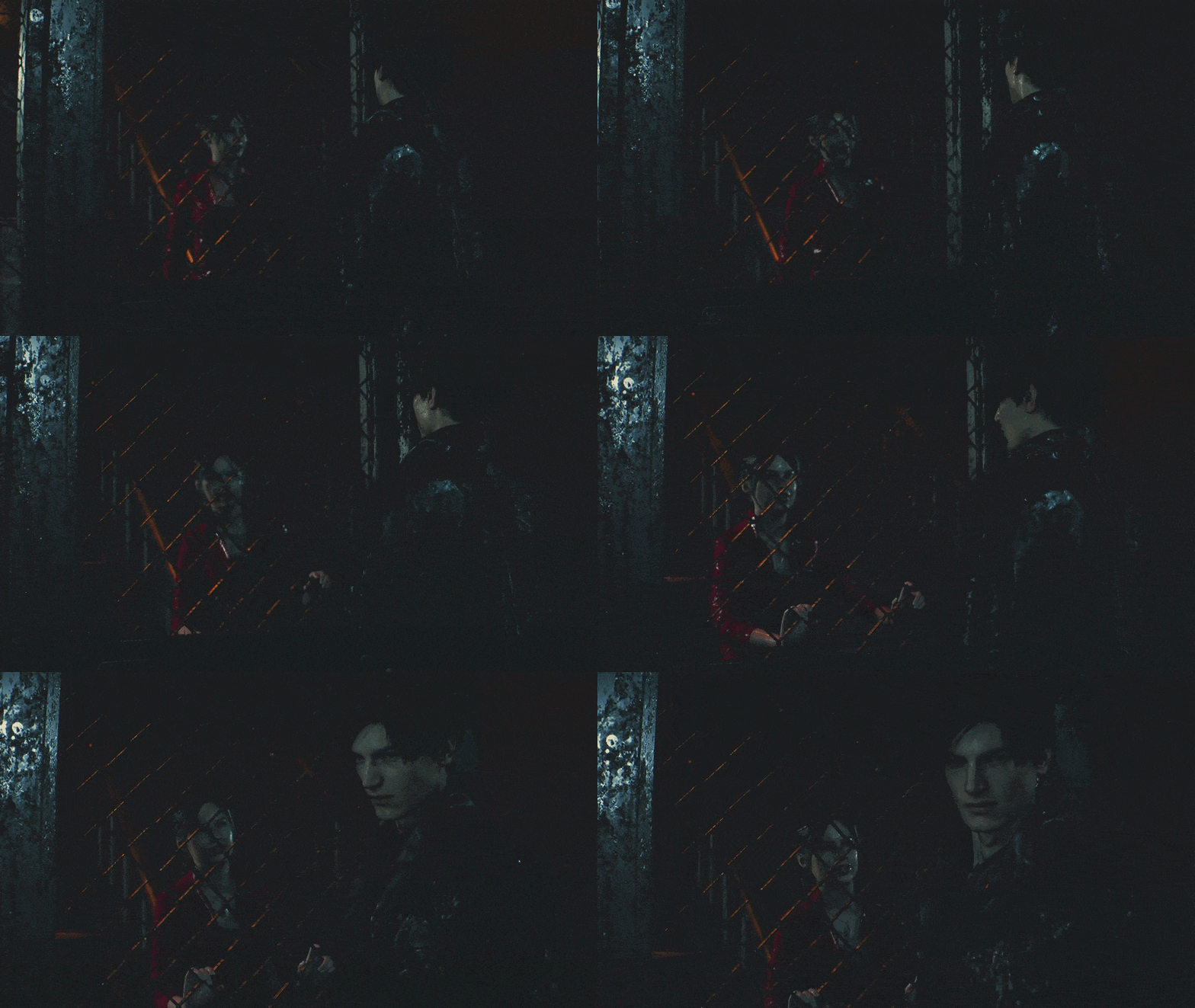
One of Resident Evil’s subtler design pillars is the duality of characters, the relationship between a pair of protagonists, and been has consistently applied since the franchise’s beginnings. The double campaign structure echoes the character selection from RE1 that allowed choosing Chris Redfield or Jill Valentine, each with their own innate characteristics, item progression, and personal sub plot. Like in that game, RE2’s cast will meet others, and Ada and Sherry complement Leon and Claire well, a love interest and daughter figure to escape Racoon City with. The duality concept was expanded to provide two complete, independent playthroughs of LeonA/ClaireB and ClaireA/LeonB, a structure so unique that the branching narrative elements were removed from the series by Code Veronica.
The Zapping System was the lynchpin holding RE2’s dual campaigns together, carrying specific actions across playthroughs, most notably the machine gun and side pouch that can be claimed by either character, applying the commodity management gameplay across the entire adventure. Another smart application is how it shows the stages of Birkin’s transformation, with each appearance in a scenario showing how quickly he’s changed since the last, but revealing a gradual, logical timeline when viewed across the complete campaign. This duality would be applied directly to gameplay starting with RE0, giving you control of both characters that you can switch between in real time, which was reworked into a co-op shooter for RE5 and both Revelations. RE2 made the campaign a single large run, extending the consequences of your performance over multiple characters.
Since RE2R reorganized the R.P.D., it cut or repurposed a considerable amount of content, going so far as to make the Scenario B character start right in front of the police station and meet their companion within minutes at a place that took the first character some two hours to reach. Items, paths, enemy locations, and more change between playthroughs, removing the main hall typewriter and item box to make it even more threatening. Even Zapping was removed, stripping the large-scale consequence and sense of cohesion that made the original so special. This is pretty surprising considering Revelations 2’s brilliant use of the system. Looking at the two campaigns shows how the game is structured, what each character does the same, what’s different, and why: the starting location and item progression in act 1 changes depending the scenario; act 2 puts them on different paths to the sewers and makes the support character playable with her own special gameplay, where they fight exclusive bosses; and then those separate paths merge back onto the same path for act 3 in Umbrella’s secret underground lab that leads to their resolution. Despite their similar foundations, the many changes stack and make RE2R a substantially different game than the original, giving us four campaigns for our heroes, more than 21 years apart.
Cinematic Character Driven Storytelling
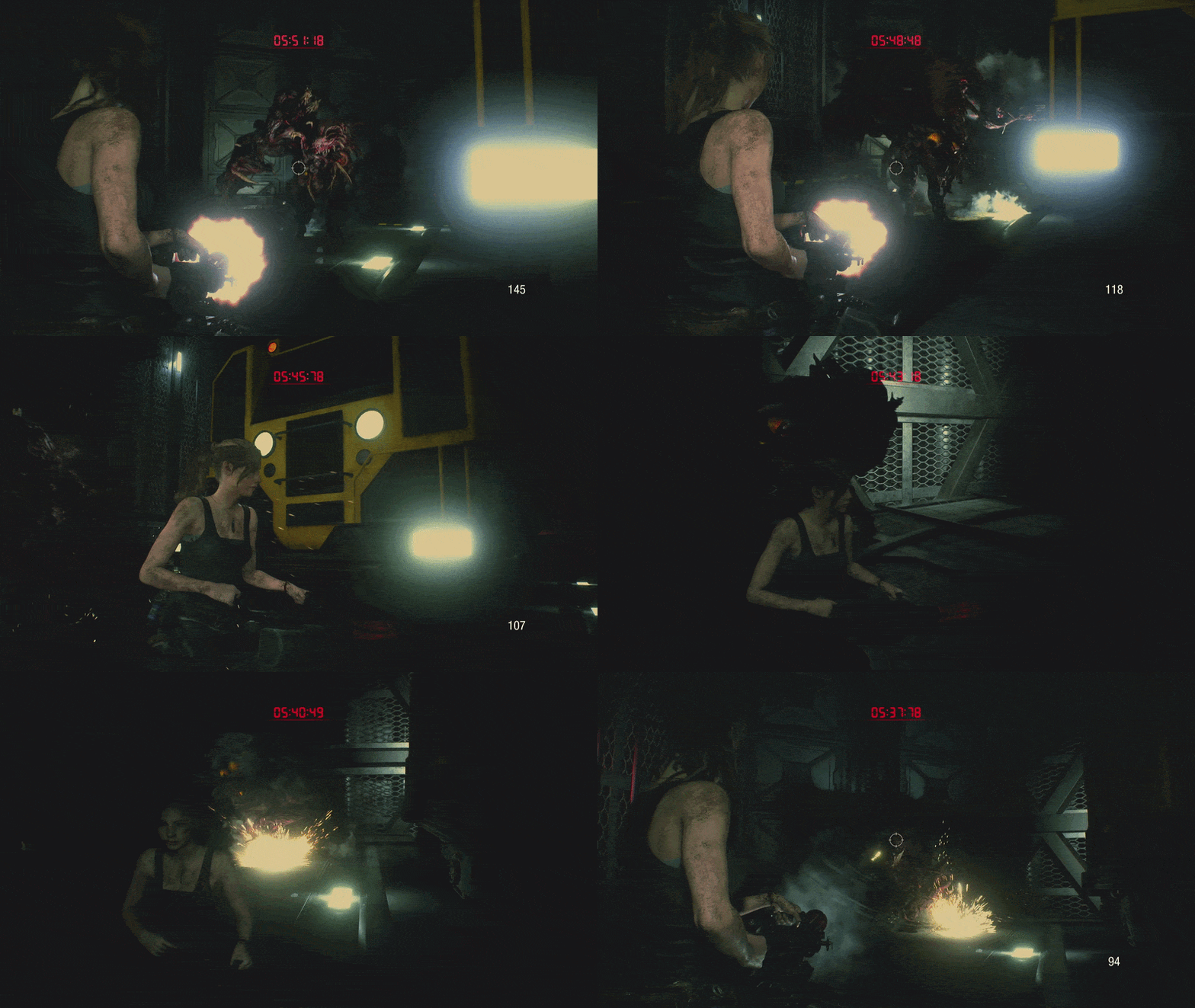
The mystery of Racoon City unfolds in cinematic style, writing human characters acted well and impressively animated. It smoothly transitions from game to cutscene and back, tells an engaging story full of fear and hope, love and loss, life and death and undeath. It gradually reveals a place whose real infection was corruption, from local government to corporation, and the monsters within humanity. After completing a sample of the G-Virus and making your escape, you’re confronted with the penultimate boss, William Birkin transformed into the pinnacle of G Virus mutation, with six arms and massive strength. It’s a fast and intense fight against a large, imposing enemy, with giant explosions, near deaths, and fury. And then when he falls, Umbrella’s lab’s self-destruct sequence begins, and our protagonist has ten minutes to escape before everything blows and buries evidence of the Racoon City incident.
It was hard to foresee at the time, but Resident Evil’s characters have become iconic in videogames, a core group emerging that lead their own titles and come together as a group. Leon Kennedy and Claire Redfield are as important as Chris Redfield and Jill Valentine from the first game. These were simple stories of personal struggle in insane times, before the bio terrorists, secret organizations, and global politics, before the people would take on larger than life presence. Where the original game rewarded high scoring games on playthroughs by unlocking the Umbrella Special Forces agent, Hunk, (and his Tofu parody) RE2R’s DLC gave what if side stories in “The Ghost Survivors” DLC, all forcing their characters to escape with limited supplies. In all of these, the game goes from being first about surviving, but as your proficiency improves, it becomes about getting the best run possible, and creating the best story that you can with the limited tools at your fingertips.
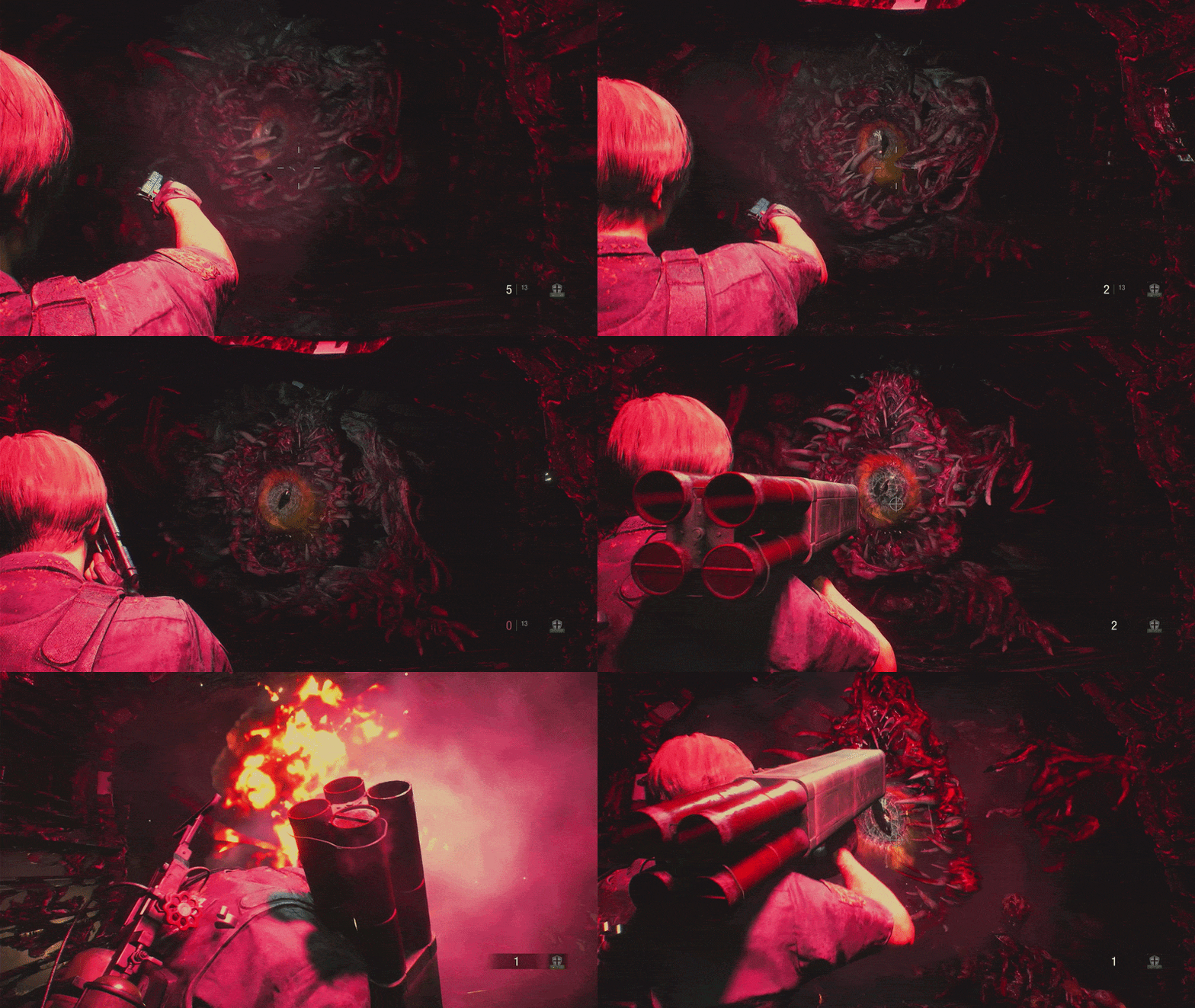
One of RE2’s most awkward aspects has always been that its four scenarios declare that the same crucial story beats happen to both characters separately in the same place, including both solving the same puzzles and fighting the same two final bosses, Birkin in A and X in B. Remake 2 corrects that by simply making Birkin Claire’s final boss because she’s with Sherry and makes Mr. X the Super Tyrant Leon’s final because Ada throws the rocket launcher that ultimately kills him. Both fights offer different intense gameplay in different arenas, made more critical by the deadly countdown timer. So as that self-detonation timer counts down, Leon and Claire must face their ultimate challenge with the train blasting them to safely so close. And only once you’ve completed Scenario B will the true final boss appear, William Birkin, his cells mutating beyond his biology’s ability to control it, and attacks the fleeing transport in animalistic rage. To defeat it, you must use the last of your reserves, those things that comforted you throughout the adventure, in a last, desperate blitz to safety.
The Resident Evil 2 remake dropped at a time of hopeful uncertainty for the franchise, having shaken off the disappointment surrounding RE6 with RE7’s refreshing first-person classic adventure. RE7 and RE2R represent two design strands from the same lineage, highlighting the benefits of a slow burn, atmospheric horror in a time of high-action and consequence-free gameplay to represent a new rebirth era, that injected excitement, intrigue, and inspiration into a series that found itself evolving quickly and adapting with the times until it had bloated beyond sustainability. But appropriately for the series and iconic zombies that made it famous, Resident Evil 2 remake is about keeping dead things alive, and having the ambition, clarity, and purpose to revive it should it die.
DEVELOPER: Capcom
ENGINE: RE Engine
2019

