
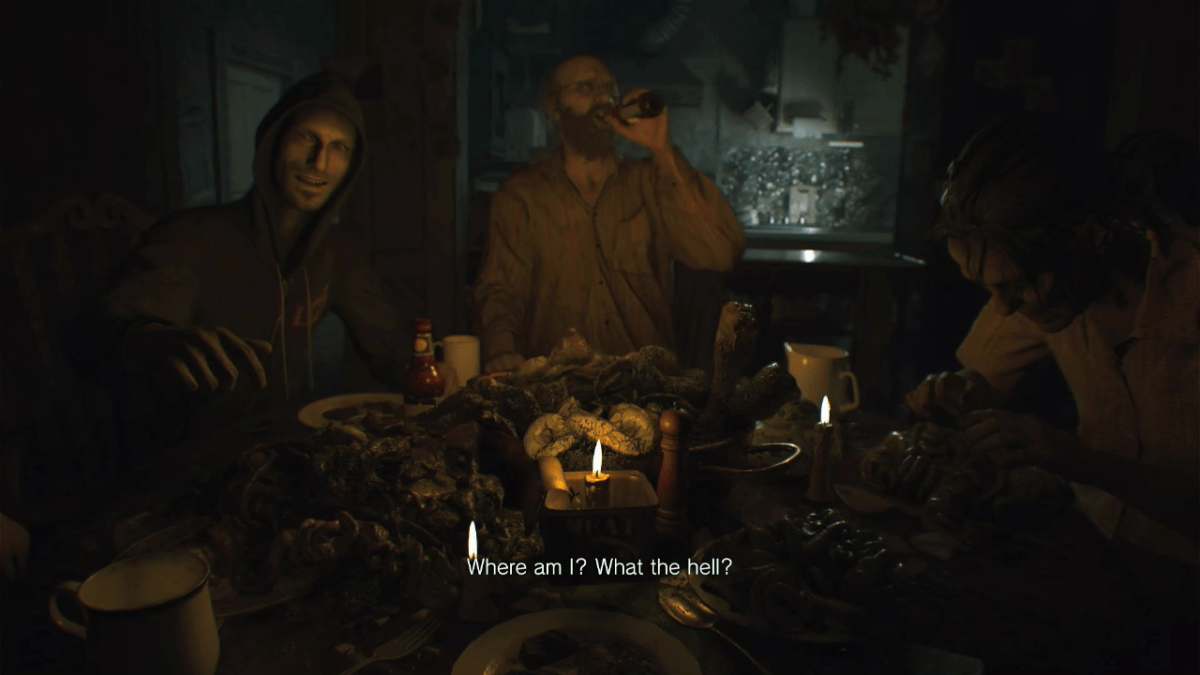
Shortly after trespassing into the abandoned Baker estate, you wake to find yourself sitting at the dining table surrounded by the family of psychotic redneck owners, the left hand that you’d just had chopped off stapled back on. It’s a surprising setting for a Resident Evil game, not only because you’re watching it all from protagonist Ethan Winter’s eyes, but because it fundamentally flips the series’ central ideas on their heads while being loyal to the core design. Rather than taking inspiration from schlocky western zombie flicks, Resident Evil 7 viewed its haunted house item progression and Condemned-esque first-person investigation gameplay to solve a country horror mystery inspired by Texas Chainsaw Massacre. Ethan escapes after dinner and kills Jack Baker when his car explodes, only to be grabbed again by fast healing Jack who blows his brains out for you in a show of his power. It’s here that the player realizes that Resident Evil 7: Biohazard, with its willingness to rethink the series on a cellular level, represents a different kind of coming back from the dead.
Continue reading “Biohazard Coming Home: When Survival Horror Returned for Resident Evil 7’s Family Reunion”Tag: Koshi Nakanishi
Resident Evil’s Revelations: How Distilling Survival Horror’s DNA Engineered Its Rebirth
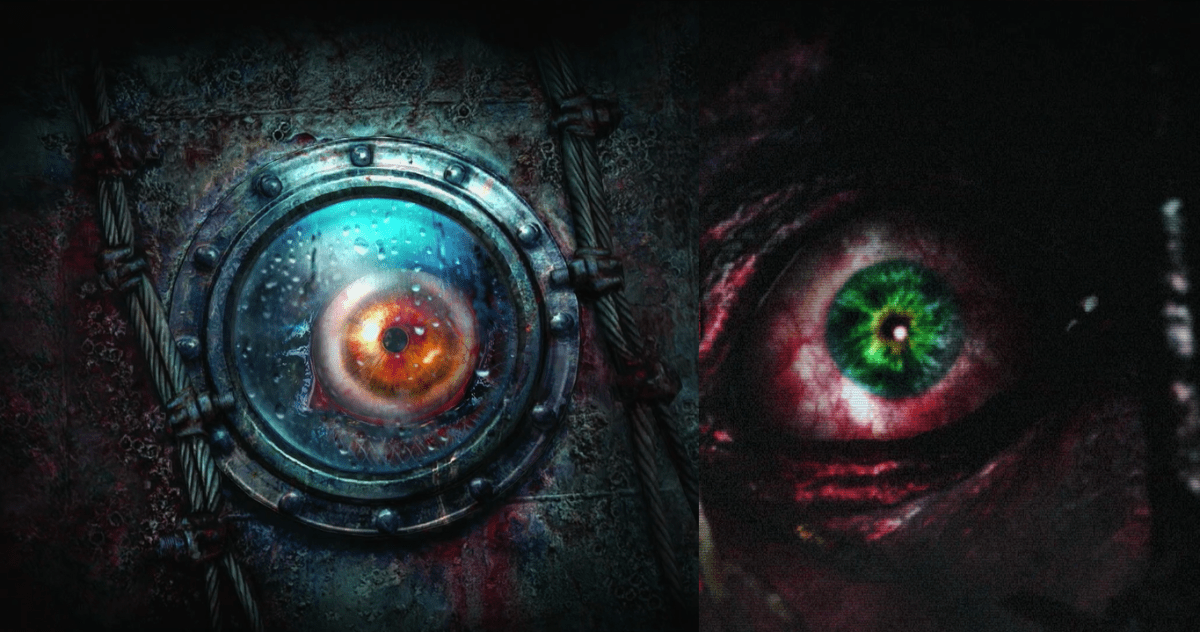
By Resident Evil 5, the series has morphed from a slow burn horror game that emulated a B zombie film into a bombastic action horror co-op spectacular, using a selectable mission-based structure that told an episodic story about bioterrorism. The change from classic survival horror began as early as RE2, adding action elements, scope, and minigames that would eventually merge into a responsive, agile gameplay that was more thrilling than terrifying. In little more than a decade, Resident Evil had seen two distinct generations, the first built around an item-based progression and the other refined into a tactical action shooter with complex level design. The quick evolution injected defects that risked killing the series, but the production team was able to administer much needed treatment, first by stripping the design down in Resident Evil: Revelations, then grafting new tissue with Revelations 2.
Continue reading “Resident Evil’s Revelations: How Distilling Survival Horror’s DNA Engineered Its Rebirth”
