
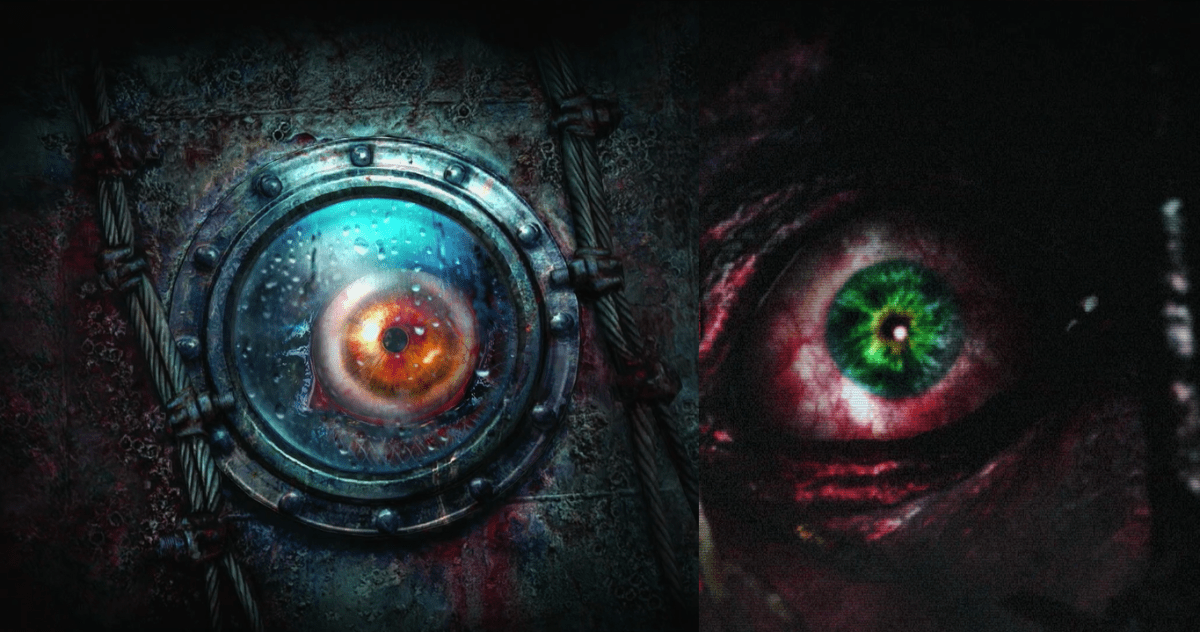
By Resident Evil 5, the series has morphed from a slow burn horror game that emulated a B zombie film into a bombastic action horror co-op spectacular, using a selectable mission-based structure that told an episodic story about bioterrorism. The change from classic survival horror began as early as RE2, adding action elements, scope, and minigames that would eventually merge into a responsive, agile gameplay that was more thrilling than terrifying. In little more than a decade, Resident Evil had seen two distinct generations, the first built around an item-based progression and the other refined into a tactical action shooter with complex level design. The quick evolution injected defects that risked killing the series, but the production team was able to administer much needed treatment, first by stripping the design down in Resident Evil: Revelations, then grafting new tissue with Revelations 2.
Despite its changes over time, Resident Evil has always revolved around core principles of adventuring haunted grounds, using ranged action horror combat, in a scarcity-based economy, with a duality of characters, telling a cinematic character driven story. The second-generation franchise creative leads Yasuhiro Ampo and Koshi Nakanishi had large shoes to fill after Shinji Mikami created, remade, and revolutionized the series, and spliced RE0’s ambitious co-op with RE4’s intense gunplay. Powered by Capcom’s MT Framework, the RE5 team was able to bring the design to Nintendo’s 3DS, which allowed it to be smaller than it had in years, a decision that would ultimately create a safety net for Resident Evil when it was most needed.
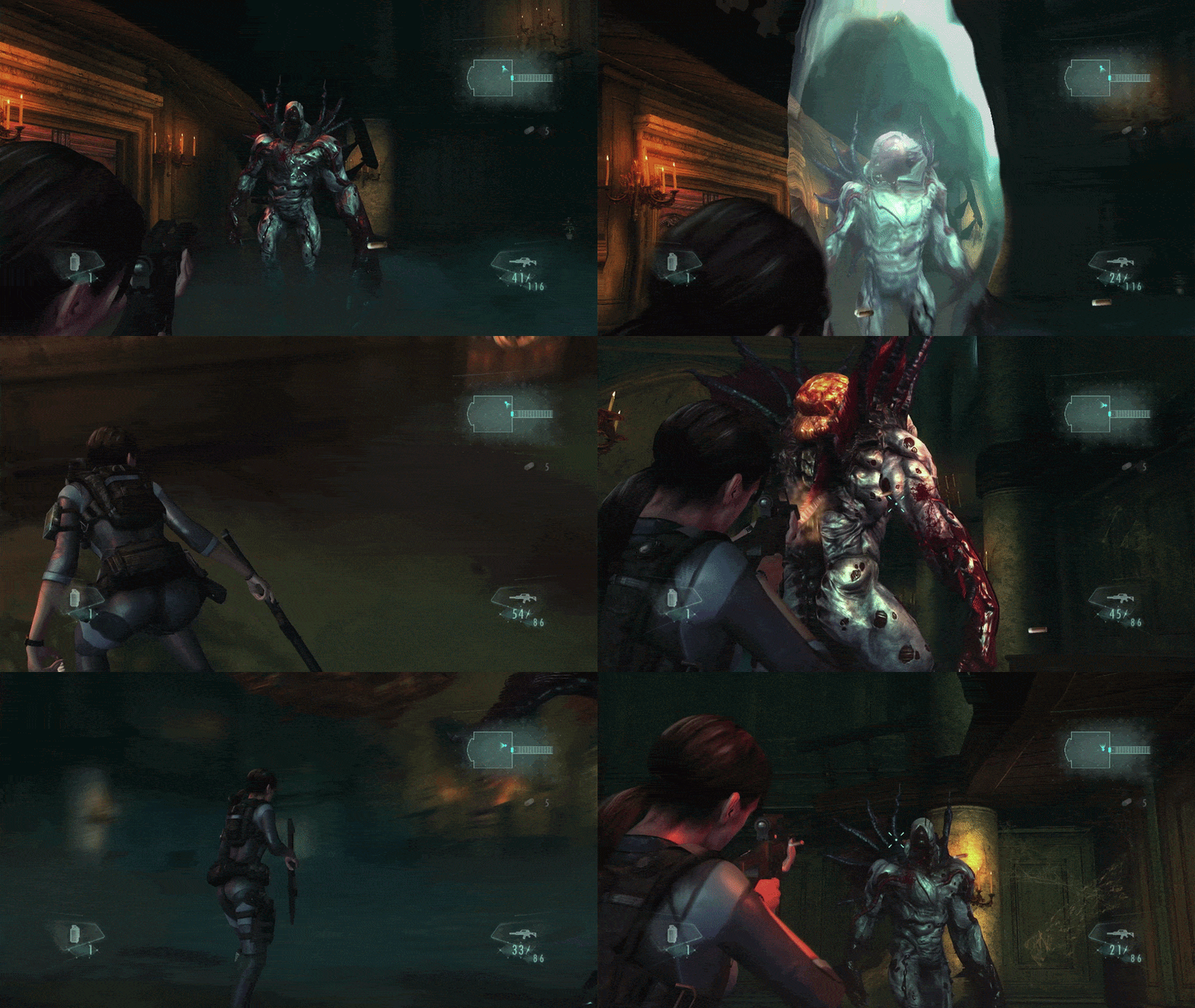
Resident Evil 5 leadership’s duties swapped for 2012’s Revelations, with Nakanishi directing based on Ampo’s design. Practicing on the 3DS hardware by porting Mercenaries mode on a Mobile version of MT, they smartly scaled the campaign down for a handheld that was played in short chunks of time, replacing the open complexes with narrow corridors and small rooms locked by items like the classic era as they simplified and rounded the edges on the action era’s combat to fit industry standards. While the partner character remained, they weren’t co-op, playable, or any kind of interactive but the campaign spans multiple teams, times, and locations, each with their own item persistence. The technology forced the moment-by-moment gameplay to a personal level, even more so after including a first-person option for the gunplay.
Years after the solar city Terragrigia fried itself to stop the virus unleashed by the bioterrorist organization Veltro, BSAA agents Jill Valentine and Parker board the mysteriously quiet cruise liner The Queen Zenobia in search of missing Chris Redfield and Jessica, led there by rumors of Veltro’s return. The ship allows the former S.T.A.R.S. agents to relive the terror of Spencer Mansion, the haunted house reimagined as ghost ship, the new T-Abyss virus threatening to poison the entire ocean and all life on Earth. But first, they must deal with the new creatures stalking the ship’s bulkheads.
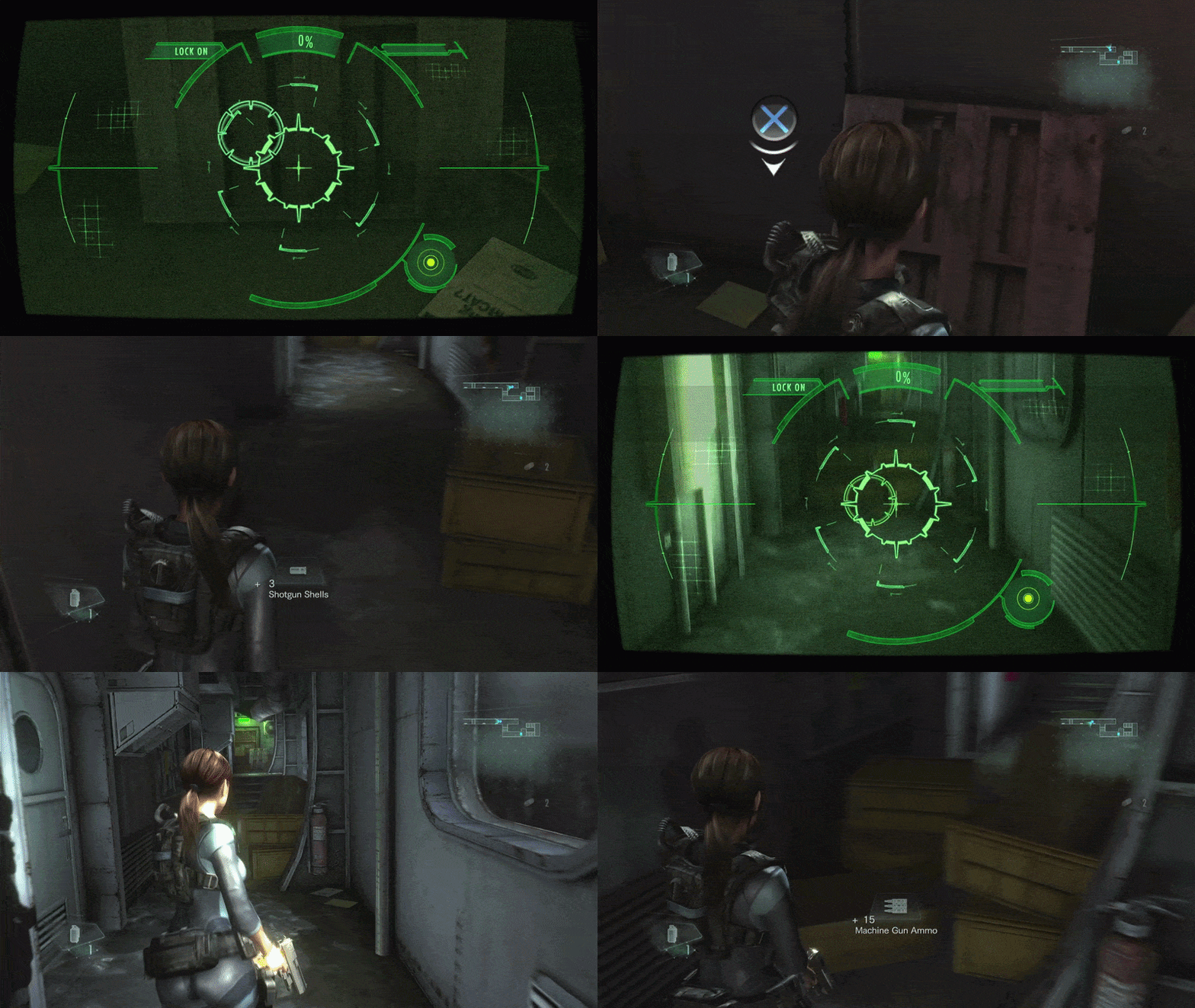
While the enemies in Revelations aren’t particularly inspired, they can be stressful in the tight corridors. The traditional tank controls were replaced with standard forward/back/strafing on the left stick and aim on right, a quick turn, and an evasive maneuver, making the gunplay easy to understand, well-rounded, and not overly powerful. The tight corridors force you to engage enemies well and can easily lead to areas just complex enough to break up the pacing. Weapon usage was adjusted as well, room to equip three guns with selectable mods, grenades on R1, and a knife attack on R2 when not aiming, a control scheme inspired by Lost Planet. Adding the Mercenaries-like Raid mode with scoring system kept the arcade action that increasingly took over the series for those that want it.
Investigation is obviously important to unlocking a RE haunted house, and though Revelations uses the mission structure from recent third person shooter entries, the Zenobia is laid out with the item progression and scarcity of the classic era, allowing the player to run as much of the ship as they’ve unlocked at any time to search for items and files to discover the unfolding story. The first-person shooting mode is very important for what would come of Revelations lessons, and it is equally used to explore the Zenobia, as aiming the Bioscanner with L2 allows scanning the environments for hidden items, hilariously turning even the investigations into a shooter.

Because it was forced to scale down its gameplay to accommodate the technology, Revelations had to be economical with its design while having the freedom to play with new mechanics and systems. The important part of Revelations is that it offered a glimpse of something almost gone from Resident Evil: a simple, connected location that was an important character in a story told on a personal scale. And with it, Resident Evil was re-anchored to its heritage, an important tether point for what would come next.
Later in 2012, Resident Evil 6 released on consoles and PC and was the opposite of Revelations, a gigantic game that upped the ante for action horror, containing four full co-op campaigns based around unique gameplay and large action set pieces. You were no longer a vulnerable everyday person in a living nightmare, you were a superhero starring in a horror movie. RE6 finally improved the controls so movement was independent of camera orientation, allowing players to run in any direction no matter where the player was pointed, but was stuffed with new combat mechanics such as dodges and SWAT rolls, a questionable hybrid aiming system, and melee combos. 6 was a chimera of interests, ambitions, and gameplay its body couldn’t support. And it could have broken Resident Evil, but Revelations‘ made a crucial anchor point.
Since MT Framework was meant for console and mobile development, Revelations and its stripped-down gameplay could be ported (minus first-person aiming) to platforms and core playerbase while retaining the mobile-scale expectations- it was a great way to inject classic Resident Evil genes back into the destabilized franchise’s public image. But after that, good tissue needed to be rebuilt starting small, and, luckily, Ampo’s mission-based gameplay was well-suited to the contemporary episodic DLC distribution model, allowing his next RE to take full advantage of modern platforms while keeping its scope small, focused, and personal.
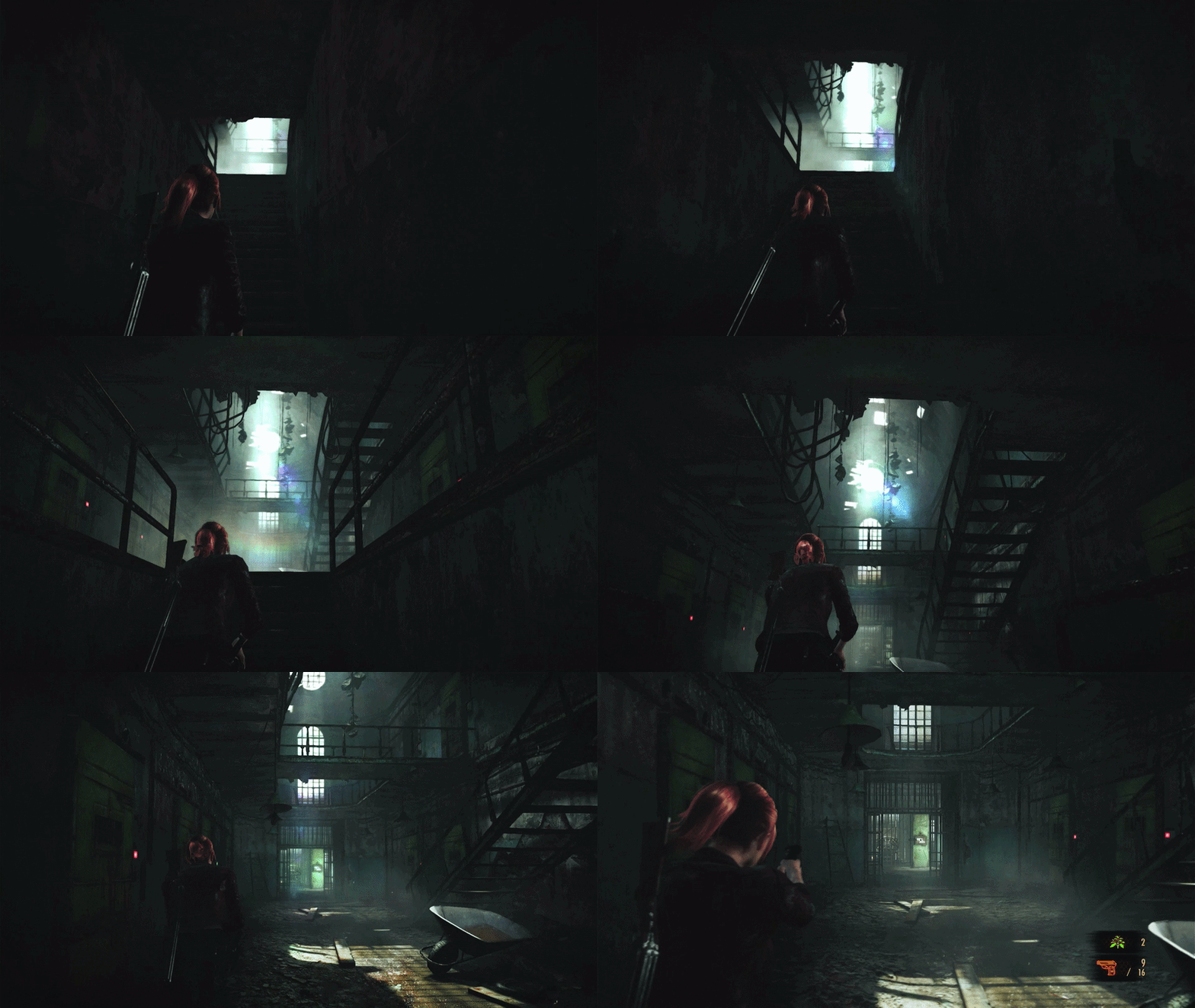
Over a month in 2015, Capcom released all four episodes of Resident Evil: Revelations 2, an atmospheric, consequential game alternating between two co-op pairs in the same location months apart. Following the Terragrigia incident, TerraSave is established to clean up bioterror units, who takes on Claire Redfield and Moira Barton, daughter of S.T.A.R.S legend Barry. When the employees get kidnaped during an organization party, the ladies wake in an island penal colony haunted by the Afflicted, test subjects turned to monsters from the terror inflicted on them. Barry retraces their steps looking for his daughter, only to find a mysterious girl, Natalia, who can sense these creatures. With Kazunori Kadoi as lead designer, Ampo created a tense, atmospheric game that smartly expanded Rev 1’s distilled gameplay, allowing you to instantly switch between differently playing characters to fight and solve puzzles, building out the core gameplay to emphasize vulnerability and implementing a meaningful zap system, the combination of which finally achieves the ambitious survival horror co-op that RE0 had aspired to.
The most immediately powerful representation of Rev 2’s tonal reset is its handy flashlight. MT Framework’s lighting system allows the penal colony to be draped in darkness, perhaps the game’s most pressing enemy. And the flashlight utterly defeats it, revealing the Afflicted and secrets hidden within. It provides as much safety as any weapon. RE3’s item system was expanded to create more meds and various bottle bombs. Since Moira doesn’t like guns, she gets flashlight duty, separating the eyes and hands, providing the total means to feel secure but leaving large enough gaps that tension and fear continuously seep through. The young Natalie possesses the ability to sense enemies through walls. The addition of crouching and new enemy AI allows stealth, capturing Metal Gear Solid 4 and Batman: Arkham Asylum’s dynamic gameplay, and rounding out the combat by splicing up close melee onto the ranged gunplay. Co-op puzzles separate characters in interesting ways, and the contained, time displaced maps route both couples through these areas well. This is sustained, concentrated tension. And then it explodes.
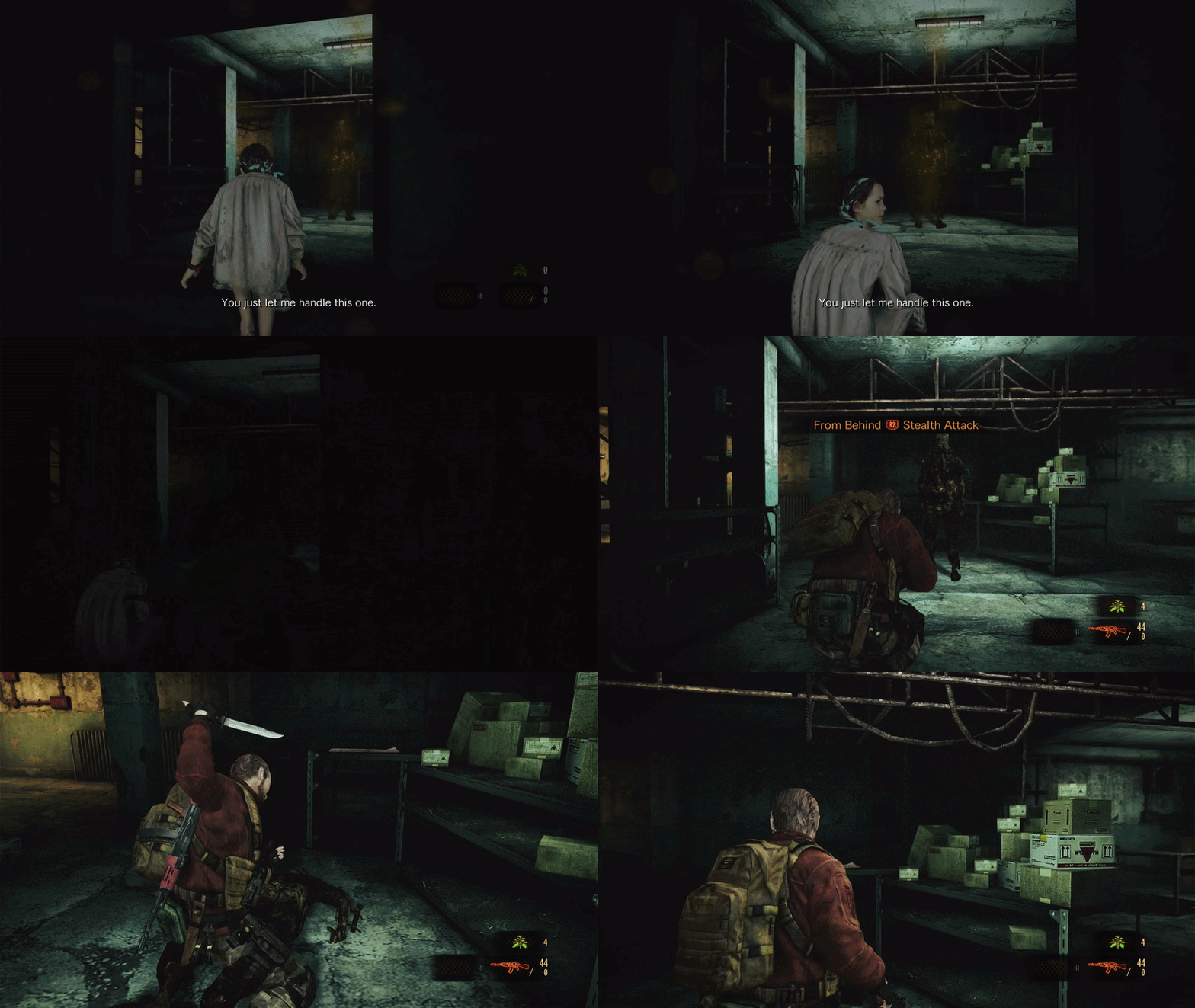
The Afflicted are an incredibly satisfying enemy to fight, their movements, reactions, and hit detection all have weight, which pairs well with the tight shooting mechanics. Overall movement speed has increased and there’s a four directional dodging system. The core gunplay has been crafted to give players power without betraying its scale. Co-op affects gameplay as Moira can blind enemies, ironically leaving them as vulnerable in the light as you are in the dark. The partner AI does a good job assisting you, shadowing your movements, shining light where you’re looking, and healing. The close-up camera and tight corridors keep gameplay personal, while large areas provide options. Rev 2’s gameplay makes fighting one enemy harrowing, groups frenetic.
Revelations 2 did something remarkable – it integrated one of the series’ most important elements, the duality of character, into multiple active layers of the gameplay, not only completing RE0’s single-player co-op, but recreating RE2’s zap system so actions in the first part affect the status of the second part. Co-op was drastically improved by differentiating character roles, shooter and support, that create different kinds of scenarios. Moira’s crowbar opens chests and doors while Natalia throws bricks and crawls through holes, giving each team a different but overlapping route through the same area. Then something weird happens: Claire kills an Afflicted without destroying the puss on its head, and then Barry gets attacked by the creature that grew on that spot afterwards.
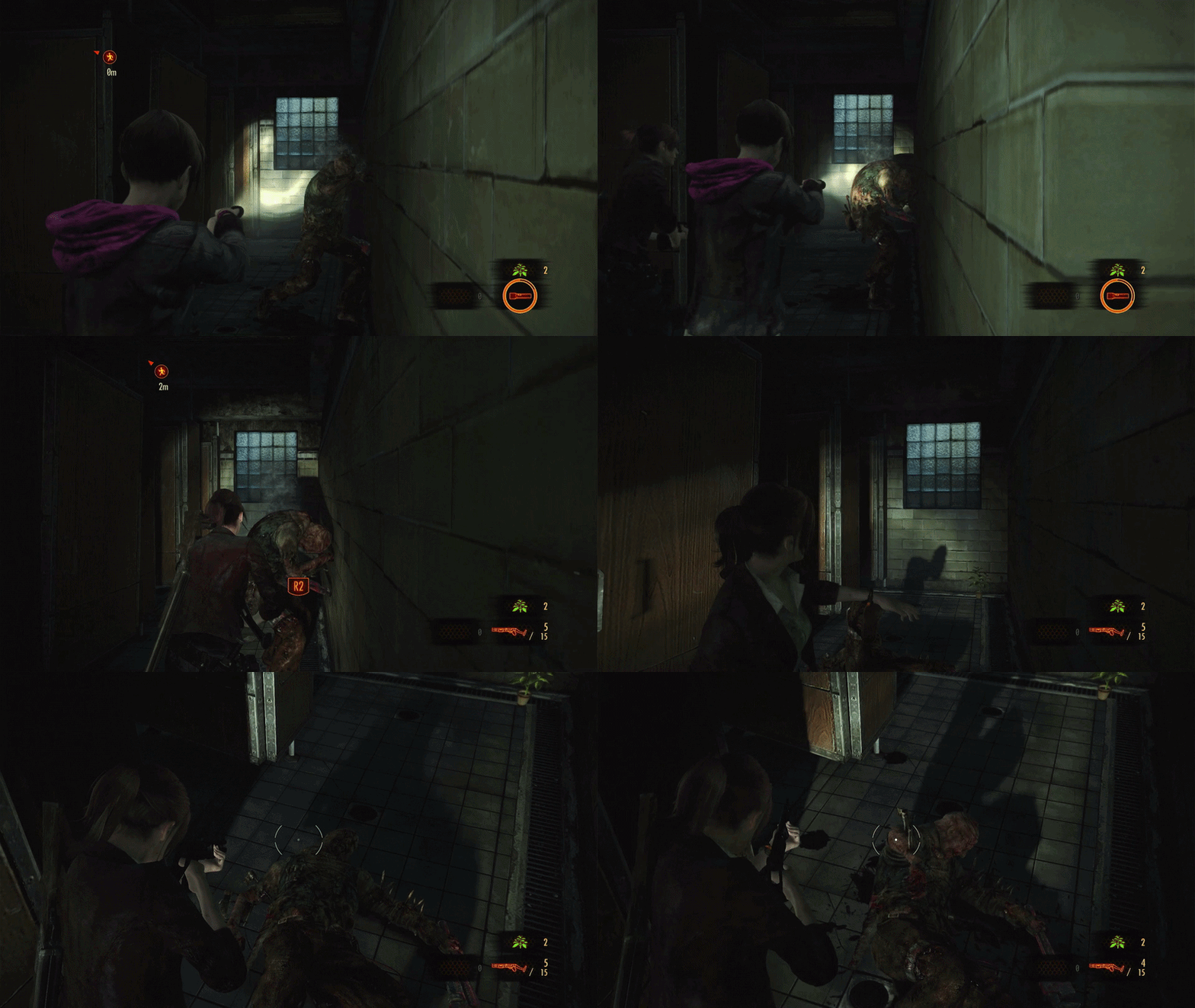
The time split creates a natural zap system where taking items, killing enemies, and making key decisions carry from Claire to Barry. Actions have larger, more immediate consequences than before, and so that sense of vulnerability, the fear of making the wrong move, amplifies. This vulnerability is at the heart of Resident Evil’s terror, and Revelations 2 figured out how to bring its impressive design down to the player’s level, proving that you can still have action moments within classic RE’s ground level horror, merging its two gameplay strains together, and taking the co-op branch to its natural conclusion.
Once the classic and action eras had been united, the primary creatives behind these two games would refine their own unique branches. Nakanishi would craft 2017’s first-person RE7: Biohazard, a game inspired by hillbilly horror like Texas Chainsaw Massacre and Condemned 2: Bloodshot, putting players into the Baker Mansion against a family of monsters. In 2019, Ampo and Kadoi further scaled down their atmospheric interlocking gameplay for the remake of Resident Evil 2, reimagining that game’s classic moments and structure into a terrifying, personal adventure. With Revelations‘ greatest discovery a modern model for Resident Evil‘s classic survival horror, the series could do more than just reclaim its legacy, it could be reborn into a form sustainable for the future.
ENGINE: MT Framework
DEVELOPER: Capcom
2012, 2015


One thought on “Resident Evil’s Revelations: How Distilling Survival Horror’s DNA Engineered Its Rebirth”