Double Dragon Neon OST

The Dragon Uppercut to Your Girlfriend’s Stomach

Double Dragon Neon lands a first-frame hurricane kick to the junk with a virtuoso big-hair anthem that recaptures the lost spirit of the original ‘80’s arcade classic while reveling in the decade’s ridiculous excesses.  As if powered by compositions spawned by some ancient Chinese magic, Jake Kaufman runs to the right and punches dudes in the face with the confident bravado of an action movie hero.
Continue reading “Double Dragon Neon OST”

Mark of the Ninja

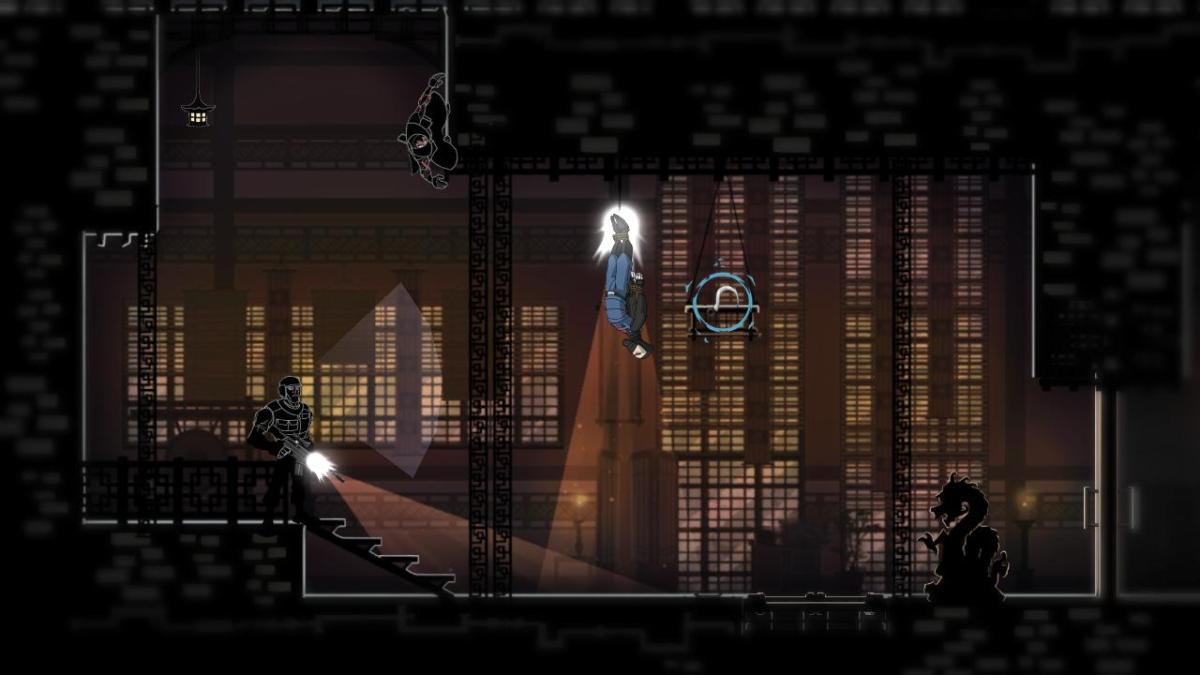
The stealth action genre has long been an echo chamber unto itself.  While many games have integrated its core ideas, its pure form hasn’t evolved much since Metal Gear 2 on the MSX.  It’s a genre that many critics have argued relies too heavily on trial-and-error, exists as puzzle games in action-game skin.  Mark of the Ninja shrugs these distinctions off while living inside them.  It’s a smart title that promotes a different kind of stealth: action not patience; the hunter, not the prey.

Continue reading “Mark of the Ninja”

Mass Effect 3 ‘Leviathan’ dlc

Mass Effect 2’s post-launch content was among the best examples of the practice this generation.  Not only did each flesh out the Mass Effect universe, they allowed custom built levels and their own cohesive story that could accentuate Shepard’s story while still existing outside of its confines.  Leviathan is the first such piece of content for Mass Effect 3 but that games controversial ending hangs heavily over this even before you embark on its mission.

Continue reading “Mass Effect 3 ‘Leviathan’ dlc”

Jet Set Radio

Graffiti is art.  However, graffiti as an act of vandalism is a crime. 

Jet Set Radio is very nearly a complete metaphor for freedom. Smilebit accomplished the task by making its game small in scope and using every element of its design to construct a theme: it has a large, overbearing enemy in its fascist Tokyo-to and a graffiti mechanic that is an action-oriented, easily understood core concept that is itself a means to fight against the oppression.  It gives characters the tools to move deftly through the world to leave their mark. With the guidance of free-wheelin’ DJ Professor K and his pirate broadcast, the youth are rebelling in the heart of Tokyo-to and the pressure is boiling up from the underground.

Continue reading “Jet Set Radio”

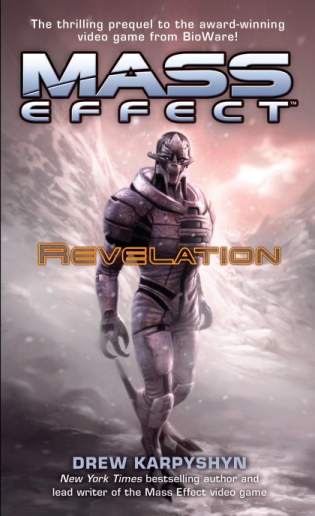
Mass Effect: Revelation

The Mass Effect saga is a sprawling epic that covers over a hundred thousand years of galactic history.  In Bioware’s extensive fiction, we learn about people long extinct, meet dozens of new races, and come together to fight an enemy that threatens to destroy it all.  It’s a complex timeline filled with personal conflict, social turmoil and galactic politics.  And we got our first glimpse of it in Mass Effect: Revelation.

Continue reading “Mass Effect: Revelation”

Bastion: The Kid’s Fairy Tale

A child’s eyes see a simple world.  For centuries, fairy tales have been tools to give those eyes a view on the world they might not see on their own.  They are a means of teaching lessons and giving metaphors, to see villainy and sorrow overcome by heroism and bravery.  In Bastion, Supergiant Games has crafted a new fairy tale in videogame form, one that allows you to revisit your youth while celebrating the games you loved when you were small and the world was big.

Continue reading “Bastion: The Kid’s Fairy Tale”

Principles of Design- Characters

First impressions are tricky things. You are introduced to every character as you are every person- without context. You might have seen pictures of what they look like, heard of their stories, but until you see them with your own eyes, it’s all academic. There are only two qualities about any person that can absolutely be measured- their existence and their actions. Their motivations and psychology are nothing more than conjecture and speculation but that doesn’t mean they’re not important.

Continue reading “Principles of Design- Characters”

Life, Agency and How Videogames Teach Us About Both

I was born in the wasteland that was once Washington D.C.  I felt joy and sadness; met people that will stay etched in my mind forever, made friends and enemies.  The life was mine alone to lead and I made choices that affected it every day and with every step.  I died on the other side of the Omega 4 Relay saving humanity from an enemy they didn’t believe existed.

Continue reading “Life, Agency and How Videogames Teach Us About Both”

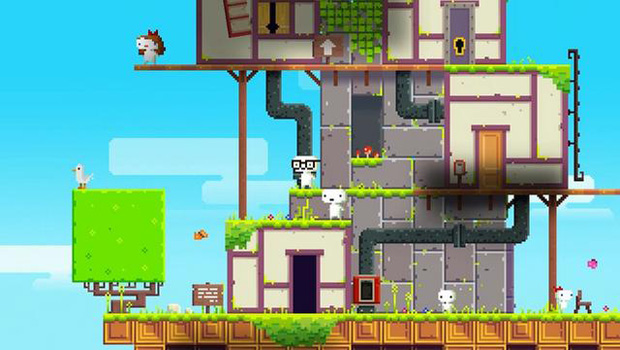
Fez Narrative Analysis: Changing Perspectives and Growing Up

Fez requires you to change your perspective.

You start in Gomez’s small room. Presented as a flat 8-bit, 2D side-scroller, the room is clean and well decorated, but is obviously a child’s. Gomez can run and jump but his only initial act is to leave. Outside is the beautiful, vertically oriented village and kind but simple residents. You are beckoned to the top of the village from a mysterious old man with an eye patch and a small red fez. He tells you that it’s an important day. That’s when the Hexahedron appears.

Continue reading “Fez Narrative Analysis: Changing Perspectives and Growing Up”

Journey

Journey opens with a red-robed figure sitting in the sand, the only immediate task climbing a nearby dune.  Making way is slow, the footing gives way and the walking arduous.  The view from the top reveals the mountain peak far in the distance and reaching it is the singular goal of the title thatgamecompany has crafted, one that utilizes every narrative convention afforded by videogames to create your own journey.

Continue reading “Journey”