

Asura’s Wrath contains one of the most brilliant player-directed narrative sequences in videogames; a fist fight. The two brawlers dance about the screen, one trying desperately to explain his actions to the other among a flurry of attacks. To evade them, the player must nail the timing for the increasingly frequent on-screen button prompts as any mistake is punished with a fist to the face, interrupting the dialogue and completely ending the conversation.
Category: Design
Essays on game design principles and narrative theories afforded by digital technologies.
Zelda’s Missing Link

Early on in A Link Between Worlds, the travelling merchant Ravio takes up shop in your house, lines it with The Legend of Zelda’s classic complement of items and offers to rent Link each and every one. This event single-handedly eradicates the suffocatingly linear item-based progression that had reached its logical conclusion even before Twilight Princess put its staggering deficiencies on display. A Link Between Worlds is in many ways an alternate take on an old story, one that reveals its true ambitions at the beginning of the second act as Link squeezes through a tear in the fabric of Hyrule and discovers that every inch of the world and its seven palaces are accessible with the right tool in hand.
The Saint’s Flow: Purple Stuff

The Japanese ad for The Saint’s Flow Energy Drink shows Pierce, the hip and youthful face of the Third Street Saints brand division, being mercilessly beaten on a basketball court by armed punks. The situation looks bleak, until an anthropomorphized purple can of Saints Flow descends from heaven and gives him the strength to throw off his attackers, unleash a savage volley of fists, kicks and a clothesline before shooting a Ryu-style fireball from his hands and closing out the performance by atomic dunking a basketball that appeared out of nowhere to a shower of neon stars. The Third Streets Saint’s lifestyle has been canned and is ready to be swallowed.
It’s All Been Done Before: Bioshock’s Infinity
NOTE: Franchise Spoilers
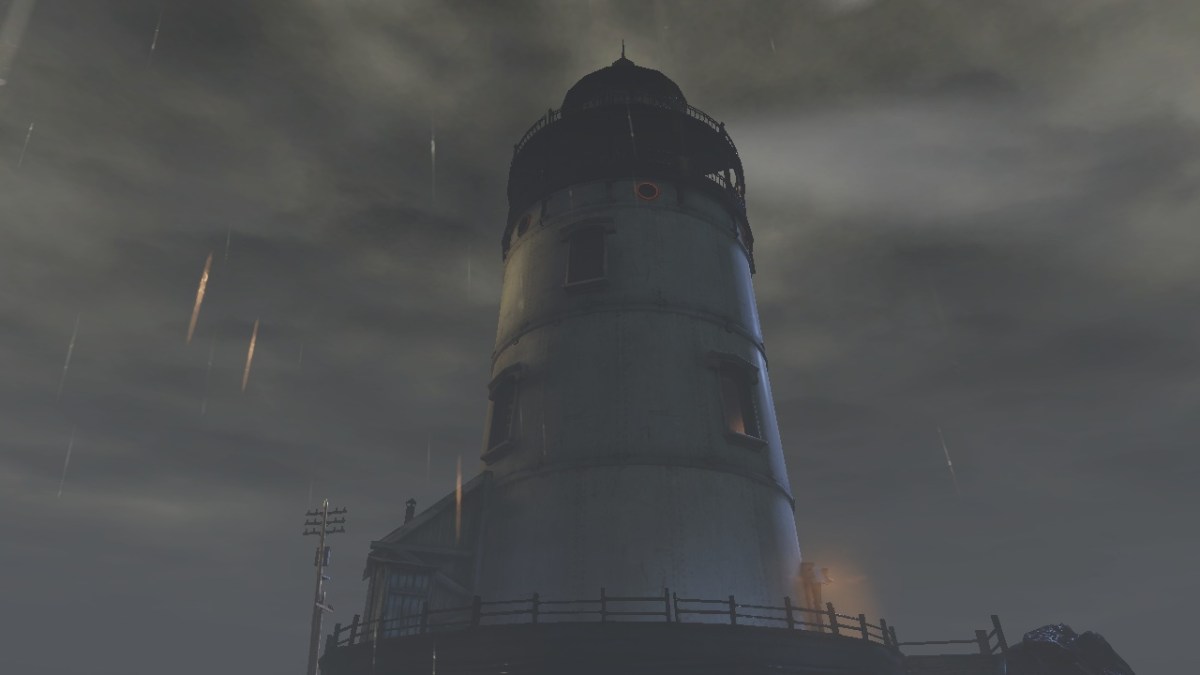
Two lighthouses stand tall. In both Bioshock and Bioshock Infinite, walking through their front doors is the first step in your adventure in two cities that share more in common than their architecture would lead you to believe. In Bioshock proper, the door leads to a bathysphere that takes you to the cold blackness of the underwater city of Rapture, deep below the sea. In Infinite, it contains the rocket that will launch you to the sun washed floating city of Columbia, high above the clouds. You only need to play the first five minutes of both these games to observe the duality at their heart- one is a descent into Hell, the other the ascension to Heaven.
Continue reading “It’s All Been Done Before: Bioshock’s Infinity”
Metroid: Zero Mission: A Screw Attack to the Cerebral Cortex

Go immediately left from the start of Metroid: Zero Mission and you’ll find the Morph Ball upgrade exactly where it was in the original Metroid. This is the first in a series of discoveries that shows how the remake beautifully modernizes galactic bounty hunter Samus Aran’s first adventure that celebrates the past while recognizing the journey her series embarked on following it, rebuilding the original release in the structure of influential classic Super Metroid.
Continue reading “Metroid: Zero Mission: A Screw Attack to the Cerebral Cortex”
Resident Evil 4’s Silent Tutorial
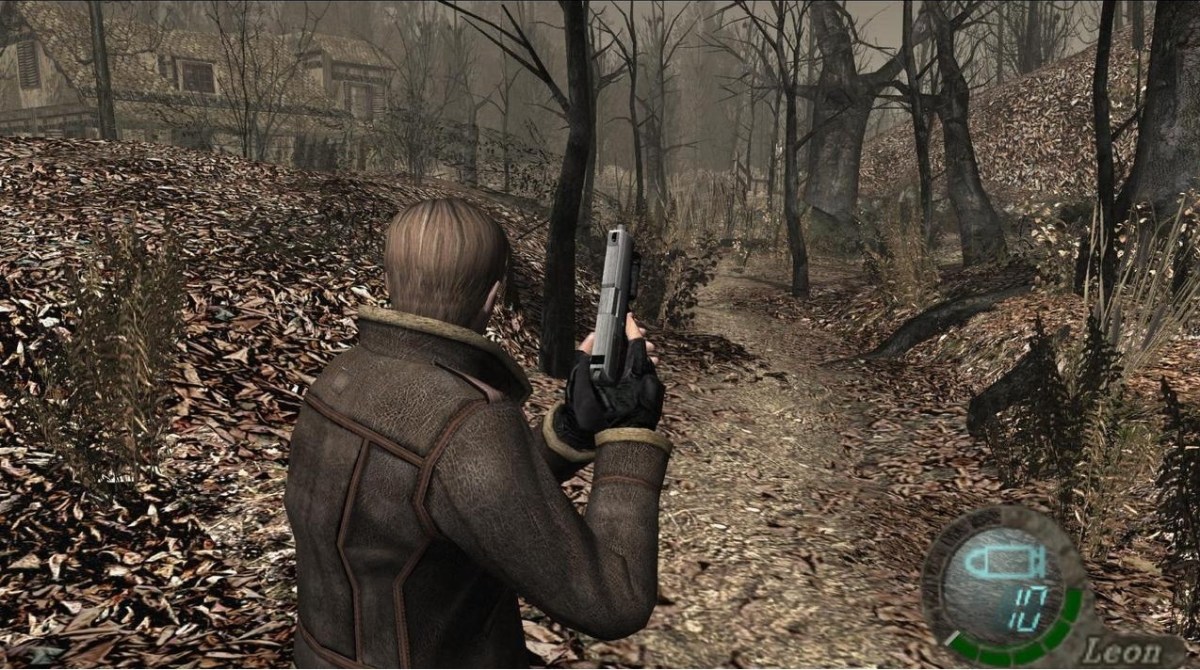
Fifteen minutes into Resident Evil 4, Shinji Mikami and his design team test your comprehension of the mechanics they’ve been invisibly teaching you since you selected ‘New Game’. Former rookie cop Leon S. Kennedy had just fought his way through the Ganado’s Village and now finds himself catching his breath on an old dingy farm. Stray slightly from the beaten path and you’ll find a radiant pearl necklace enticingly suspended above a barrel of putrid water, patiently waiting for you to find it. Retrieving this necklace is your test. You can’t just reach out and interact with it, so you draw your handgun and shoot it loose- and immediately fail as it falls directly into the barrel of sludge beneath. When you pull it from the filth, your inventory lists the item as ‘Dirty Pearl Pendant’, its picture a grimy mess. Looking back at the barrel, you notice the 2×4 propping up the lid, so you shoot that next and watch it create a cover. Since you didn’t learn the lesson before, you do now: Resident Evil 4 rewards tactical gunplay.
Let’s study the notes:
Double Dragon Neon OST
The Dragon Uppercut to Your Girlfriend’s Stomach
Double Dragon Neon lands a first-frame hurricane kick to the junk with a virtuoso big-hair anthem that recaptures the lost spirit of the original ‘80’s arcade classic while reveling in the decade’s ridiculous excesses. As if powered by compositions spawned by some ancient Chinese magic, Jake Kaufman runs to the right and punches dudes in the face with the confident bravado of an action movie hero.
Principles of Design- Characters
First impressions are tricky things. You are introduced to every character as you are every person- without context. You might have seen pictures of what they look like, heard of their stories, but until you see them with your own eyes, it’s all academic. There are only two qualities about any person that can absolutely be measured- their existence and their actions. Their motivations and psychology are nothing more than conjecture and speculation but that doesn’t mean they’re not important.
Fez Narrative Analysis: Changing Perspectives and Growing Up
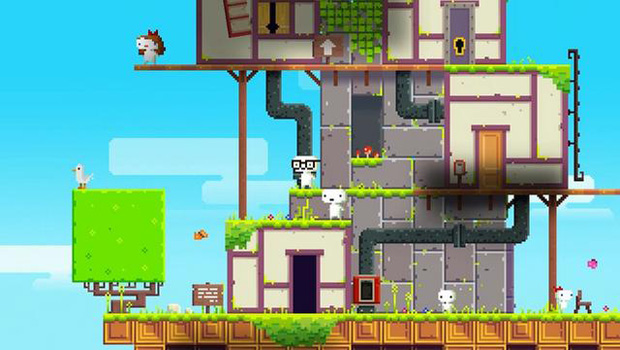
Fez requires you to change your perspective.
You start in Gomez’s small room. Presented as a flat 8-bit, 2D side-scroller, the room is clean and well decorated, but is obviously a child’s. Gomez can run and jump but his only initial act is to leave. Outside is the beautiful, vertically oriented village and kind but simple residents. You are beckoned to the top of the village from a mysterious old man with an eye patch and a small red fez. He tells you that it’s an important day. That’s when the Hexahedron appears.
Continue reading “Fez Narrative Analysis: Changing Perspectives and Growing Up”
Snappin’ Pics on a Pokémon Safari

More than any other medium, videogames possess the ability to immerse people in worlds, of giving them a sense of place, one that can be populated, filled out and come alive before our eyes. But great worlds contain memorable characters with their own personalities- Pokémon has long had one of those worlds. Pokémon Snap is built around this singular idea- it puts would-be photographers on a Safari in a Pokémon nature preserve and equips us with a camera to witness, interact and record.
 scriptroutine.com