

Aya Brea’s date night at Carnegie Hall is tragically cut short when the show’s new singer eyes her in the audience, activating an unknown ability deep in her cells that lights everyone in attendance on fire except the stunned NYPD detective who chases the mutated Eve backstage. The theater is a perfect place to start Parasite Eve’s story, as the game, inspired by survival horror games of the time, was SquareSoft’s experiment with cinematic techniques, using digital actors on its virtual stage. Since RPGs are fundamentally about surviving dungeons and harsh environments with the resources you have in your inventory, Parasite Eve was a great opportunity to experiment with new ideas. Directed by Takashi Tokita, veteran of Live A Live and Chrono Trigger, Parasite Eve is a cinematic police procedural that merges game genres to tell of the six day quest to stop Eve’s genetic awakening before it changes humanity forever.
Continue reading “Parasite Eve (or, SquareSoft’s Experimental Cinematic RPG)”Category: PlayStation
Splicing Gen(r)es: Investigating Resident Evil’s Survival Horror
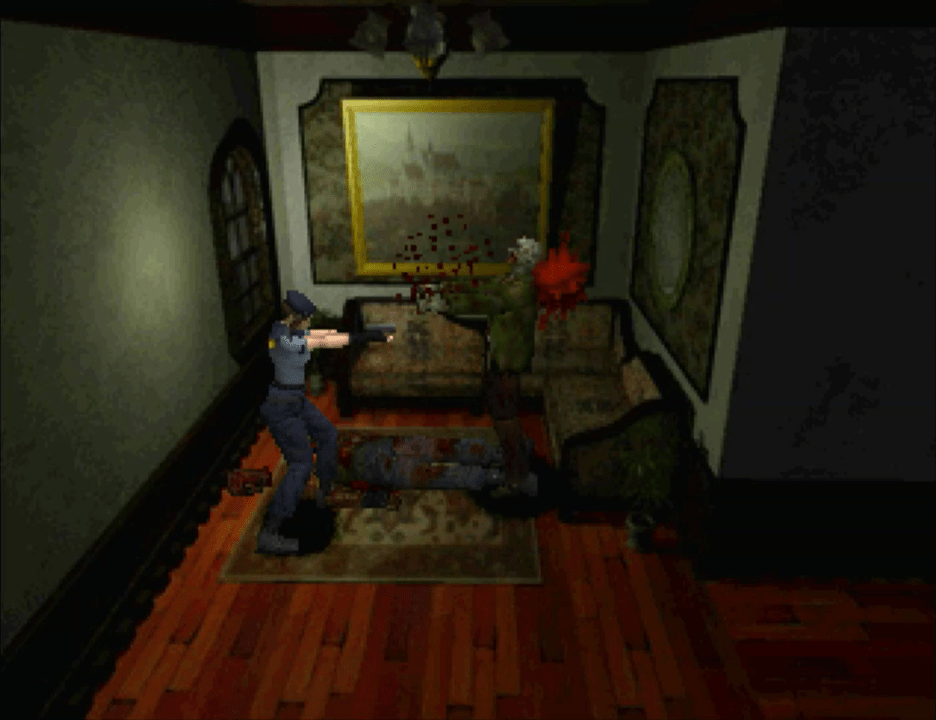
A Biohazard Outbreak
When Special Tactics And Rescue Squad’s Bravo team goes dark in Raccoon City’s Arklay Mountains while investigating grizzly murders, the Alpha team rescue party finds itself in a firefight against bloody claws and gnashing teeth, a scene Resident Evil brings to life with real actors dashing through the woods towards the safety of Spencer Mansion. Though primarily told through cinematic in-engine cutscenes framed by a static camera system, this live-action scene transitions the player into the B movie game’s world filled with zombies, mutated dogs, giant spiders, and, at the end, the perfect bioweapon, manufactured by the international conglomerate, Umbrella Inc. A controllable, branching B horror movie starring S.T.A.R.S.’ Chris Redfield or Jill Valentine and supporting characters, Resident Evil tests your delicious brain’s skills to survive a different kind of haunted house, discover the truth about a biological outbreak.
Continue reading “Splicing Gen(r)es: Investigating Resident Evil’s Survival Horror”How Metal Gear Solid Integral Upgraded Solid Snake’s Simulation

Lessons Learned
Metal Gear Solid’s post credit scene reveals that the nuclear-equipped Metal Gear Rex’s test data survived Solid Snake’s missiles, its log an invaluable learning experience for the developers. Similarly, snaking through the occupied Shadow Moses military base where Rex was developed required a lot of in-the-field training and dozens of hours, rations, and Game Overs, stats the game totals onscreen at its end. Of course, this is all created by a third set of data, the combined mechanics, systems, art, scripts, and modes that are the game. If the elements in Hideo Kojima’s classic thriller supports the theme of biological evolution, the very existence of its 1999 special edition, Metal Gear Solid Integral, tells us much about the new worlds that technological evolution is building for us, even on societal levels, as it upgrades its digital bootcamp to MGS version 1.2.
Continue reading “How Metal Gear Solid Integral Upgraded Solid Snake’s Simulation”The Snake’s Blueprint: An Analysis Of Metal Gear Solid’s DNA
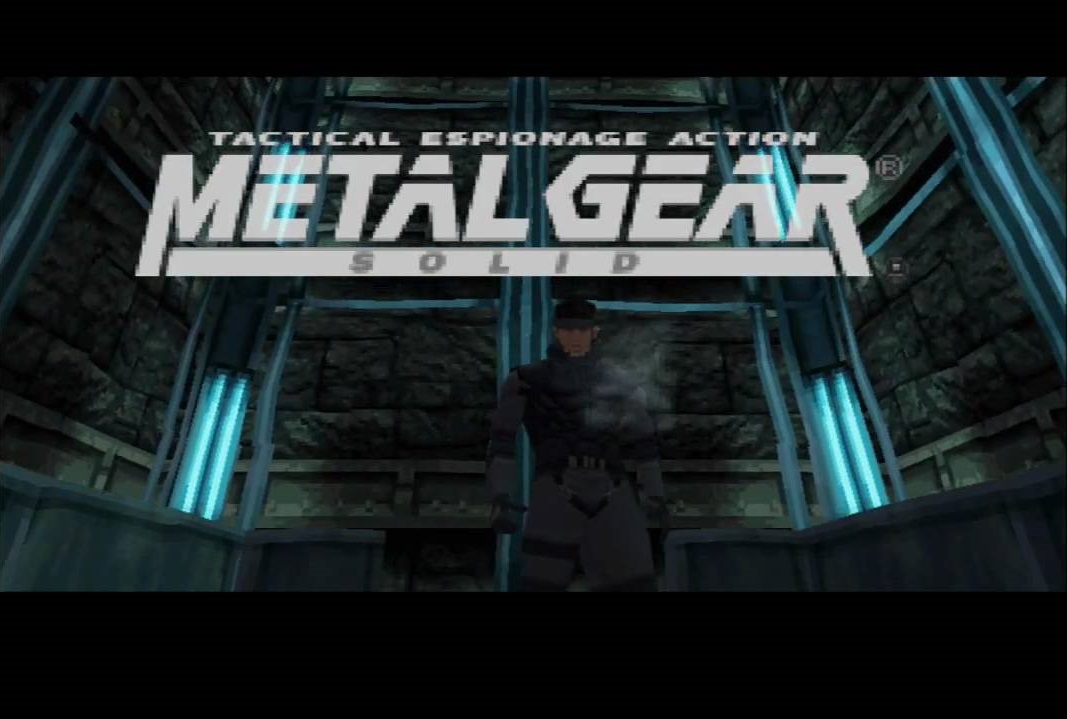
For the third time, legendary agent Solid Snake destroyed the walking tank Metal Gear deep behind enemy lines and saved the world from Armageddon, this time from his old unit FOX-HOUND led by his newly-revealed twin brother Liquid Snake. Until then, Metal Gear Solid had been an action-packed bonanza told through expertly produced cinematics that rivaled Hollywood blockbusters. And then the story pivoted at its climax. What had been a politically charged narrative about Cold War era terrorism and the threat of nuclear war changed into an examination on genetics, using the very technology and rendering techniques that brought the game to life to reinforce its deep and complex themes. With MGS, Hideo Kojima merged his narrative and gameplay abilities into a deep metaphor about biology, technology, and destiny.
Continue reading “The Snake’s Blueprint: An Analysis Of Metal Gear Solid’s DNA”
Going Maverick: How X4 Upgraded Mega Man’s Hardware
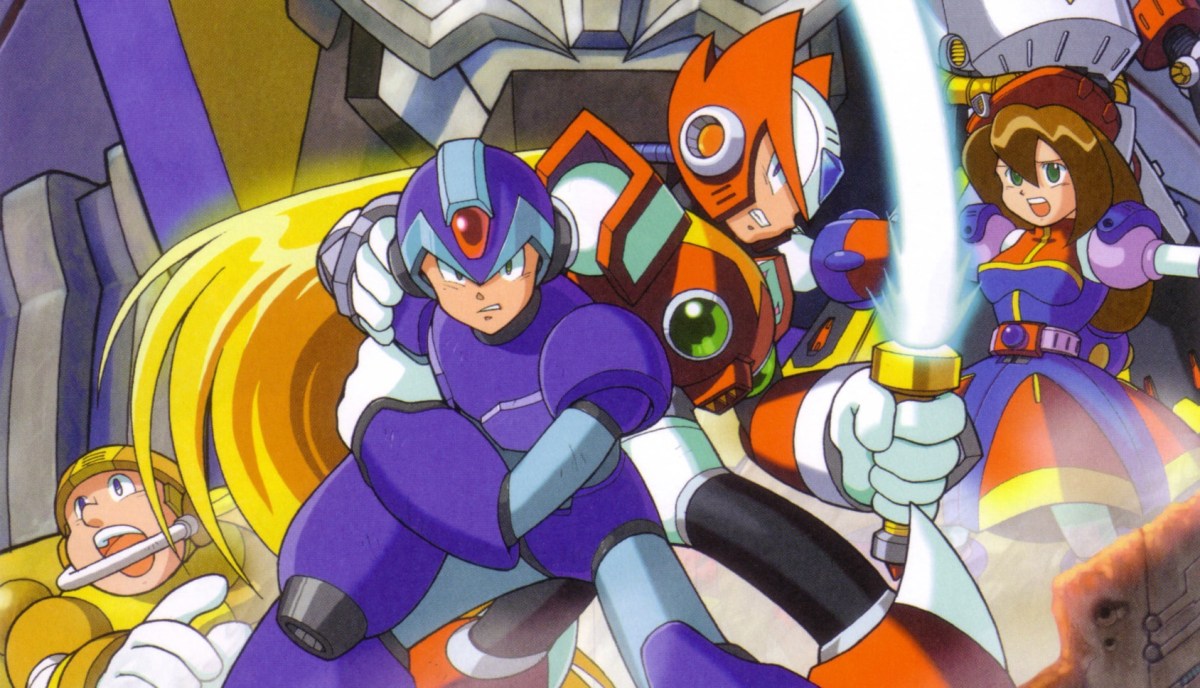
Depending on whether you chose to play as X or Zero, the fight against Web Spider requires a different set of tactics. With his X-Buster, X can dash around the small jungle room until Spider descends from the canopy, wall jumping over the webs he shoots and firing from afar. With his Z-Sabre, Zero is forced to stay close to the bug on his line, dashing away from the web only to careen up and around over it in a circle and strike before your foe scrambles back to safety. The fight gets harder when the Repliforce member lays an electric grid and starts scurrying about the scene. Because of their different playstyles, the remaining seven robot masters will present X and Zero with a similarly different dynamic that test what the two machines, and the player at their controls, are made of.
Continue reading “Going Maverick: How X4 Upgraded Mega Man’s Hardware”
Policenauts’ Mise-En-Scene

Policenauts was the perfect game to introduce the world to Hideo Kojima’s visual style and keen eye for editing a trailer. Unlike other games at the time, every screenshot from the 1994 ‘Interactive Movie’ could have been ripped from an anime, this one the tale of a man lost in space for the first twenty five years of humanity’s move into off-world colonies. It’s Lethal Weapon in the Gundam timeline with an Aliens setup, starring a blue-haired Mel Gibson. The trailer claims Policenauts is ‘The Next Generation of Snatcher’.
The Cinematic Power of Final Fantasy VII
It’s no exaggeration to say that Final Fantasy VII had a major impact on me. It marked my introduction to JRPG’s and broke me of my N64 stockholm syndrome and its slow trickle of games to embrace the Playstation, the platform I look back on as the defining point of my gaming life. I spent so much time breeding chocobo’s and grinding that goddamn crashed Gelnika ship that I continued to play for months after I’d killed Sephiroth and avenged Aeris’ famous death. I hadn’t experienced anything like it. Then I came to despise it and what it became in the years after its release. I thought back on the tangled weave of Cloud’s angst and Sephiroths madness and the nonsense turns its plot takes. But when you can no longer remember why you dislike something, perhaps it’s time to return and look with fresh eyes.
Mega Man Legends & The Future Archaeology
For a decade across the 8 and 16-bit generations, Mega Man had been an action-packed dynamo, but after some twenty odd games, his aging framework was in need of some vital upgrades. Powered by the PlayStation hardware, Yoshinori Kawano and his crew of robot masters successfully forged a new Blue Bomber, translating his action concepts onto a three-dimensional world.
The new 32 bit tech gave the series a chance to break away from the techno-future aesthetic found in both the Classic and X series with their cities dependent on robots for manual labor. Mega Man Legends is an adventure in a world covered in endless water where diggers explore the ruins of a lost civilization amongst the scattered land masses for Zenny and treasure.
Continue reading “Mega Man Legends & The Future Archaeology”
 scriptroutine.com